

AI slop, the colloquial term for low-effort AI-generated content, has emerged as a huge problem across different industries. Music labels are fighting streaming services to put an AI label on such tracks. Publishing houses are wary of AI-written drafts. Research journals are buried under a deluge of AI-generated papers. The software industry is reeling under the pressure of vibe-coded apps brimming with security flaws. Even Apple is struggling against a tide of bug reports created using AI. Of course, the disdain against AI is pretty obvious, but there’s now a new dimension to it.
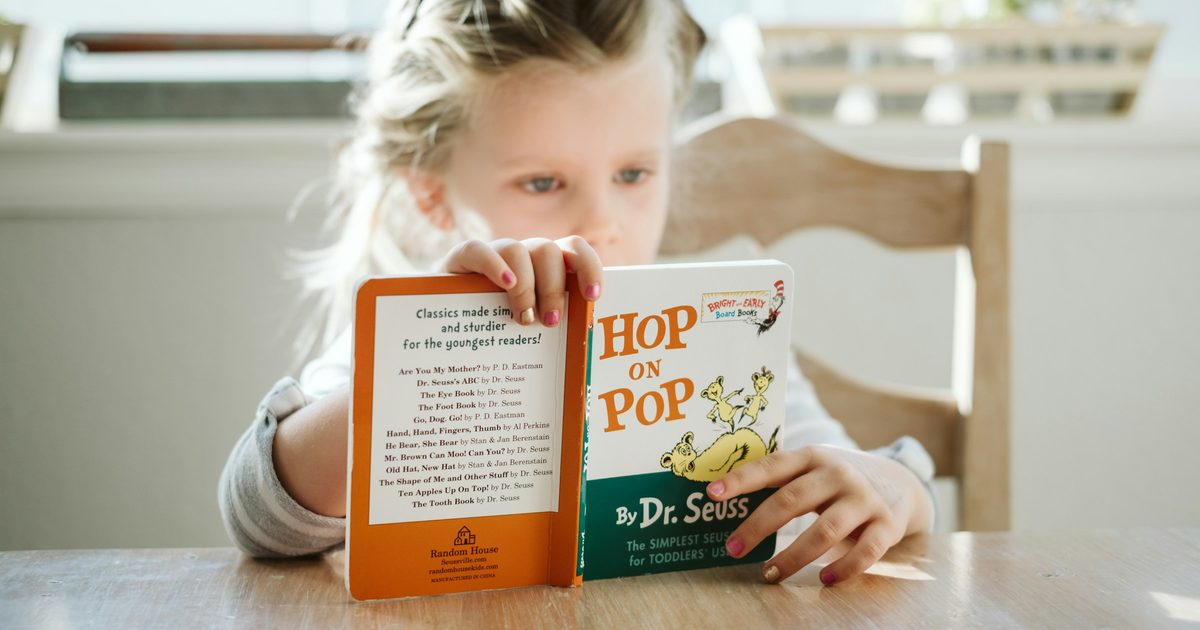
Boomers are gifting AI-generated books to their grandkids.
“She is creating these storylines based on experiences with my kid and modeling her characters to have similar attributes as my kid, and us[ing] our family’s first names so that they represent us and my kid will ‘see her family reflected,’” an individual wrote on Reddit, detailing how their mother was using AI to make stories for their grandkids, influenced by real-life events.
Multiple parents told a leading tech publication that their kids have received AI-generated story books from grandparents or other senior family members, labelling the trend as “morally reprehensible.” The trend is horrific. I have seen numerous AI-generated books targeted at kids selling on online marketplaces, and even advertisements for tools that use AI to write notes and tributes for real humans.
The whole well is polluted
Ironically, the support for such behaviour comes from AI giants that also own the world’s biggest channels for distributing digital content in all shapes and forms. One such source is Amazon, which also runs Kindle as one of the world’s largest digital books platforms.
As far back as 2024, it was reported that Amazon’s store has an AI slop book problem. Poor, AI-written copies of popular books have flooded the ecommerce platform. In the most recent incident that got plenty of coverage in online circles just three weeks ago, a technology journalist wrote an account of how someone used AI to write her biography and put it for sale on Amazon.
Here is the fun part. You would think that Amazon must be drafting harsh anti-AI policies by now. Well, Amazon is actually adding more fuel to the fire. All the way back in 2022, Amazon released an AI feature called “Create with Alexa,” which lets users create bedtime stories for kids, complete with visuals and animations. In 2026, Amazon rolled out a similar feature that lets you create podcasts on any topic using the Alexa AI assistant.
Platforms like YouTube are also seeing a tsunami of AI-generated brainrot content targeted at kids. It’s pretty odd (and disheartening) to see that the biggest platforms for digital content in varied forms are also owned by companies that are doing cutting-edge work and pushing AI into our lives from every direction.
Amazon should be the guardian of books (on Kindle and its eponymous store for physical books), films and TV shows (through Prime Video) and songs (via Amazon Music). Google and Meta are in a similar position, but once again, they are likely not going to take these AI problems hitting close to home as responsibly as they should.
The rise of AI-generated children’s books represents a unique and troubling intersection of technology, commerce, and family relationships. Unlike spam emails or fake product reviews, these books carry emotional weight. They are intended as heartfelt gifts, yet they substitute genuine human creativity with algorithmically assembled text and images. A grandparent who uses AI to craft a story featuring their grandchild’s name and personal traits may believe they are creating a magical keepsake. In reality, they are participating in a broader cultural shift that devalues the effort, imagination, and personal touch that make childhood stories meaningful.
Children are remarkably perceptive. Even young kids can sense when a story lacks the warmth of a human voice, the quirky details that come from lived experience, or the gentle unpredictability of a storytelling grandparent. The best bedtime stories are often a little messy, full of inside jokes, repeated phrases, and spontaneous embellishments. AI-generated stories, by contrast, are almost always smooth, formulaic, and dangerously generic even when they include personalized details. They are optimized for plausibility rather than authenticity.
Psychologists and child development experts have long emphasized the importance of shared reading experiences between adults and children. The emotional bond formed during storytime is just as important as the content of the stories themselves. When a child receives an AI-generated book that mimics their family, the gift can feel hollow or even unsettling. Some parents describe it as a form of emotional outsourcing, where the effort to create something unique is replaced by a few clicks and prompts. The Reddit user quoted above captured this unease perfectly: the grandmother used real-life experiences and family names, but the underlying creativity, care, and intentionality were missing.
This phenomenon is not limited to a few scattered gifts. The market for AI-generated children’s books has grown rapidly. Online marketplaces are saturated with titles that promise personalized adventures, often produced in bulk by sellers who generate dozens of variations without reading a single one. These books are frequently sold at prices that undercut legitimate authors, making it harder for human creators to compete. The result is a race to the bottom where quantity trumps quality, and where the next generation of readers grows up thinking that stories are disposable products rather than crafted works of art.
Amazon, the dominant player in both ecommerce and digital publishing, bears a significant share of responsibility. The company has repeatedly claimed to be investing in tools to detect and remove fraudulent or low-quality AI content, but its own product lineup tells a different story. “Create with Alexa” was launched with much fanfare, encouraging families to generate bedtime stories on demand. The feature is positioned as a convenience, a way to create a new story every night without any effort. But it also normalizes the idea that AI-generated storytelling is acceptable for children. When the same company that polices AI slop on its marketplace actively sells AI story creation tools, the message is confusing at best and cynical at worst.
The problem extends beyond books. YouTube, which is owned by Google, has become a dumping ground for AI-generated “brainrot” content aimed at young children. These videos often feature repetitive animations, nonsensical narratives, and low-quality audio designed to maximize watch time rather than educate or entertain. Many parents have reported that their children become addicted to these strange, hypnotic videos, which are often produced by faceless channels that churn out hundreds of uploads per week. YouTube’s recommendation algorithm frequently promotes such content because it keeps children engaged, and the company has been slow to implement robust safeguards against AI slop.
The issue raises uncomfortable questions about the ethics of AI and childhood. Children are among the most vulnerable consumers of media. They are still developing their critical thinking skills, their sense of self, and their understanding of what is real and what is fake. Exposing them to large volumes of AI-generated content, especially content that pretends to be personalized and loving, could distort those developmental processes. A child who receives an AI-generated book from a grandparent might believe that the grandparent wrote it by hand. If they later discover the truth, they may feel betrayed or confused. And even if they don’t, they are still learning the lesson that art can be manufactured at the push of a button.
There is also a broader cultural cost. Storytelling is one of the oldest and most fundamental human traditions. Every culture on Earth has its own myths, fairy tales, and oral narratives that are passed down through generations. These stories are not just entertainment; they carry values, history, and identity. When grandparents use AI to generate stories, they are not passing down a family legacy. They are handing their grandchildren a product cooked up by an algorithm, one that draws on no particular wisdom and creates no lasting memory. The story itself is disposable, easily replaced by another prompt and another batch of generic characters.
Of course, AI is not inherently evil, and there are legitimate uses for AI in education and creative work. Some researchers are exploring how AI can assist human authors, generate illustrations, or help children who struggle with reading. But the key difference is human control and intentionality. A professional author who uses AI as a brainstorming tool is still making artistic choices. A grandparent who clicks a button and receives a finished book is not doing the creative work; they are simply ordering a product. That distinction matters, especially when children are on the receiving end.
Parents who are outraged by this trend are not overreacting. They are pushing back against a culture that increasingly treats AI as a shortcut for everything, including love and attention. Gift-giving is one of the most personal forms of human expression. When a gift is generated by a machine, it loses its emotional value. A store-bought book can still be meaningful because someone chose it, read it, and gave it with care. An AI-generated book with the child’s name in the title is the opposite: it is manufactured by an algorithm, often without anyone even reading the final product.
This is not a problem that will solve itself. As AI tools become more sophisticated and accessible, the temptation to use them for personal expression will only grow. Companies like Amazon, Google, and Meta have a responsibility to distinguish between creative tools that empower humans and automated faucets that flood the market with slop. They need to implement stricter policies for AI-generated content, especially content marketed to children. They also need to stop promoting their own AI storytelling features as harmless fun when those features are actively undermining the value of human-made children’s books.
Regulators and lawmakers could play a role as well. Requirements for clear labeling of AI-generated content on retail platforms would help consumers make informed choices. So would restrictions on the use of children’s personal data in AI-generated narratives. But legal solutions alone are not enough. There needs to be a broader cultural shift in how we think about AI and creativity. We must collectively decide that some things, especially the stories we tell our children, should remain deeply, irreducibly human.
The childhood imagination is a fragile and precious thing. It is shaped by the stories we hear, the pictures we see, and the voices we love. AI-generated slop threatens to flatten that imagination into a generic landscape of cookie-cutter characters and predictable plots. The grandparents buying these books may mean well, and the companies selling them certainly profit well, but the children are the ones who lose. They lose the opportunity to hear a story that no one else could tell, the one that comes from a grandmother’s own memory, or a father’s silly sense of humor, or a family’s unique traditions. No algorithm can replicate that, and no amount of prompting should be allowed to replace it.
As consumers, parents, and grandparents, we must be vigilant. We should question where the books and videos we give to children come from, and we should demand better from the platforms that sell them. We should celebrate human storytellers, support independent authors, and treasure the imperfect, wonderful, idiosyncratic stories that make us who we are. The future of childhood stories depends on the choices we make today. If we choose convenience over care, we may find that we have traded our children’s imagination for a machine’s imitation.
The trend of grandparents gifting AI-generated books is not just a quirky footnote in the larger story of AI disruption. It is a warning sign. It shows how easily AI can infiltrate even the most intimate corners of our lives, bending our relationships and our culture to its convenience. It shows how companies that claim to protect creativity are often the ones enabling its erosion. And it shows that we are all responsible for drawing a line between what we allow machines to do and what we insist on doing ourselves. Telling a child a story is perhaps one of the simplest, oldest moments of human connection. Let us not give that away to the algorithms.
Source: Digital Trends News