

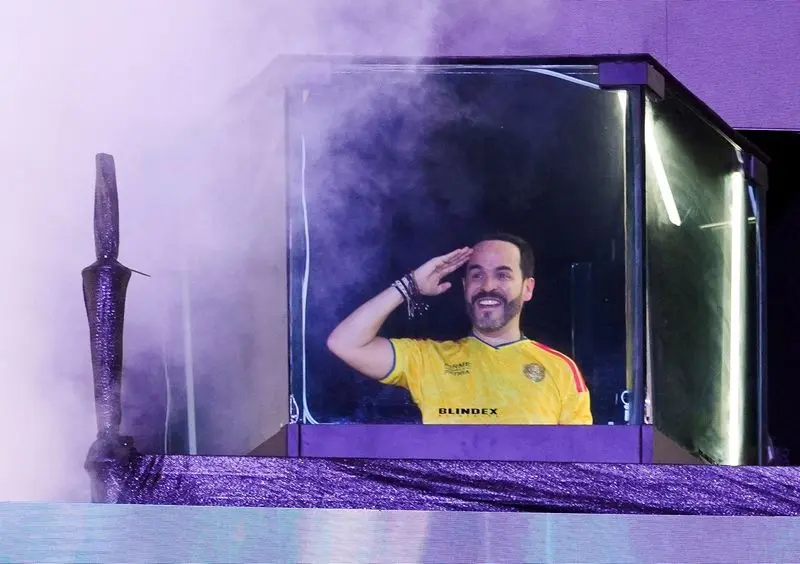
Colombia has decisively swung to the right, electing nationalist lawyer and political newcomer Abelardo De La Espriella as president, accelerating a rightward shift that is rippling across Latin America. The move marks a stark reversal of the region's so-called pink tide, which brought several leftist governments to power in the early 2020s, including President Gustavo Petro, Colombia's first leftist president. De La Espriella's victory, by a razor-thin margin of less than 1%, underscores a broader ideological realignment driven by weak economies, rising crime, and a global surge of right-wing nationalism.
In Peru, the rightward trend is equally pronounced. Authorities have been slowly counting contested ballots from the June 7 presidential runoff, with conservative Keiko Fujimori projected to win by just over 0.2%, securing the presidency after three failed attempts. Colombia and Peru now join Argentina, Chile, Ecuador, Bolivia, and Panama in moving right, a dramatic shift from the progressive wave that swept the region earlier this decade. This realignment has been fueled by voter frustration over sluggish economic growth, high inflation, and persistent violence, which have reshaped priorities and pushed once-fringe hard-right candidates into the mainstream.
De La Espriella, a naturalized U.S. citizen who lived in Miami, has been a vocal supporter of former President Donald Trump and received his endorsement ahead of the runoff. He has vowed to join Trump's regional alliance, the Shield of the Americas, crack down on drug traffickers, ease business regulations, lower taxes, and revive oil and gas projects halted under Petro. His victory comes as Colombia faces gas shortages and global energy markets are disrupted by the war on Iran and the closure of the Strait of Hormuz. With vast oil reserves in Guyana and Venezuela, which Trump has promised to develop, and one of the world's largest shale formations in Argentina, experts say Latin America stands to gain as a global energy powerhouse.
Economic and Security Challenges
Right-wing leaders across the region have gained support with promises of tax cuts, smaller government, and looser mining and fossil fuel rules. However, many face budget deficits that force unpopular spending cuts, triggering protests. Bolivia declared a state of emergency this weekend and began clearing blockades that had paralyzed the nation for more than 50 days as labor unions and others protested austerity measures enacted by center-right President Rodrigo Paz. In Chile, President Jose Antonio Kast saw his approval rating plummet after the Iran war prompted his government to hike fuel prices, while Argentine President Javier Milei's austerity measures have been met with recurring protests.
Security challenges persist despite pledges to be tough on crime. In Ecuador, murders soared 30% last year, with President Daniel Noboa's government blaming turf wars between splintered gangs vying for dominance. Murders also surged in Costa Rica under right-wing populist Rodrigo Chaves. His successor, President Laura Fernandez, vowed a war on crime, but murders have remained high as the small Central American nation has become a key shipment point for South American cocaine destined for the United States and Europe.
A Difficult Test
Drug trafficking, illegal mining, and little state presence in parts of Colombia are likely to prove a difficult test for De La Espriella, analysts said. He narrowly won by less than 1% and must govern with a divided Congress, where his rival Ivan Cepeda's Historic Pact party holds more seats than any other. His style of dress and promises of mega-prisons have drawn comparisons to El Salvador's leader Nayib Bukele, who calls himself the 'world's coolest dictator.' De La Espriella has denied imitating Bukele, but experts argue that importing El Salvador's security solutions into Colombia is not feasible due to its larger size and complexity. 'Colombia is a much larger country and far more complex to manage than El Salvador, and importing El Salvador's security solutions into Colombia is not feasible, whether legally, budget-wise, or in terms of international engagement,' said Sergio Guzman, founder of Colombia Risk Analysis.
Harvard University professor Steven Levitsky noted that De La Espriella will have to work with Colombia's powerful democratic institutions to pass reforms. 'If he tries to be more radical then he can get into some trouble,' Levitsky said. The new president's pro-business agenda includes lowering corporate taxes, cutting red tape, and encouraging foreign investment, particularly in energy and mining. He has also promised to crack down on crime by building mega-prisons and deploying the military to combat drug cartels. However, his plans face significant hurdles, including a fragmented Congress, a potentially hostile judiciary, and widespread public skepticism about the effectiveness of such measures.
The broader Latin American rightward shift is also being shaped by international forces. President Trump has ordered strikes killing more than 150 people on alleged drug boats in the Caribbean, launched the Shield of the Americas regional alliance, and captured Venezuelan President Nicolas Maduro in a raid on Caracas. Colombia's Petro was Trump's most outspoken critic in the region, drawing threats of military action and sanctions. De La Espriella, by contrast, has embraced Trump's approach, promising to align Colombia closely with U.S. foreign policy. This alignment could bring economic benefits, such as increased trade and investment, but also risks entanglement in Trump's confrontational stance toward China and Iran.
Under Colombian law, a final verified count overseen by notaries and judges is required and was nearly complete late Sunday. It is unclear if it aligns fully with the initial count. The outcome has sparked protests from supporters of Cepeda, who argue that the election was marred by irregularities. De La Espriella has called for national unity, but the deep polarization evident in the campaign suggests his presidency will face significant opposition. The new government's ability to deliver on its promises will be closely watched, both within Colombia and across a region that is watching closely to see whether this rightward swing will bring stability or further turmoil.
Source: Yahoo News News