

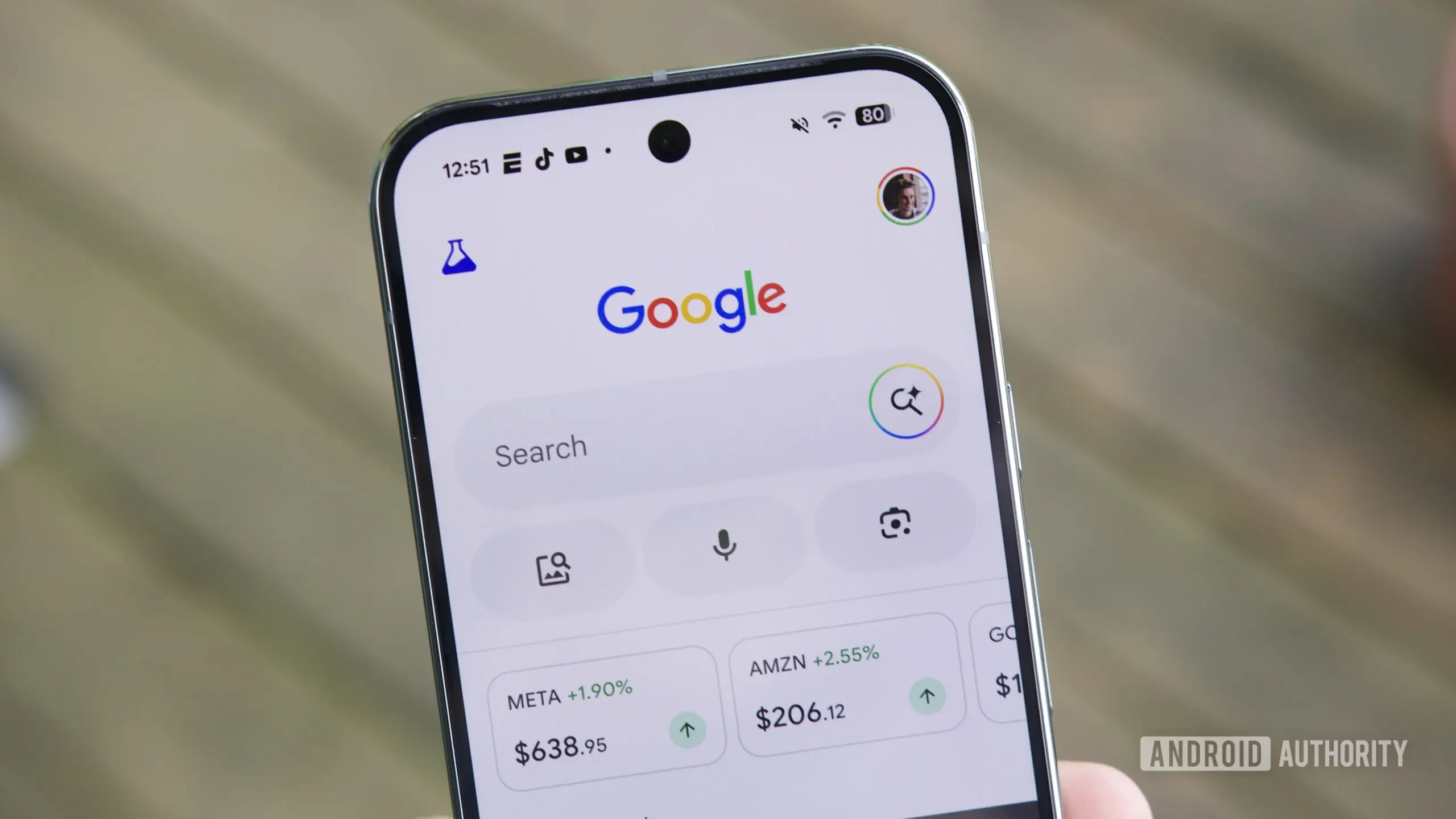
If you have used Gemini with Gmail or Calendar, you already understand how much time can be saved by pulling information from the apps you use daily. Google now intends to bring that same concept to Search, but this time it is not just about answering questions — it is about helping users actually get things done.
Starting today in the United States, users can switch to AI Mode in Google Search and link to supported third-party applications. The initial lineup includes YouTube Music, Canva, and Instacart. This marks a significant shift from traditional search, which primarily retrieves information, toward a more action-oriented assistant that can complete parts of tasks on behalf of the user.
Imagine planning a birthday party. Instead of opening Canva, selecting a template, and making manual adjustments, you can simply ask AI Mode to create a colorful invitation for a party next Saturday with a tropical theme. Once Canva is connected, Search understands the request, sends it over, and returns a ready-made design in moments. This seamless integration eliminates the need to switch between multiple apps, saving users a considerable amount of time and effort.
How AI Mode Works
Google Search's AI Mode was first introduced in early 2025 as an experimental feature within Search Labs. It uses advanced large language models to provide conversational, context-aware answers to user queries. Unlike traditional search results that present a list of links, AI Mode generates a synthesized response that can incorporate information from multiple sources. The new app integrations extend this capability by allowing AI Mode to perform actions within external services via secure API connections.
To use the feature, users must first enable AI Mode in Google Search settings and then link their accounts for each supported app. The linking process requires user consent and uses OAuth protocols to ensure data security. Once linked, AI Mode can send requests to these apps on behalf of the user, but the user retains final control — for example, with Instacart, the user still decides whether to check out the shopping cart.
Music creation is another example. If you are tired of spending twenty minutes building the perfect playlist, AI Mode can ask YouTube Music to compile one that matches your desired mood or event — whether it is a laid-back barbecue, an ’80s throwback, or a high-energy workout. When the playlist is generated, you can save it directly to your YouTube Music library with a single tap. This feature leverages YouTube Music's vast catalog and recommendation algorithms, combined with the natural language understanding of AI Mode.
Grocery shopping via Instacart is equally streamlined. After finalizing a guest list for a party, you might realize you need snacks, drinks, and dessert. Instead of manually searching for every item in the Instacart app, you can tell AI Mode what you need, and it will populate your shopping cart automatically. The user can then review the items, adjust quantities, and proceed to checkout when ready. This automation reduces the friction of repetitive tasks, making daily planning more efficient.
Context and Development
Google's move toward integrating third-party apps into Search is part of a broader strategy to compete in the AI assistant space. Competitors like Amazon's Alexa, Apple's Siri, and Microsoft's Copilot have long offered integrations with various services, but Google's advantage lies in its massive search index and understanding of user intent. By combining search with action, Google aims to create a more holistic assistant that can handle complex workflows without leaving the search interface.
The technology behind these integrations relies on Google's proprietary Gemini family of models, which were designed to understand multimodal inputs and generate structured outputs. The same models power features like Gemini with Gmail, Calendar, and other Google services. Over the years, Google has invested heavily in natural language processing (NLP) and machine learning, culminating in the ability to interpret nuanced requests like "make a tropical-themed birthday invitation" and map them to specific actions in Canva.
Canva, for its part, has built a rich design platform with thousands of templates. The integration allows AI Mode to select an appropriate template, apply custom text and colors, and generate a finished design that users can further edit. YouTube Music's integration uses its popular playlisting API, which has been refined for years based on user listening habits. Instacart offers a robust shopping API that enables automated cart population based on natural language descriptions of needed items.
Security and privacy remain top concerns. Google states that all app connections require explicit user permission and can be revoked at any time. Data sent between Search and third-party apps is encrypted and not used for training models without consent. This approach mirrors the privacy practices established for other Gemini integrations.
Expansion Plans and Future Outlook
Google has confirmed that it is working with additional partners to expand app support beyond the initial trio. While the company has not disclosed specific names, the integration framework is designed to be extensible. Potential future partners could include productivity tools like Notion or Trello, travel booking platforms like Expedia or Kayak, food delivery services like Uber Eats or DoorDash, and smart home platforms like Google Home.
As AI Mode evolves, it could become much more useful for everyday planning, shopping, and creative work, all without leaving the Search page. For example, a user could plan an entire vacation by asking AI Mode to book flights via a travel app, create a packing list in a notes app, and set reminders in Google Calendar — all from a single conversational interface.
The introduction of third-party app integrations also signals a shift in how Google views Search. Instead of a simple information retrieval tool, Search is becoming a task completion platform. This aligns with industry trends where AI assistants are increasingly expected to perform actions, not just provide answers. Google's move may pressure other search engines like Bing to accelerate their own integration strategies.
However, challenges remain. Ensuring that AI Mode correctly interprets user intent across different apps requires constant refinement of the language models. Misinterpretations could lead to unwanted actions, such as adding wrong items to a shopping cart or creating a playlist that does not match the user's taste. Google mitigates this by providing users with previews of actions before they are finalized, and by offering easy undo options.
Additionally, the success of AI Mode depends on the availability and quality of third-party developer partnerships. If only a few apps are supported, the feature may feel limited. Google's track record with platforms like Google Assistant shows that developer adoption can be slow initially, but dedicated tools and incentives often accelerate growth.
The rollout in the US is expected to be followed by expansion to other English-speaking markets later this year, with support for additional languages and regional services. For now, users in the US can activate AI Mode through the Google Search app on Android and iOS, or via the web interface. A Google One subscription may be required for some advanced features, though basic AI Mode access remains free with a standard Google account.
Source: Android Authority News