

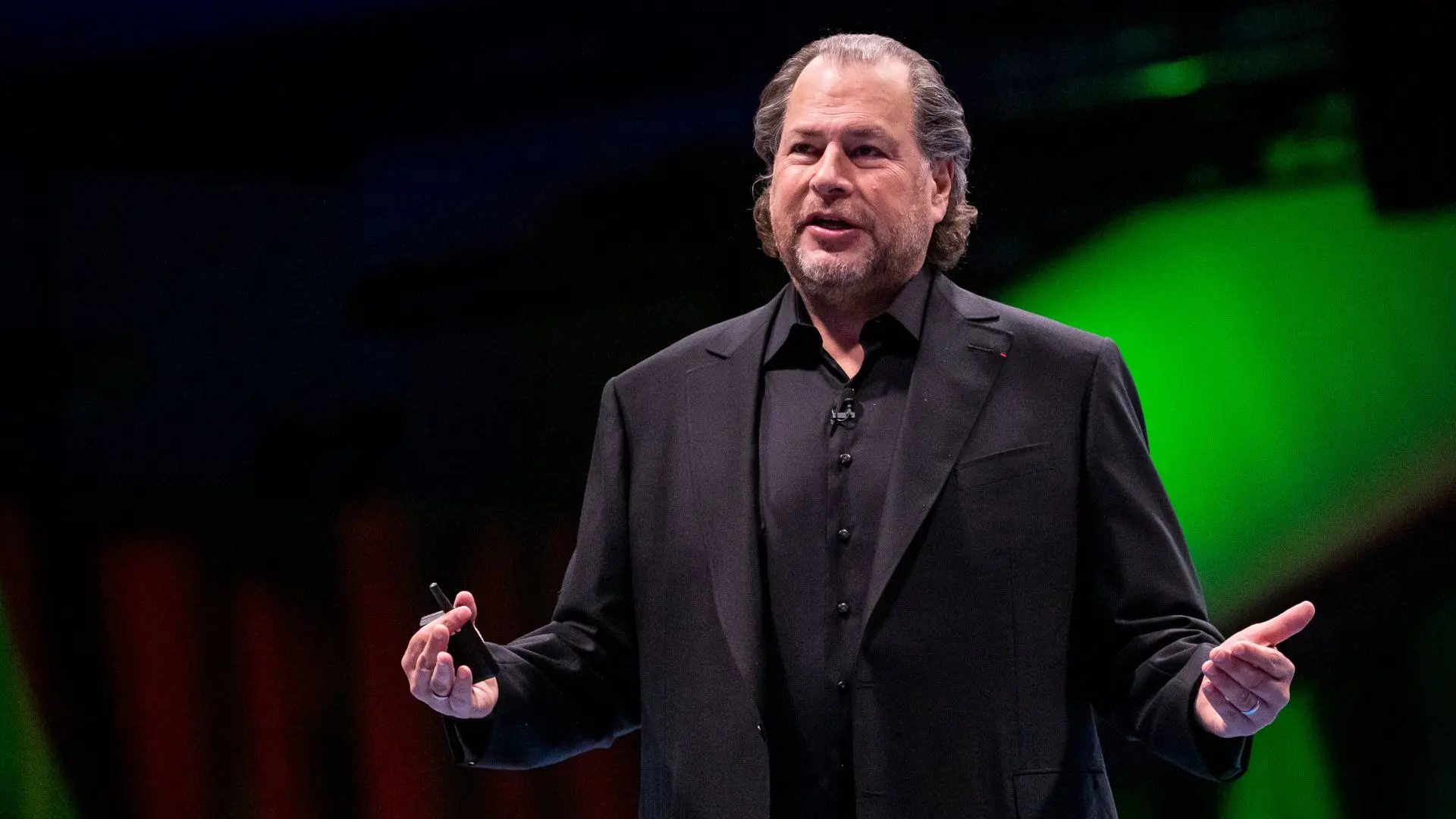
Salesforce CEO Marc Benioff has once again made headlines with his characteristic optimism, this time regarding the company's aggressive push into artificial intelligence. Speaking about the integration of AI into Salesforce's extensive product lineup, Benioff declared, "It's gonna be awesome," and added that "it's impossible to describe what we're gonna be able to do for customers." These comments reflect the company's strategic pivot toward AI-driven solutions as the tech industry races to capitalize on generative AI technologies.
The AI Vision for Salesforce
Salesforce, the world's leading customer relationship management (CRM) platform, has been a frontrunner in incorporating AI into enterprise software. The company's Einstein AI platform, launched in 2016, already provides predictive analytics, natural language processing, and machine learning capabilities across Sales Cloud, Service Cloud, Marketing Cloud, and other products. However, Benioff's recent remarks suggest a more ambitious leap into generative AI, which can create content, summarize data, and automate complex workflows.
"We are at an inflection point," Benioff said during a meeting with analysts and partners. "The capabilities we are building will fundamentally change how businesses interact with their customers. It's not just about automation—it's about augmentation. AI will empower sales reps, service agents, and marketers to be more effective and creative."
Background and Context
Marc Benioff co-founded Salesforce in 1999 and has served as its CEO for over two decades. Under his leadership, the company grew from a small startup into a cloud computing giant with a market capitalization exceeding $200 billion. Benioff is known for his visionary statements and philanthropic efforts, including the 1-1-1 model of donating 1% of equity, product, and employee time. His recent comments on AI come at a time when competitors like Microsoft, Oracle, and SAP are also heavily investing in AI.
Salesforce has already launched several AI-powered features, such as Einstein GPT, which combines generative AI with CRM data to auto-generate emails, call scripts, and personalized content. In March 2023, the company announced a $250 million investment in generative AI startups and a partnership with OpenAI to integrate ChatGPT into its Slack and Sales Cloud platforms.
Key Facts and Quotes
- Benioff's quote: "It's impossible to describe what we're gonna be able to do for customers."
- Product integration: AI enhancements are expected across all major Salesforce clouds, including Sales, Service, Marketing, Commerce, and Analytics.
- Timeline: Salesforce aims to roll out new generative AI features by the end of the fiscal year, with broader availability in 2024.
- Investment: The company has allocated billions of dollars to AI research and development, including the acquisition of AI startups like Spiff and Airkit.
Industry Implications
The CRM market is highly competitive, and AI is becoming a key differentiator. Salesforce's focus on "trusted AI"—emphasizing data privacy, security, and ethical use—could give it an edge over rivals. According to industry analysts, the global AI in CRM market is expected to grow from $10 billion in 2023 to over $50 billion by 2028.
Benioff's enthusiasm is shared by many in the tech world. However, some experts caution that AI deployment must be handled carefully to avoid biases, data breaches, and job displacement. Salesforce has responded by establishing an Office of Ethical and Humane Use of Technology, led by Paula Goldman.
Recent Developments
In November 2023, Salesforce unveiled "Einstein Copilot," a conversational AI assistant embedded directly into its platform. This tool allows users to ask questions in natural language and receive instant insights. For example, a sales manager could ask, "Which deals are at risk this quarter?" and get a real-time analysis.
Additionally, Salesforce announced "Data Cloud" enhancements that unify customer data across sources, making AI models more accurate and personalized. "We are building a data foundation that is second to none," said Benioff. "Our AI is only as good as our data, and we have the richest customer data in the world."
Challenges and Criticisms
Despite the optimism, Salesforce faces challenges. The company has been criticized for high pricing, complex licensing, and occasional service outages. Moreover, some customers remain skeptical about AI reliability. In a survey by Gartner, 60% of CRM buyers expressed concerns about AI transparency and explainability.
Benioff acknowledged these concerns: "We are working hard to make our AI explainable and accountable. We want customers to trust the recommendations." Salesforce has published a set of "AI Trust Principles" that include fairness, reliability, privacy, and security.
Looking Ahead
Salesforce's AI roadmap includes deeper integration with its low-code platform, MuleSoft, and the development of industry-specific AI models for healthcare, financial services, and retail. The company also plans to expand its AI Ecosystem Partner Program to encourage third-party developers to build AI solutions on top of Salesforce.
"We are just scratching the surface," Benioff concluded. "The next ten years will be about AI transforming every business process. And Salesforce will be at the center of that transformation." The CEO's bullish stance reflects a broader industry trend where AI is no longer a futuristic concept but a present-day business imperative.
As Salesforce continues to roll out new AI features, the tech community and business leaders will be watching closely. With Benioff's track record of turning ambitious visions into reality, his statement that "it's gonna be awesome" may very well ring true for the company and its millions of customers worldwide.
Source: TechRadar News