

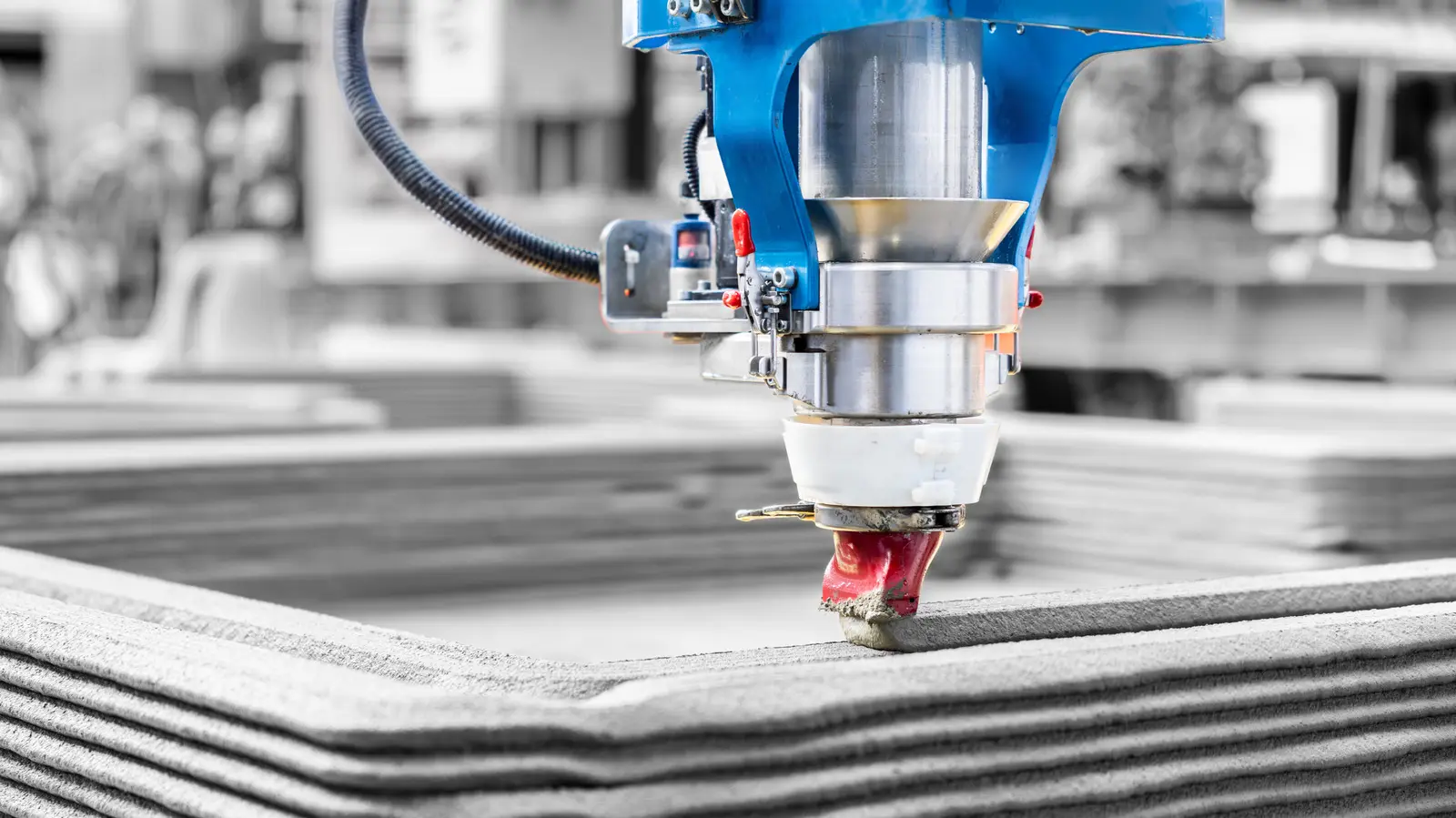
3D printing concrete has long been hailed as a potential game-changer for the construction industry, promising faster build times, reduced waste, and greater design freedom compared to traditional mold-based methods. However, one persistent hurdle has been the difficulty of translating architectural designs into instructions that large-scale 3D printers can actually execute. Until now, optimizing a design for a concrete printer could take engineers several days of painstaking manual adjustments. A team of scientists at the Massachusetts Institute of Technology (MIT) has just announced a major breakthrough that promises to reduce that process to mere minutes, marking a significant step forward for additive manufacturing in construction.
The researchers, led by co-authors Zane Schemmer and Hajin Kim-Tackowiak, published their findings in the journal Additive Manufacturing. Their work focused on creating a new computational framework that automatically accounts for the physical limitations of concrete 3D printers—limitations that previous modeling tools often ignored. The team conducted their experiments at the Autodesk Technology Center in Boston, leveraging the center's large-scale printers and the expertise of its technicians to identify exactly why so many supposedly optimized designs turned out to be unbuildable.
According to the study, the problems boiled down to three key factors. First, concrete printers must lay down material in a continuous, unbroken line; the previous framework did not properly enforce this constraint, leading to gaps or overlaps that made the structure unstable. Second, the printer nozzle has a limited turning radius—it cannot make sharp corners without causing defects or jamming. Third, the width of the printing bead (the strand of concrete extruded) is fixed for a given print job, and the framework had to account for how bead thickness affects the overall shape and material usage.
By integrating these constraints into a sophisticated mathematical model, the MIT team created a solver that can generate a printer-ready design in a fraction of the previous time. The mathematics involved, as Schemmer noted, are extremely complex. Indeed, such a solver would have been impossible just five or ten years ago. Even three years ago, the computational power and algorithms needed were not available. Today, however, the team has proven that faster, more reliable 3D concrete printing is not only possible but also practical.
To demonstrate the effectiveness of their framework, the researchers printed a 2.3-meter-long concrete bridge using Autodesk's industrial printers. The bridge was designed to be both aesthetically pleasing and structurally sound. On the day of printing, the team discovered a last-minute issue: the bridge design needed to be slightly reduced in size to fit the printer's workspace. Under the old workflow, such a change would have required a significant delay—perhaps a full day or more—to manually re-optimize the design. With the new framework, the team updated the design in about ten minutes. The printer then executed the new instructions without a hitch, producing a bridge that was not only readily printable but also met all strength predictions.
Kim-Tackowiak reported that the bridge turned out to be "super over-engineered." In load tests, it comfortably supported more than 2,000 pounds of weight, far exceeding the typical loads it would encounter in pedestrian use. The researcher added that the framework could design far stronger bridges, noting that it was only "after 200,000 pounds [that] you can start to think about the physics." This margin of safety highlights the robustness of the optimized designs generated by the new model.
Beyond speeding up the design process, the MIT study offers insights that could help 3D printer manufacturers improve their hardware. One surprising finding was the impact of bead width on material efficiency. The bridge was printed using a 4-centimeter bead, but the team's calculations showed that switching to a 1-centimeter bead could reduce the amount of concrete needed by as much as 76%, without compromising structural safety. This dramatic reduction is particularly beneficial for one-off designs, such as emergency infrastructure built after natural disasters, where every kilogram of material saved can accelerate deployment and lower costs.
The broader context of this research is the growing interest in 3D-printed construction worldwide. Several companies have already built small houses using concrete 3D printing, and some projects have attempted larger structures like bridges and bus shelters. However, the lack of reinforcement—steel rebar or fibers—has limited the widespread adoption of 3D-printed concrete for load-bearing infrastructure. Current concrete printing methods cannot easily incorporate continuous reinforcement, which means printed structures often have lower tensile strength than traditional reinforced concrete. The MIT team acknowledges this limitation and says they are now turning their attention to solving the reinforcement problem.
Despite these challenges, the pace of innovation in additive manufacturing for construction continues to accelerate. New materials, including geopolymers and recycled aggregates, are being tested to reduce the carbon footprint of concrete. Printer designs are evolving to allow wider nozzles, faster extrusion rates, and more flexible path planning. The MIT framework represents a crucial piece of the puzzle: it bridges the gap between design intent and printer capability, making the technology more accessible to engineers and architects who lack specialized knowledge of 3D printing.
Looking ahead, the team plans to refine their solver to handle even more complex geometries and to integrate real-time feedback from the printer during construction. They also aim to collaborate with industry partners to bring the framework to commercial software. If successful, this could lead to a future where 3D-printed concrete bridges, buildings, and disaster-relief shelters become common, built in days rather than weeks, with minimal waste and maximal strength.
Source: SlashGear News