

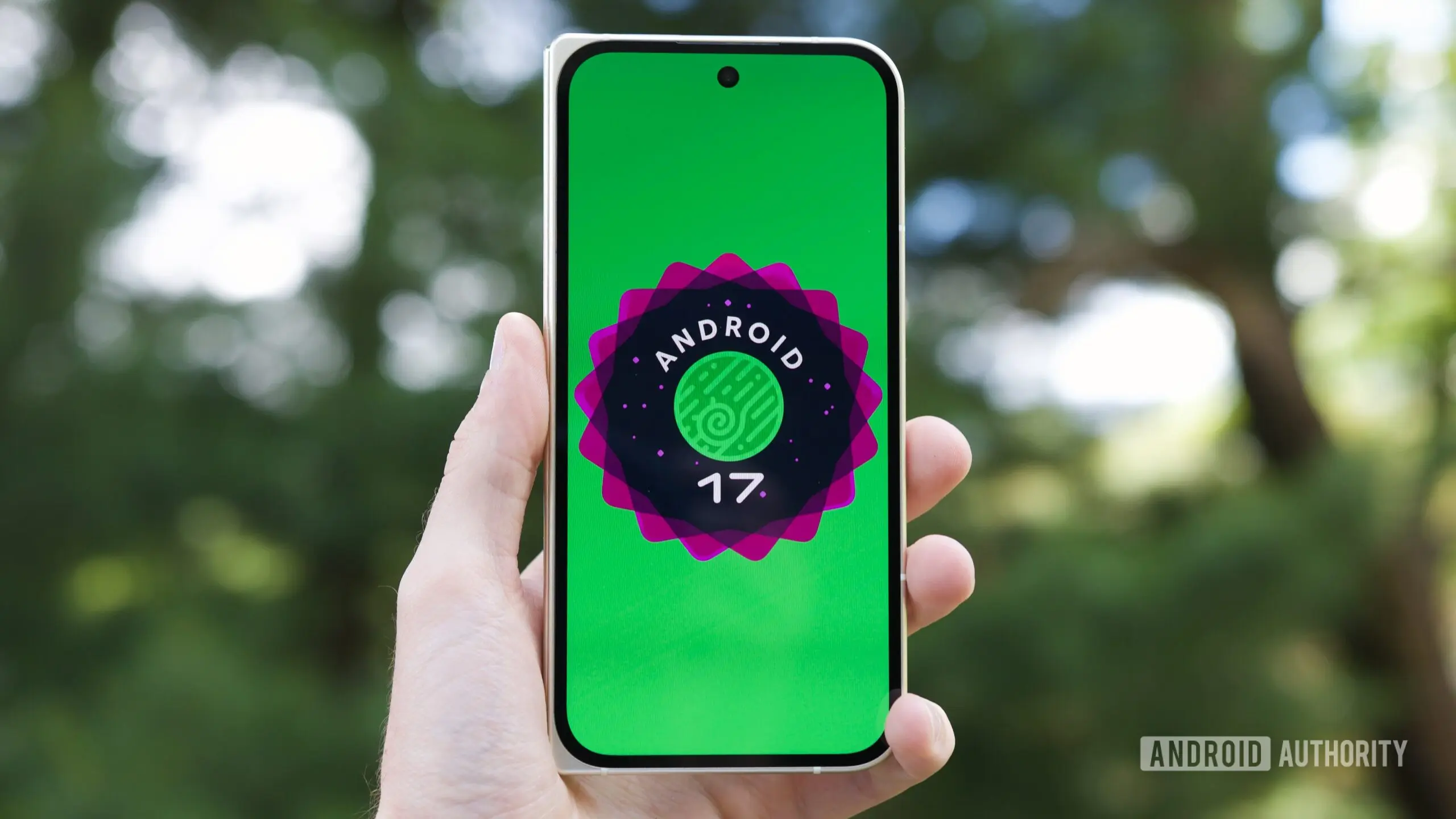
Foldable phones have promised a revolution in mobile gaming, offering a large, immersive display in a pocketable form factor. However, the reality has often fallen short: the square-ish aspect ratio of unfolded screens forces thumbs to stretch awkwardly across the canvas to reach touch controls, leading to discomfort and cramping. While external Bluetooth controllers can solve this, they add bulk and require constant carrying. Google's upcoming Android 17 update aims to eliminate this friction with a system-level virtual gamepad designed specifically for foldable devices.
Android Community Engagement Manager Mishaal Rahman recently provided a detailed look at the feature on Reddit, following a brief initial announcement on June 16. The idea is straightforward yet powerful: when a user opens a foldable phone in landscape orientation, Android 17 splits the inner display into two equal halves. The top half displays the game in full-screen, unobstructed, while the bottom half transforms into a dedicated virtual gamepad. This approach leverages the otherwise wasted screen real estate beneath the player's thumbs, turning a liability into an asset.
This is not the first attempt to bring controller-like input to foldables. In the past, users had to rely on third-party key-mapping apps that overlayed custom touch zones on top of games, or hope that specific developers would build custom split-screen layouts for their phone models. These workarounds were inconsistent, often broke with updates, and lacked the polish of a built-in solution. By baking the virtual gamepad directly into the Android Open Source Project (AOSP), Google ensures that the feature is available across all compatible foldables without requiring developer cooperation or third-party software.
The technical implementation is key to its success. Instead of simply overlaying transparent buttons that register screen touches (which would only work with touch-based games), the virtual gamepad simulates hardware button presses at the system level. This means any game that already supports standard controller inputs via Bluetooth or USB will automatically work with the new gamepad. The phone essentially tricks the game into thinking a physical controller is connected. This broadens compatibility dramatically, covering thousands of games from Call of Duty Mobile to Genshin Impact and many emulators.
The gamepad itself offers a full set of controls expected from a modern console: twin thumbsticks, a D-pad, four action buttons (A, B, X, Y), a Start button, and three tiers of shoulder buttons (L1/L2/L3 and R1/R2/R3). This layout covers the vast majority of games that support controllers. However, Google recognized that a one-size-fits-all approach would not suit every hand size or play style. Therefore, the gamepad is heavily customizable.
Tapping the game controller icon on the overlay opens a menu where users can adjust multiple aspects. The default layout is "Twin stick, Inline," placing the left and right thumbsticks directly opposite each other. For those who find this cramped, the "Twin stick, Staggered" option shifts the left thumbstick, D-pad, and shoulder buttons upward and to the left, mimicking the offset of traditional console controllers like the Xbox or PlayStation. Users can also scale the overall size of the gamepad among small, medium, and large, accommodating everything from compact foldables to larger tablets. Visual themes toggle between clean light and dark modes, reducing eye strain. A toggle for haptic feedback provides simulated physical button clicks, adding tactile confirmation to every press.
The overlay is designed to be unobtrusive. If a player prefers to use touch controls for a particular game, they can minimize the gamepad with a "Hide Gamepad" button in the built-in menu. Alternatively, the feature can be turned off entirely from the system settings. Additionally, the virtual gamepad automatically hides itself when it detects a real controller connected via Bluetooth or USB-C, ensuring no conflict between input methods.
Since this is a platform-level feature included in AOSP, individual phone manufacturers can take the base code and adapt it. They can adjust the gamepad's placement based on their specific screen dimensions and aspect ratios, and potentially add their own customizations. This means that while the base feature will appear on Google Pixel Fold devices and other Android One foldables, brands like Samsung, OnePlus, and Xiaomi may offer their own variations, perhaps with additional themes or layout presets.
The timing of the announcement is strategic. Foldable phone sales have been growing steadily, and the market is becoming more competitive with devices like the Samsung Galaxy Z Fold 6, the Google Pixel Fold 2, and upcoming offerings from OPPO and vivo. A native gaming mode could become a differentiator for Android foldables against their more static rivals, including Apple's rumored but not yet released foldable. It also addresses a key criticism: that large foldable screens are not well optimized for the very activity that benefits most from extra screen real estate—gaming.
The implications for mobile gaming are significant. As foldables become more mainstream, the expectation will shift from mere screen size to intelligent use of the unique form factor. Android 17's gaming mode could inspire more developers to consider dual-screen interactions, potentially leading to new game mechanics that treat the bottom half as a control panel rather than just a screen extension. While the feature is still in development, its inclusion in AOSP means it will likely be part of the final release of Android 17 in the coming months, rolling out to users through system updates.
The days of hand cramps from stretching thumbs across a large display may soon be over. With Android 17, Google is finally giving foldable owners a reason to use their phone's unique design for gaming, without needing to carry an extra controller. The platform-level integration ensures a consistent, polished experience that third-party apps could never achieve. As the feature reaches users, it will be interesting to see how manufacturers differentiate their implementations and how the gaming community embraces this new way to play.
Beyond the immediate benefit of ergonomics, this update could also influence the design of future foldable hardware. If the virtual gamepad proves popular, phone makers might consider adjusting screen aspect ratios or adding physical controller attachment points. Some may even experiment with haptic engines in the bottom half to provide localized feedback during gameplay. The feature also paves the way for potential multi-user scenarios, where the bottom half becomes a separate touch interface while the top half displays content.
Security and latency are also important considerations. Simulating hardware button presses at the system level must be done with minimal input lag to ensure a competitive gaming experience. Early demonstrations suggest that the latency is comparable to that of real Bluetooth controllers, thanks to direct integration with the input subsystem. Additionally, because the gamepad is a system feature, it can be sandboxed appropriately, preventing malicious apps from exploiting it as a keylogger.
Overall, Android 17's foldable gaming mode represents a thoughtful solution to a persistent problem. By turning a design weakness into a strength, Google is not only improving the user experience but also setting a new standard for how foldable devices can be used. The feature's flexibility and depth of customization ensure that it will meet the needs of a wide range of players, from casual gamers to enthusiasts. As the mobile gaming market continues to grow, such innovations will be crucial for keeping foldable phones competitive against traditional slabs and dedicated gaming handhelds.
Source: Android Authority News