

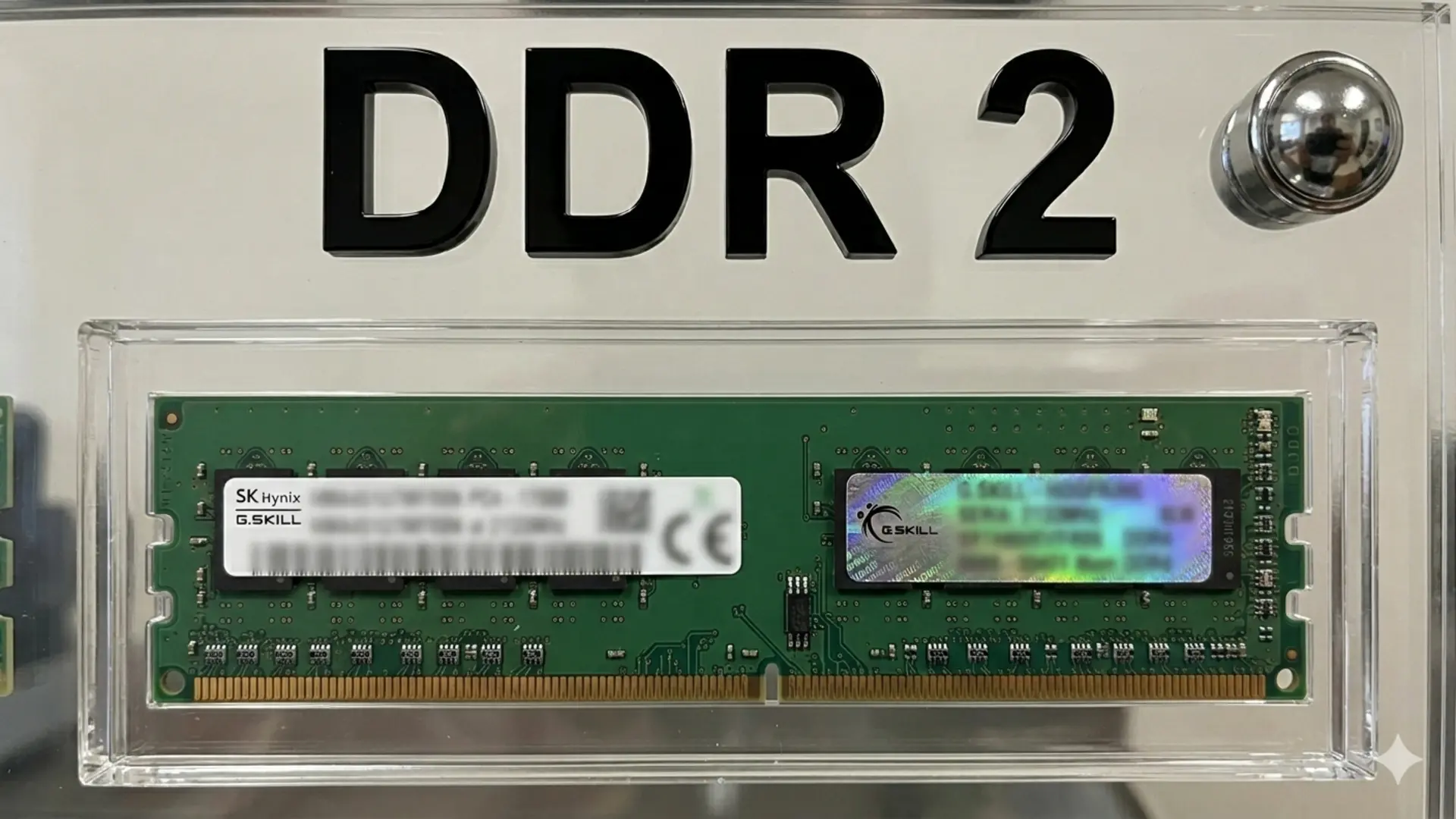
In a surprising twist of market dynamics, the price of 25-year-old DDR2 memory is set to more than double, driven by an unexpected surge in demand from the artificial intelligence sector. This phenomenon, dubbed 'RAM-armageddon' by industry observers, underscores how the insatiable appetite of AI for memory resources is reshaping even the most obsolete corners of the hardware market.
The DDR2 Resurgence
DDR2 SDRAM, introduced in 2003, was the standard for desktop and server memory throughout the mid-2000s. It offered improvements over its predecessor, DDR, by doubling the data transfer rate and reducing power consumption. However, with the arrival of DDR3 in 2007 and later DDR4 and DDR5, DDR2 quickly became a relic, relegated to industrial controllers, embedded systems, and a handful of legacy computers. Production of new DDR2 chips ceased years ago, and the remaining supply comes from old stock, recycled hardware, and decommissioned servers.
Now, that limited supply is facing an unexpected demand spike. According to recent reports, prices for 2GB DDR2 DIMMs have already risen by 30% in the past quarter, with projections indicating a further 70% increase in the coming months. This would effectively more than double the cost of such modules from their already inflated levels.
AI's Insatiable Hunger for Memory
The root cause lies in the explosive growth of AI training and inference workloads. Large language models and image generation tools require enormous amounts of RAM to handle datasets and model parameters. While cutting-edge data centers rely on high-bandwidth memory (HBM) and DDR5, many smaller AI operations, particularly in edge computing and research labs, are turning to older, cheaper hardware. And that includes servers still equipped with DDR2.
Furthermore, the 'AI-driven RAM-armageddon' term reflects a broader stress on the entire DRAM market. As manufacturers prioritize newer, more profitable memory types, fab capacity for legacy nodes is squeezed. This scarcity, combined with the exponential growth in AI-driven data processing, has created a perfect storm. Even though DDR2 is far slower than modern memory, its availability in bulk at a low cost makes it attractive for specific low-latency caching tasks, data buffering, and even as temporary storage in AI inference pipelines where speed is not the primary concern.
Historical Context: The Lifecycle of Legacy Memory
To understand the significance of this price surge, one must look at the typical lifecycle of computer memory. When a new standard emerges, the older generation usually experiences a gradual decline in price as surplus inventory is cleared. Eventually, prices bottom out and then, oddly, often spike again as production stops and supply dries up. This has happened with DDR and DDR3 in the past, but never to the extent seen with DDR2 now. The AI factor is unprecedented.
DDR2 was designed for a different era—its peak clock speeds of 800-1066 MHz are dwarfed by today's DDR5 modules reaching 4800 MHz and beyond. Yet, the sheer number of legacy systems still operational worldwide—estimated in the millions—means that even a small shift in demand can have outsized effects on pricing. Many industrial systems, medical devices, and even some older network switches rely on DDR2, and their operators are now forced to compete with the AI sector for the same dwindling pool of modules.
Market Implications and Speculation
The price hike has sparked speculative buying and panic hoarding among collectors and hobbyists who maintain vintage computing systems. Enthusiasts who build retro gaming PCs or preserve old hardware now find that a 2GB stick of DDR2, once worth a few dollars, can command prices north of $50. Some resellers are already reporting shortages, and online marketplaces show listings for DDR2 modules at three times their value from just a year ago.
From a broader perspective, this event is a cautionary tale about the interconnectedness of technology markets. The AI boom, often associated with cutting-edge innovation, is now causing ripples in the most unexpected places. It also raises questions about the sustainability of using legacy hardware for modern workloads. While reusing old systems can reduce electronic waste, the sudden price volatility could force industries reliant on DDR2 to accelerate migration to newer platforms, which itself carries costs.
Another factor is the role of AI in actually predicting and driving these market shifts. Some analysts suggest that AI models used for supply chain optimization are themselves identifying DDR2 as a component worth stockpiling, further tightening availability. This creates a self-fulfilling prophecy: AI-driven demand analysis triggers hoarding, which in turn raises prices, making the initial analysis correct.
Technical Details: Why DDR2 Matters
DDR2 memory operates at a lower voltage (1.8V) compared to DDR (2.5V) but slightly higher than DDR3 (1.5V). It uses a 240-pin DIMM for desktops and 200-pin SO-DIMM for laptops. The technology introduced prefetch buffers of 4 bits, double that of DDR, allowing higher speeds. Its maximum standard capacity per module was 8GB, though 4GB modules were most common. For AI tasks, these capacities are tiny, but when combined in multi-socket servers with dozens of slots, they can provide tens of gigabytes of memory—enough for smaller models or pre-processing workloads.
The performance gap is significant: DDR2 has a typical latency of 5-5-5-15, while modern DDR5 can achieve CL40 or lower. However, for tasks that are bandwidth-limited rather than latency-sensitive—like bulk data transfer or matrix operations that can be parallelized—the slower speed of DDR2 may be acceptable when the cost per gigabyte is extremely low. But with prices now doubling, that cost advantage evaporates, potentially triggering a switch to newer memory solutions.
Future Outlook
As the AI arms race continues, the demand for any RAM—regardless of generation—may remain high. For DDR2, the next few months will be critical. If the price surge persists, it could force the recycling of yet more old systems to extract their memory modules, further depleting the already scarce supply of functional motherboards and processors. On the other hand, the increased value of DDR2 might incentivize third-party manufacturers to resume production, though that seems unlikely given the specialized fabs required.
In the meantime, users of legacy systems should brace for sticker shock. Whether the 'RAM-armageddon' is a temporary spike or a lasting shift remains to be seen, but one thing is clear: the era of cheap, abundant DDR2 memory has come to an end, thanks in large part to the AI revolution.
Source: TechRadar News