

J.R.R. Tolkien's Final Story: The Fall of Gondolin
J.R.R. Tolkien's latest posthumous book, The Fall of Gondolin, marks what may be the final addition to the legendarium of Middle-earth. Published in 2018, it completes a loose trilogy of tales from the Elder Days, following Beren and Lúthien (2017) and The Children of Húrin (2007). In his preface, Christopher Tolkien, the author's son and longtime editor, writes that he had assumed Beren and Lúthien would be the last story published under his stewardship. However, he was proven wrong: 'I must now say that, in my ninety-fourth year, The Fall of Gondolin is (indubitably) the last.' Christopher's careful editing and significant contributions to the Silmarillion tradition have ensured that his father's legacy remains vibrant. The tale itself recounts the hidden elven city of Gondolin and its tragic fall, a story that Tolkien had drafted as early as 1917, making it one of his earliest conceptions. The book presents multiple versions of the narrative, offering readers a unique glimpse into Tolkien's evolving vision. This final publication underscores the enduring power of mythopoeic storytelling, blending themes of heroism, loss, and redemption that resonate across generations.
Picasso's Early Classical Realism
Before Pablo Picasso became the icon of Cubism and modern art, he was a prodigious young painter working in a naturalistic, realist style. At just 13 years old, he officially began his career, producing works characterized by precise brushwork, a muted color palette, and everyday subject matter. One of his early masterpieces, The First Communion (1896), depicts his sister Lola kneeling at the altar, dressed in white. This large canvas reflects the influence of his father, a painter and art teacher, as well as the artist's own deep Catholic upbringing. Picasso's early works often focused on portraits of family members, still lifes, and scenes from daily life, executed with remarkable technical skill. These paintings are frequently overshadowed by his later avant-garde innovations, but they reveal the solid foundation upon which his revolutionary style was built. Understanding his early period helps contextualize his later experiments with form and perspective, showing that his break from tradition was a deliberate choice rather than a lack of ability. Exhibitions of Picasso's juvenilia continue to draw attention, highlighting the continuity of his artistic journey from realism to abstraction.
The Decline of Deep Reading in the Digital Age
The way we read has changed dramatically, and not for the better, argues neuroscientist Maryanne Wolf in her book Reader, Come Home. Skim reading has become the new normal, driven by the constant influx of digital information. On planes, in coffee shops, and at home, people flit between email, news feeds, and social media, rarely engaging deeply with a text. This shift alters the brain's neuronal circuitry, weakening the capacity for deep, reflective reading. Children learn to scan rather than absorb, while adults lose the ability to follow complex arguments. The consequences extend beyond literacy: critical thinking, empathy, and memory all suffer when reading becomes shallow. Wolf warns that we are inadvertently rewiring our brains for speed over depth, a change that has profound implications for education and society. Efforts to preserve sustained reading—through print books, slow reading movements, and dedicated time away from screens—could counteract this trend, but only if we recognize the stakes. The art of deep reading, once the cornerstone of intellectual life, is at risk of becoming a lost practice.
Why the Myers-Briggs Test Endures
The Myers-Briggs Type Indicator (MBTI) remains wildly popular despite decades of criticism from psychologists. Derived from Carl Jung's theories, the test categorizes people into 16 personality types based on preferences such as introversion versus extraversion, sensing versus intuition, thinking versus feeling, and judging versus perceiving. While scientific consensus holds that the MBTI lacks reliability and predictive validity—people often get different results on retakes—its appeal lies in its simplicity and positivity. It offers a non-judgmental framework for understanding oneself and others, making it popular in corporate training, career counseling, and even personal relationships. The test also fills a cultural void: in an era of identity flux, people crave clear labels for who they are. Yet the MBTI conflates personality with identity, reducing complex human beings to four-letter codes. As Shakespeare explored in his plays, true character is far more multifaceted. Nevertheless, the test's enduring popularity suggests a deep human desire for self-knowledge, even if the tool is flawed. It might be better used as a conversation starter than a definitive measure.
Conservatives and Utopian Imagination
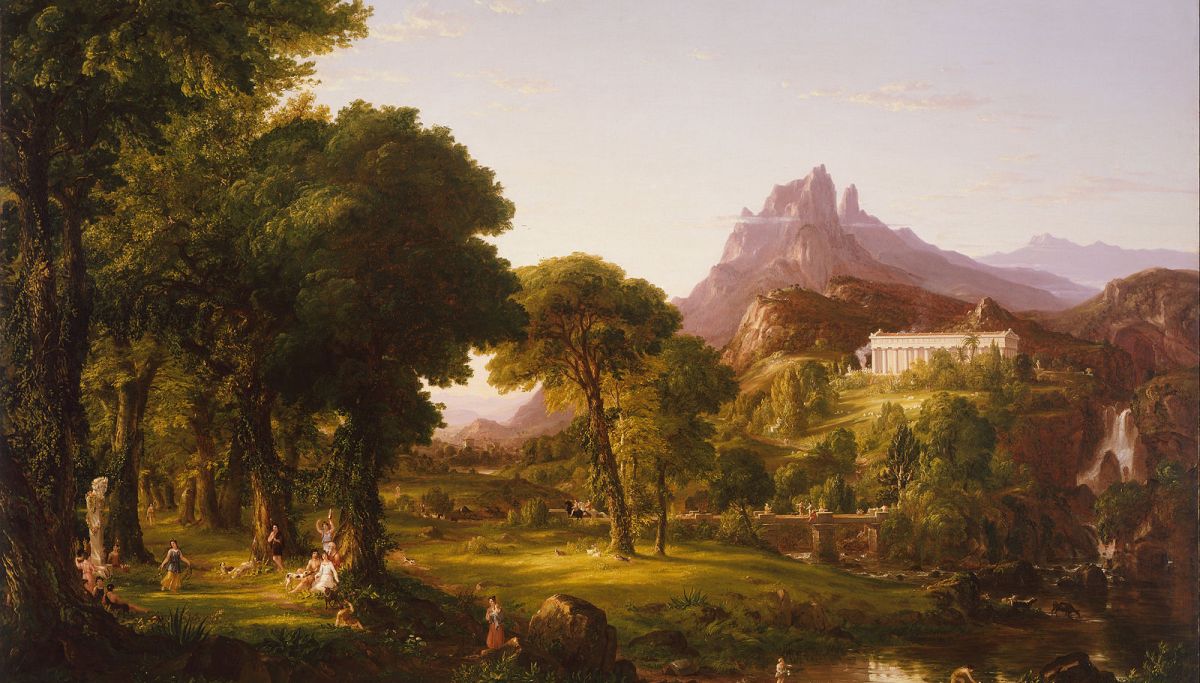
Conservatives often reject utopianism as a dangerous illusion, pointing to the failures of communist and fascist utopias. But Nathan Schlueter argues that a proper utopian imagination is essential to human flourishing. In his essay, he distinguishes between 'utopianism'—the attempt to impose a perfect society by force—and 'utopian imagination,' which is a natural orientation of human desire toward happiness. Drawing on Thomas More's coinage of 'Utopia' (no place) and 'Eutopia' (happy place), Schlueter contends that we all harbor an ideal image of a good life, whether individual or communal. This desire for completeness is not escapism but a necessary motivation for moral and social improvement. Classical conservatives like Edmund Burke understood the importance of prudence and tradition, but they also valued the vision of a just order that inspires reform. For Schlueter, abandoning all utopian thinking leaves conservatism with only a reactive stance, unable to offer a positive vision. Instead, conservatives should recover a sense of hope and purpose rooted in natural law and the common good. Such a vision would reject totalitarian schemes while embracing the imperfect but realizable progress toward a better society.
The Culture of Safety and Its Costs
Thomas Chatterton Williams, writing in The New York Times, reviews two new books that examine how America's obsession with safety is harming public discourse and personal freedom. He recounts the controversy over a poem by Anders Carlson-Wee in The Nation, which used colloquial language to evoke empathy for homeless people. The poem was quickly condemned for 'ableist' and 'disparaging' language, and the magazine appended a lengthy editor's note. Even the poet's apology was criticized for using the phrase 'eye-opening' (allegedly dismissive of the visually impaired). Such incidents, Williams argues, are symptomatic of a culture where hypersensitivity to language stifles honest communication. The roots lie in university campuses, where students are taught to police language and to view speech as potentially causing harm. This mindset has spread through social media, creating a climate of fear and self-censorship. The books under review trace the genealogy of this 'safetyism' from academic theories of microaggressions to online call-out culture. They warn that while the intention may be to protect the vulnerable, the effect is to erode trust, resilience, and the ability to engage across difference. Williams contends that we must relearn how to speak and listen in good faith, tolerating some discomfort in exchange for genuine dialogue. The alternative is a society where everyone walks on eggshells, afraid to utter anything that might be misinterpreted.
The Neuroscience and Sociology of Reading Changes
Beyond the content of what we read, the very act of reading is being transformed by digital platforms. Studies show that the brain does not have a dedicated 'reading center'—it recycles parts of the visual and language systems when we learn to read. The shift to screen reading, with its distractions and hyperlinks, encourages a different neural pathway than the linear decoding of print. Young children who grow up with tablets may develop strong visual-spatial skills but weaker reading comprehension. Adults, too, find it harder to concentrate on long texts after constant exposure to short, fast-paced content. Psychologists refer to this as the 'skimming effect,' where the brain becomes trained to scan for keywords rather than process syntax and argument. This has implications for democratic discourse: if citizens cannot digest complex policy issues, they may become more susceptible to propaganda. Some educators are pushing back by requiring sustained reading in print and teaching students to slow down. Yet the economic and convenience incentives of digital media remain powerful. Balancing the benefits of digital access with the need for deep reading is one of the great educational challenges of our time.
Historical Context of Utopian Thought
The debate over utopianism has deep historical roots. Thomas More's Utopia (1516) launched a genre that includes Francis Bacon's New Atlantis and Tommaso Campanella's City of the Sun. These works imagined ideal societies based on reason, equality, and communal living, but they also contained dark undertones of authoritarian control. During the Enlightenment, thinkers like Rousseau and Condorcet embraced the perfectibility of humanity, while Edmund Burke warned of the violent excesses that could result from abstract ideals. In the 20th century, the ideological utopias of communism and fascism led to totalitarian regimes and mass murder. This history has made many conservatives deeply suspicious of any grand vision, preferring incremental reform. However, Schlueter's argument suggests that jettisoning all utopian longing leaves an empty space that can be filled by nihilism or hedonism. He points to the work of philosopher Josef Pieper, who argued that hope is a virtue that orders desire toward a transcendent future. A sane utopianism would acknowledge human imperfection and the need for limits while still striving for goodness, truth, and beauty. Such a vision could unite conservatives around a positive cultural project rather than mere opposition.
Picasso's Journey: From Prodigy to Icon
Pablo Picasso's early realistic works are often unseen by the public, but they are essential for understanding his later achievements. Born in 1881, he showed remarkable talent as a child, completing sophisticated academic studies by age 16. His First Communion and Science and Charity (1897) won awards and demonstrated his mastery. These paintings reveal the influence of Spanish masters like Velázquez and El Greco. Later, Picasso moved to Paris and entered his Blue Period (1901-1904), marked by melancholic figures and monochromatic tones. This was followed by the Rose Period, and then the revolutionary Cubist breakthrough with Les Demoiselles d'Avignon (1907). While his early work might seem conventional, it gave him the confidence to dismantle representation. Critics have noted that Picasso's 'deformations' were always in dialogue with classical beauty. His proficiency allowed him to see beyond surface appearance into structure and emotion. The 2019 exhibit 'Picasso's Early Work' at the Kunstmuseum Basel brought together many of his juvenilia, showing how a boy who could paint like Raphael later chose to paint like a child. This paradox is at the heart of modernism.
The Enduring Relevance of Tolkien's Legendarium
Since Christopher Tolkien's passing in 2020, the stewardship of his father's literary estate has passed to others. The publication of The Fall of Gondolin was thus a landmark event, closing a chapter begun with The Silmarillion in 1977. The tale itself reveals Tolkien's lifelong fascination with language, myth, and heroism. Gondolin is a hidden city built by the Ñoldor elves, protected by mountains and magic. Its fall to the forces of Morgoth, aided by the betrayer Maeglin, is one of the great tragedies of the First Age. Tolkien's writing style evolved from archaic romance to more modern narrative, which the book captures by presenting multiple drafts. Scholars have praised Christopher's editorial work for its fidelity and clarity. The final publication also sparked renewed interest in Tolkien's other unfinished works, such as the Silmarillion revisions and the 'Athrabeth Finrod ah Andreth.' For fans, The Fall of Gondolin is more than a farewell; it is a testament to a mythic world built with extraordinary depth. The story's themes of sacrifice and loyalty continue to inspire new readers, ensuring that Tolkien's legacy will outlast any single publication.
Source: Washington Examiner News