

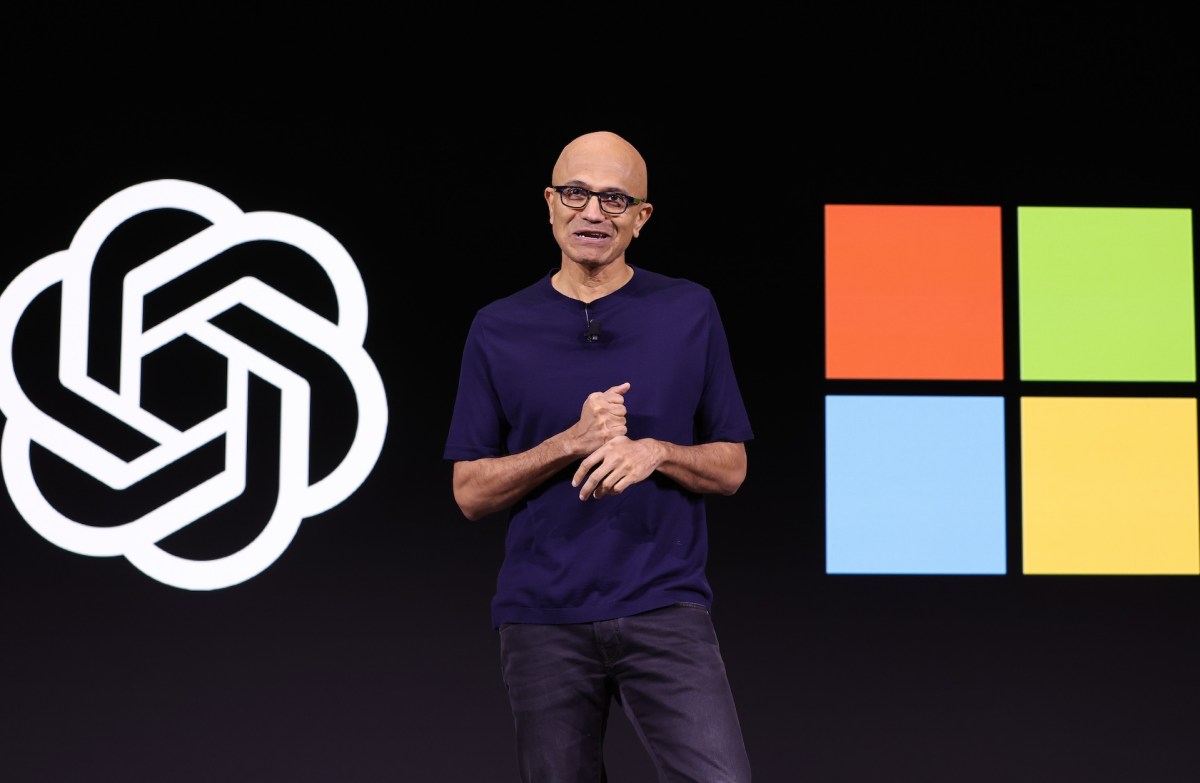
In a stark and unexpected blog post, Microsoft CEO Satya Nadella has warned companies that their reliance on proprietary artificial intelligence models may come at a far higher cost than they realize. The warning, published on Sunday, adds a powerful voice to a growing debate within Silicon Valley about the hidden risks of feeding sensitive business data to AI labs.
Nadella joins a chorus of technology leaders who fear that AI model makers — such as OpenAI and Anthropic — could act as Trojan horses, gaining unprecedented access to the internal workings of the companies that use their models. Venture capitalists like Jason Calacanis and Palantir CEO Alex Karp have previously raised similar concerns, but the involvement of Microsoft's CEO adds significant weight to the argument.
The Problem: Paying Twice for Intelligence
Nadella's central thesis is that enterprises are paying for AI intelligence twice. The first payment is straightforward: the direct cost of API tokens or subscription fees. The second, he argues, is far more insidious: the proprietary knowledge that companies must reveal to make the AI useful. "You essentially pay for intelligence twice, once with money, and again with something even more valuable: the proprietary knowledge you must reveal to make that intelligence useful," Nadella writes. "The better you want the model to perform, the more of that knowledge you have to feed it!"
This is not a trivial concern. As companies train AI models on their unique data — customer interactions, internal processes, trade secrets — they are essentially teaching the models the nuances of their businesses. Nadella highlights that models learn from "exhaust": the prompts users write, the tools agents use, and especially the corrections people make when the model is wrong. "Every correction is distilled into institutional know-how," he writes. This accumulated knowledge, he warns, "is the kind of knowledge a competitor could never buy," yet enterprises are handing it over willingly.
The Hypocrisy of Model Makers
Nadella also targets what he sees as a double standard in the AI industry. Model makers freely scrape the public internet to train their models, often citing fair use. Yet they impose restrictive terms on "distillation" — the practice of using a model's own outputs to learn how it works and to train a cheaper or alternative model. In February, Anthropic accused Chinese open-source models of sending millions of prompts to Claude to improve their own systems, calling for U.S. government intervention. Nadella argues that this is hypocritical: "While the great innovation that comes from model providers having fair use rights to train models on public data is needed, I find it ironic that the status quo is to then turn around and impose restrictive terms on distillation."
He is particularly concerned when model makers "reserve the right to learn from customer usage and interaction data." This practice, he suggests, effectively allows labs to absorb competitive intelligence from their own customers.
Nadella's Proposed Solution
As the CEO of a major cloud provider, Nadella's recommended solution naturally aligns with his company's business model. He urges enterprises to "retain ownership" of their data, including prompts, feedback, and corrections. To do this, he suggests building "proprietary learning environments" in the cloud — a move that would likely benefit Microsoft's Azure platform, where much enterprise data is already stored. He also advocates for the creation of "orchestration layers" that allow companies to easily switch between different AI models rather than being locked into a single provider. This concept has already gained traction through tools like AI gateways.
While Nadella never explicitly mentions open source, the subtext is clear. By retaining control over their data and using flexible orchestration, companies can avoid the trap of handing over their knowledge to any single model maker.
The Growing Shift to Open Source
Industry trends suggest that Nadella's warning is not just theoretical. Large enterprises are increasingly moving away from proprietary models and toward open-source alternatives that they can run on their own premises. Idit Levine, founder and CEO of Solo.io, a company that helps enterprises manage AI systems, reports that her customers are actively exploring this shift. "Can I take an open source model and run it on-prem? It will do almost 90% of what the big one's doing. It will cost way less," she says. "They understand that, and they can control it."
Solo.io's technology was selected by the Linux Foundation for its Agentgateway project, and the company counts major enterprises like T-Mobile, ADP, and SAP as clients. Levine sees on-premise open-source models as the next big wave in enterprise AI adoption.
Other companies are witnessing similar trends. Vercel, known for building and hosting websites, has recently added AI model-switching tools. OpenRouter, which helps developers route requests across different AI models, also reports a surge in traffic to open-source models. In fact, open models accounted for 29% of all traffic routed through Vercel's gateway in the last month. This shift reflects a growing desire among enterprises for control, cost savings, and data privacy.
Broader Context and Implications
Nadella's warning comes at a time when the AI industry is undergoing intense scrutiny. The rapid adoption of generative AI has raised concerns about data security, intellectual property, and the concentration of power among a handful of AI labs. Microsoft itself has invested billions in OpenAI and Anthropic, making Nadella's public admonition particularly striking. It suggests that even the largest backers of proprietary AI recognize the risks of unchecked data leakage.
For enterprises, the message is clear: the convenience of using ready-made AI models may come with hidden strings attached. As companies race to integrate AI into their operations, they must weigh the benefits of immediate performance against the long-term dangers of exposing their core business knowledge. Nadella's call for data ownership and model flexibility offers a path forward, but it also places the onus on businesses to proactively build their own AI infrastructure — potentially on Microsoft's cloud.
The debate over distillation rights and fair use of training data is far from settled. Regulators in the U.S. and Europe are beginning to examine these issues, and the outcome could reshape the competitive landscape. In the meantime, Nadella's blog post serves as a powerful reminder that in the age of AI, the most valuable asset a company possesses may not be its products or services, but the proprietary knowledge that makes them unique. And that knowledge, he warns, is currently being given away for free.
Source: TechCrunch News