

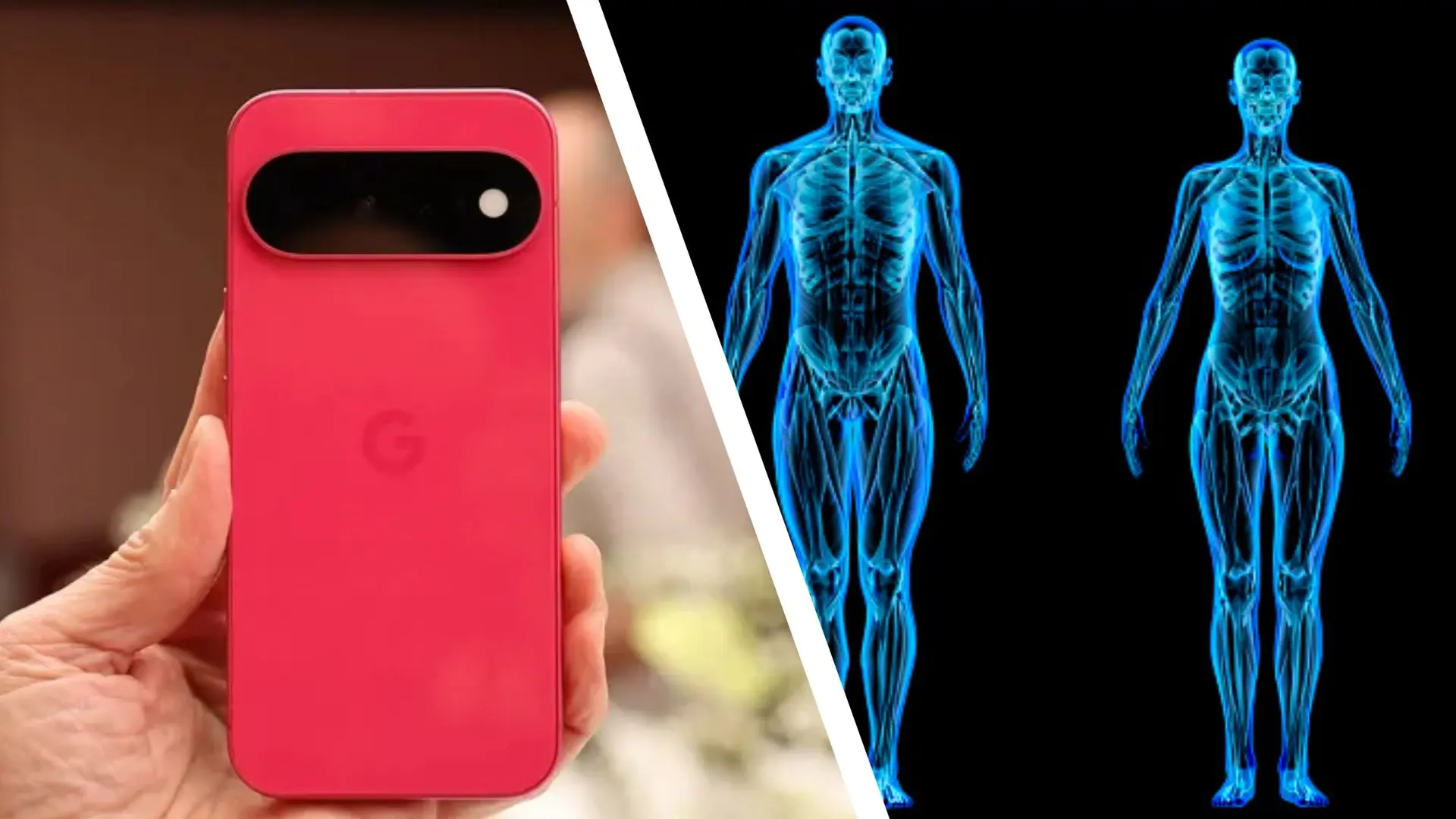
Google has fired a fresh shot in the wearable health wars. The company says the latest AI-powered camera tool on its smartphones can measure body composition more accurately than the bioelectric impedance sensors packed into Samsung's Galaxy Watch. If true, the claim could reshape how millions of people track their fitness.
Key facts
- Google's newest camera-based body measurement tool uses AI and computer vision to estimate body metrics.
- It reportedly outperforms the Galaxy Watch's bioelectric impedance analysis in body measurement accuracy.
- The smartphone feature may offer a no-wearable alternative for tracking body composition.
- Samsung's Galaxy Watch relies on bioelectric impedance sensors, also known as BIA, to estimate body fat and muscle mass.
- The development signals a shift toward camera-based health tracking, with potential privacy and accuracy questions.
What is Google's AI camera body measurement tool?
The new tool uses the smartphone camera to capture a series of images of the user's body. It then applies machine learning algorithms to build a three-dimensional model. From that model, Google claims it can calculate estimates for body fat percentage, muscle mass, and other body composition metrics.
Unlike a smartwatch, which must be worn on the wrist and relies on sensors touching the skin, the camera tool requires no physical contact. The user simply follows an on-screen guide, positions the phone at an appropriate distance, and turns slowly while the camera records the shape and contours of the body.
This approach belongs to a family of techniques called photogrammetry. Photogrammetry has been used for decades in mapping, architecture, and engineering. Only recently have smartphones become powerful enough to run the necessary computer vision algorithms locally. Google's implementation appears to combine photogrammetry with deep neural networks trained on many thousands of body scans.
Early descriptions of the tool suggest it is designed to be simple. There is no special hardware, no infrared sensor, and no need for a separate accessory. The phone's existing camera and processing chip do all the work. That is a major advantage over wearables, which require users to own and charge a dedicated device and wear it consistently.
How does it compare with Galaxy Watch bioelectric sensors?
Samsung's Galaxy Watch uses bioelectric impedance analysis, often abbreviated as BIA. This method sends a very weak electrical current through the body through electrodes on the underside of the watch. The resistance to that current, known as impedance, is used to estimate body fat and lean mass.
BIA is popular in consumer wearables because it is inexpensive and easy to integrate. But its accuracy depends on many factors. Hydration levels, skin temperature, recent food intake, and even the position of the wrist can change the readings. The electrical current also follows the path of least resistance, which means it may not accurately represent the whole body. For example, a Galaxy Watch can only measure the segment between the watch's electrodes, typically the arm and part of the torso. This limits its ability to provide a complete body composition profile.
Google's camera-based method takes a different approach. Instead of measuring electrical properties, it estimates body shape and volume. Using the three-dimensional model, the software can apply anatomic assumptions about tissue density and fat distribution. This can produce a more global estimate that covers the full body, including the abdomen, hips, and legs, areas that matter greatly for health risk assessment.
In comparative tests mentioned in the original report, Google's camera tool produced measurements that were closer to reference standards than the Galaxy Watch's BIA readings. The exact margins of improvement were not detailed, but the implication is clear: a contactless camera method can rival and potentially surpass a sensor-based wearable in this specific area.
The science behind bioelectric impedance and photogrammetry
To understand why a camera might outperform a watch, it helps to understand how each technology works. BIA measures the opposition of body tissues to an alternating electrical current. Lean tissue, which contains more water and electrolytes, conducts electricity better than fat tissue, which is more resistant. By measuring impedance and combining it with age, height, sex, and weight, algorithms estimate body fat percentage.
The problem is that BIA estimates rely on regression equations that may not generalize well across populations. A person who is very muscular, very obese, or older may have different hydration characteristics. The equations used by a particular smartwatch manufacturer may be tuned for a specific demographic, leading to systematic errors. Additionally, since the current flows primarily through water-rich tissues, any change in hydration can drastically alter the result. Drinking a glass of water before a measurement can make a person appear leaner. A workout followed by sweating can make the same person appear to have more body fat.
Photogrammetry, on the other hand, measures geometry. When a camera captures multiple images of the body from different angles, the software identifies common points on the surface and calculates their three-dimensional coordinates. The resulting point cloud becomes a mesh that models the body's shape and volume. From this geometry, the AI can estimate segmental volumes and apply statistical shapes to infer underlying composition.
This method is not entirely new. Researchers have used body scanners and structured-light systems for years in clinical settings. But these systems cost thousands of dollars and required fixed installations. Google's tool takes advantage of modern smartphone cameras with high resolution, depth sensors in some models, and powerful neural processing units that can run complex models in real time. The result is a body measurement tool that is accessible to anyone with a compatible phone.
Why this matters for fitness tracking
For most people, body weight alone is a poor indicator of health. Two people of the same weight can have very different body compositions. One may have high muscle mass and low body fat, while the other may have the opposite. Tracking body fat percentage, lean mass, and waist-to-hip ratios provides a more meaningful view of health changes over time.
The Galaxy Watch and other wearables have made it easier to track these metrics without visiting a clinic. However, many users find wearable-based body composition measurements to be inconsistent. Readings can shift noticeably from day to day, and it is difficult to know whether a change reflects real progress or simply a change in hydration. This uncertainty can be frustrating for people who are trying to lose fat or build muscle.
A camera-based tool could offer a more stable and consistent measurement method. Because it does not depend on electrical current or hydration, it may be less susceptible to short-term biological variability. Users could take a measurement at the same time each week, in the same lighting, with the same distance, and get a more reproducible result. This would allow for better trend tracking and more informed decisions about diet and exercise.
Another advantage is convenience. Many people forget to wear their smartwatch to bed or leave it on the charger during the day. A smartphone is rarely far away. If body composition tracking becomes as simple as launching an app and following a short scan routine, more people may adopt the habit. That could lead to greater engagement with overall health and fitness.
Privacy and security concerns
The shift from wrist sensor to camera is not without risks. A camera-based body measurement tool requires images of a person's body, often with little clothing. These images are highly sensitive data. Users need to know whether the images are processed on the device or uploaded to the cloud. If they are uploaded, there is a risk of data breaches, unauthorized sharing, or use for other purposes.
Google has emphasized on-device AI in many of its recent features, and it may process these body scans locally. But users should still be cautious. The terms of service and privacy settings will determine how much control people have over their body images. Any health-related data also falls under the category of sensitive personal information in many jurisdictions, meaning companies must follow strict regulations.
There is also the potential for misuse. A camera-based tool could be used to judge or shame people about their appearance if it is not handled responsibly. Even if the app is designed for legitimate health tracking, it could be combined with other data to create detailed profiles of individuals. Regulators may need to examine these implications as camera-based body measurement becomes more widespread.
Accuracy limitations
Despite the promising comparison against the Galaxy Watch, photogrammetric body measurement is not perfect. The accuracy of the 3D reconstruction depends on the quality of the camera, the lighting conditions, the background, and the user's posture. Loose clothing can distort the body shape and lead to incorrect estimates. The app may require the user to wear form-fitting clothing or minimal clothing, which not everyone is comfortable with.
In addition, the algorithms must make assumptions about the relationship between external body shape and internal tissue composition. Two people with the same body shape may have different amounts of visceral fat, or fat surrounding the organs. Photogrammetry cannot directly measure what is inside the body. It can only infer from surface geometry and, possibly, reference data from MRI or DEXA scans used during training. For some populations, especially those with unusual fat distributions or very high muscle mass, the estimates may be less accurate.
The Galaxy Watch's BIA sensors also have a role to play because they provide a continuous signal. A smartwatch can measure body composition trends throughout the day, while a camera-based tool requires a deliberate scan. For real-time monitoring, such as tracking fluid changes during a marathon or detecting dehydration, BIA is still more practical. The ideal approach for many users might be a hybrid system that uses both camera scans for accurate baseline measurements and wearable sensors for daily trend tracking.
What this means for Samsung
Samsung has invested heavily in the Galaxy Watch's health features. The bioelectric impedance sensor is one of the key differentiators in its premium smartwatches. If Google's camera tool is truly more accurate, Samsung may need to respond. The company could improve its BIA algorithms, add more electrodes, or explore its own camera-based measurement features.
Other wearable makers could also be affected. Apple, Garmin, and Fitbit all offer body composition estimates or have explored similar features. A camera-based solution from Google could be integrated into Android phones and made available to other hardware partners. This would put pressure on the entire wearable industry to justify the extra cost and inconvenience of a dedicated health sensor.
Samsung is unlikely to abandon its Galaxy Watch lineup. Smartwatches offer many other features that a phone cannot easily duplicate, such as continuous heart rate monitoring, sleep tracking, GPS tracking during workouts, and notifications on the wrist. However, body composition tracking may no longer be a unique selling point. If consumers can get similar or better measurements from a phone app, they may be less willing to pay a premium for a smartwatch.
For now, Google's claim is a product of the fast-moving field of mobile AI. The company is leveraging its strength in machine learning to turn a simple camera into a sophisticated health measurement tool. Whether this tool will be widely adopted depends on its accuracy in real-world conditions, the user experience, and privacy safeguards. What is clear is that the race between camera-based and sensor-based body measurement has begun.
Google and Samsung are likely to continue refining their approaches in the coming months. The next few years will determine whether cameras or sensors become the default way people understand their bodies.
Source: TechRadar News