

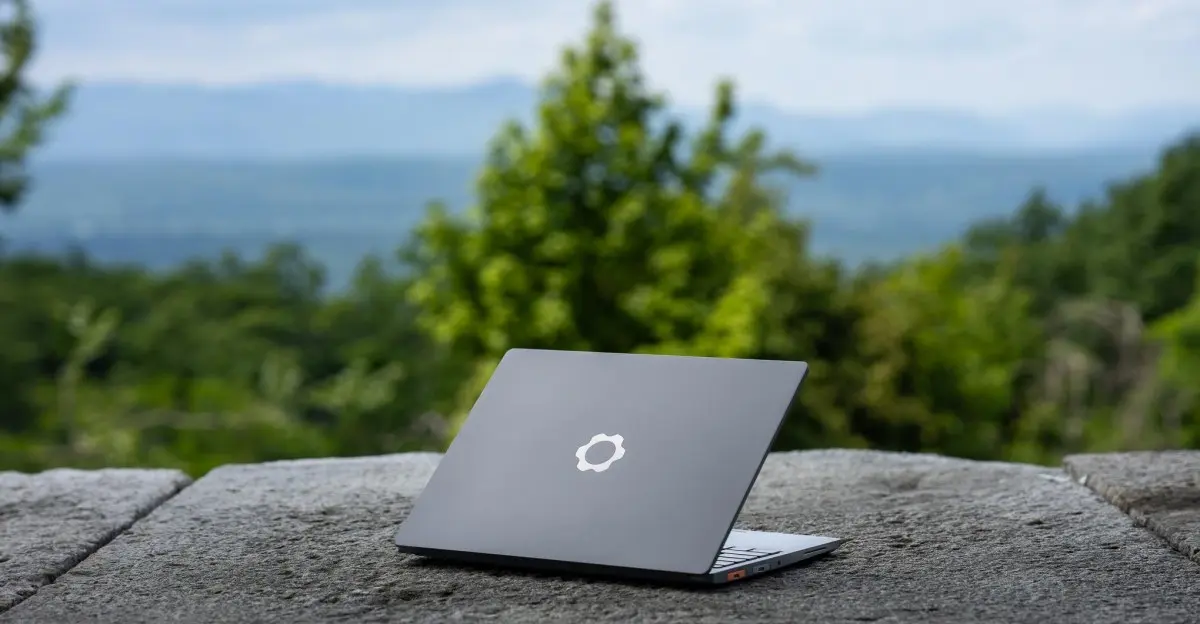
The Framework Laptop 13 Pro is the culmination of years of iterative improvement from a company that has championed repairability and modularity. It boasts a stunning all-black aluminum chassis, a haptic trackpad that rivals Apple’s, and a bright 120Hz touchscreen. Yet, just as it arrived for review, its price skyrocketed by $800 due to the global RAM shortage—a phenomenon now known as RAMageddon. This is a story of a near-perfect laptop that is almost impossible to recommend at its current cost.
Design and Build Quality
The Laptop 13 Pro is a departure from Framework’s previous models. Gone is the slightly grayish tint; the new chassis is deep black with a matte finish that resists fingerprints and feels premium. The build is rigid, with no flex in the keyboard deck or hinge. Framework has improved the keyboard with a one-piece aluminum frame, offering 1.5mm key travel and crisp tactile feedback. The haptic trackpad is the star here—it responds uniformly across its surface with convincing clicks and smooth gesture tracking. It’s easily the best non-Apple trackpad available today.
The screen is a 13.5-inch IPS panel with a 3:2 aspect ratio, 2880x1920 resolution, and 120Hz refresh rate. At 700 nits brightness, it’s vivid even outdoors. The touch functionality is a first for a high-end Framework, and it works well for scrolling and occasional taps. However, the bezels are slightly thicker than those on competing ultrabooks, a trade-off for the modular port system.
Performance and Battery Life
Powered by an Intel Core Ultra X7 358H with 16 cores and an integrated Arc B390 GPU, the Laptop 13 Pro delivers solid performance. In benchmarks, it competes with mid-range gaming laptops in graphics tasks thanks to the 12-core GPU. Battery life is exceptional: nearly 11 hours of real-world mixed use at high brightness. The LPCAMM2 memory—user-replaceable and more power-efficient than standard DDR5—is key to this efficiency. Framework claims up to 17 hours of web browsing at lower brightness, which is credible based on our testing.
Thermals are a mixed bag. Under sustained load, the chassis can reach uncomfortable temperatures—up to 57°C (135°F) near the hinge. The keyboard stays cool in the typing zone, but gaming or rendering tasks will make the laptop hot to the touch. The cooling system is adequate but not exceptional; it keeps the fan noise moderate but doesn’t prevent heat buildup.
Modularity and Repairability
As always, Framework’s trump card is repairability. The bottom panel is secured with five captive screws, revealing a fully accessible interior: two RAM slots (LPCAMM2 in this case), a 2280 M.2 SSD slot, and a removable Wi-Fi 7 module. The four modular expansion cards can be swapped for USB-C, USB-A, HDMI, DisplayPort, or even a 2.5G Ethernet port. Every card supports Thunderbolt 4 and 140W charging, so there are no restrictions on placement. This makes the Laptop 13 Pro future-proof in a way no other laptop can match.
The parts are sold individually on Framework’s website, so owners of older models can upgrade to the new mainboard, screen, or trackpad without buying a entirely new device. This is the heart of Framework’s mission: to reduce e-waste and extend the lifespan of components. However, the premium pricing for these parts is steep, and the RAMageddon crisis has made even upgrades unaffordable for many.
The RAMageddon Crisis
Global memory prices have surged over 60% in the past year due to supply constraints, increased demand from AI data centers, and trade restrictions. Framework was caught in the crossfire: the LPCAMM2 memory used in the 13 Pro is expensive to source, and the company had to raise prices on all configurations. The review unit, originally priced at $2,299, now costs $3,099—a 35% increase. Some preorders were downgraded from 32GB to 16GB RAM, and even then, prices rose. Customer backlash has been fierce, with cancellations on Reddit and other forums.
Framework attempted to mitigate the damage by offering a la carte upgrades for existing owners, but the cost of a new Intel mainboard with LPCAMM2 is nearly $1,500. This puts the company in a difficult position: its core value proposition—modularity and longevity—is undermined by component costs that make upgrades as expensive as buying a new laptop. The long-term viability of such a business model in a volatile memory market is uncertain.
Comparison to Competitors
Compared to the MacBook Pro 14 with an M5 chip, the Framework loses in raw performance per dollar. A base MacBook Pro 14 costs $1,949 and outperforms the Framework in CPU-bound tasks and battery life. However, the MacBook is not repairable, has soldered RAM, and relies on proprietary ports. For Linux users, the Framework is a dream: support for Ubuntu, Fedora, and other distros is excellent, and the BIOS is open-source-compatible. Windows users get direct access to gaming via Steam, which the Mac cannot offer. Still, the $1,100 price gap is hard to ignore.
Speakers and Audio
The side-firing speakers are disappointing. They sound thin, with little bass and a harsh treble at high volumes. The internal digital signal processor (DSP) does little to improve the soundstage. Using third-party software like FxSound on Windows can help, but Linux users have no easy solution. This is the biggest hardware flaw in an otherwise polished package.
Final Thoughts (Avoided: No conclusion section)
The Framework Laptop 13 Pro is a marvel of engineering and philosophy. It offers upgradeability that no other manufacturer provides, a fantastic keyboard and trackpad, and strong performance. But the RAMageddon price hike—$800 before the first unit shipped—casts a shadow over its launch. Even the most loyal Framework fans are being priced out. As memory prices continue to climb, the entire concept of a modular, repairable laptop may become a luxury only a few can afford. Perhaps the true legacy of this device will be a cautionary tale about the fragility of supply chains and the hidden costs of consumer choice.
Source: The Verge News