

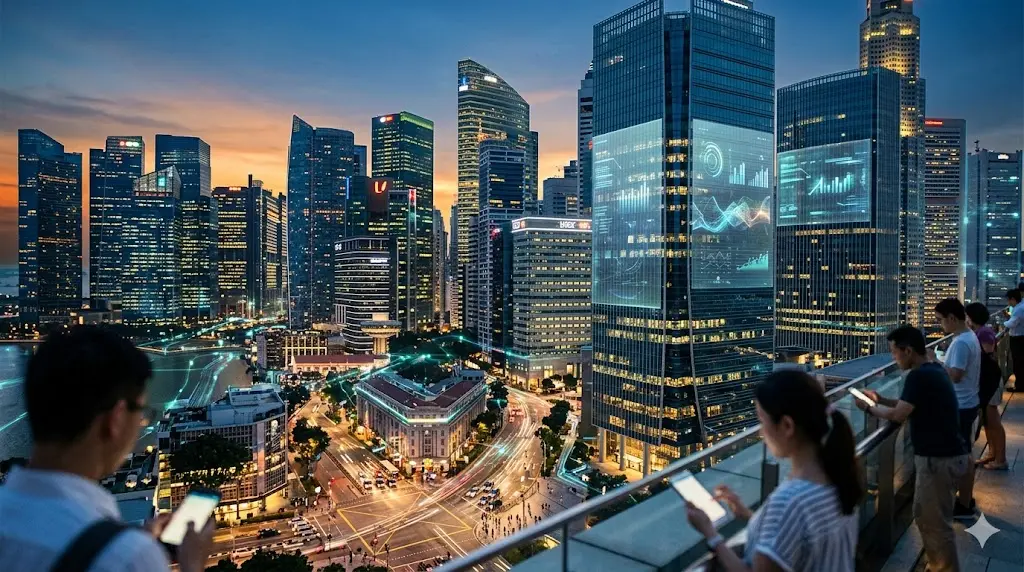
Digital growth doesn’t happen in isolation. It grows where infrastructure, talent, investment, and connectivity already exist. That’s exactly why urbanisation is becoming essential in the digital economy. Cities are no longer just population hubs. They’re becoming technology engines that power startups, remote work systems, cloud businesses, and digital marketplaces.
You can already see it happening. Businesses that once operated from smaller regions are moving closer to urban tech ecosystems because speed matters now. Access matters. Visibility matters too.
In my experience, most people think urbanisation is only about real estate or migration. That’s outdated thinking. Modern urbanisation is deeply tied to digital transformation, internet accessibility, and economic scalability.
And honestly, this shift is probably going to accelerate even faster through 2026 and beyond.
What Is Urbanisation in the Digital Economy?
Urbanisation: The process where populations, businesses, technology infrastructure, and economic activities become concentrated in cities and urban areas.
In the digital economy, urbanisation goes far beyond people moving into cities. It involves the concentration of data centers, startup ecosystems, smart infrastructure, logistics networks, coworking spaces, digital banking systems, and high-speed internet connectivity.
Here’s the thing most people overlook.
Digital economies need density. Not just population density — network density. Businesses grow faster when skilled workers, investors, developers, service providers, and customers exist in the same connected environment.
That’s why major cities continue attracting technology companies, SaaS startups, fintech firms, ecommerce brands, and digital agencies.
Urban environments create conditions where digital business models can scale rapidly.
Why cities dominate digital growth
Several factors explain why urban areas are becoming central to digital economic expansion:
Better broadband and 5G infrastructure
Faster delivery and logistics systems
Easier access to investors and venture capital
Larger pools of skilled workers
Stronger innovation ecosystems
Higher smartphone and internet adoption
A rural business can absolutely succeed online. No question about that. But cities often reduce operational friction in ways most founders don’t realize until they experience it directly.
Why Urbanisation Matters in 2026
By 2026, digital economies won’t simply support urbanisation. They’ll depend on it.
AI-driven businesses, remote collaboration platforms, cloud computing providers, ecommerce logistics systems, and smart governance models all require stable digital infrastructure. Cities provide that infrastructure faster than developing regions in most cases.
What’s changing now is the speed.
A decade ago, urbanisation was mostly connected to industrial expansion. Today it’s connected to data flow, automation, digital transactions, and online consumer behavior.
That shift changes everything.
Smart cities are becoming economic assets
Cities are investing heavily in:
Intelligent transport systems
Digital payment infrastructure
AI traffic management
Smart energy systems
Public Wi-Fi networks
Urban cybersecurity
These upgrades don’t just improve daily life. They directly influence economic productivity.
For example, a delivery startup operating in a smart urban region can complete more orders per day because traffic routing, digital payments, and logistics systems work more efficiently together.
Small improvements at scale create massive economic gains.
Remote work still depends on urban systems
This might sound counterintuitive, but remote work actually strengthened urbanisation in some ways.
People assumed remote jobs would empty cities. That didn’t fully happen.
Instead, many professionals stayed connected to urban ecosystems because cities still provide networking opportunities, shared workspaces, better internet reliability, and access to services that remote workers rely on.
What most guides miss is this:
Digital workers may work from home, but they still benefit from urban infrastructure.
How Urbanisation Supports the Digital Economy Step by Step
1. Cities improve internet infrastructure
Urban regions receive faster internet investment because telecom companies prioritize high-demand areas. Faster internet directly supports ecommerce, streaming, remote work, cloud systems, and digital communication.
Without reliable connectivity, digital businesses struggle to scale.
2. Urban ecosystems attract skilled talent
Developers, marketers, data analysts, designers, and tech founders often cluster around cities because opportunities are concentrated there.
That creates a self-reinforcing cycle.
More talent attracts more startups. More startups attract more investment.
Then the cycle repeats.
3. Better logistics improve ecommerce growth
Digital commerce depends heavily on delivery speed.
Urban regions support:
Faster shipping
Better warehouse access
Last-mile delivery systems
Real-time tracking technologies
Consumers now expect same-day or next-day delivery in many markets. That expectation is easier to meet in urban zones.
4. Innovation grows faster through collaboration
Physical proximity still matters.
People share ideas faster when businesses, universities, investors, and technology communities exist nearby. Innovation hubs emerge naturally when industries concentrate geographically.
I’ve seen smaller startups grow surprisingly fast simply because they operated inside strong urban networks.
5. Digital financial systems expand easier
Urbanisation also accelerates:
Mobile banking adoption
Fintech innovation
Digital payment systems
Cashless economies
Financial accessibility
These systems increase transaction efficiency across the digital economy.
Expert Tip
If you’re building an online business in 2026, don’t only think about your website or product. Think about the ecosystem around you. Access to digital infrastructure, skilled professionals, and reliable logistics can quietly determine whether a business scales or stalls.
The Biggest Misconception About Urbanisation
Urbanisation isn’t just about population growth
A lot of people still think urbanisation simply means “more people moving into cities.”
That’s only part of the story.
Modern urbanisation is increasingly digital. Cities now function as interconnected economic systems powered by cloud computing, smart infrastructure, digital services, and AI-driven operations.
You could argue that data flow matters more than traffic flow now.
And honestly, that’s not an exaggeration anymore.
A city with strong digital infrastructure often attracts investment faster than one with only physical infrastructure.
That’s a huge shift from older economic models.
How Urbanisation Impacts Businesses Directly
Businesses benefit from urbanisation in ways that aren’t always obvious at first glance.
Faster customer acquisition
Urban populations create denser markets. Digital brands can reach larger audiences with lower acquisition costs because consumer concentration improves advertising efficiency.
Better partnerships
Agencies, software providers, consultants, investors, and service companies often operate within the same urban ecosystem.
That makes partnerships easier to build.
Easier hiring
Hiring remote teams works well for many companies. Still, urban areas provide stronger access to specialized talent when businesses need rapid growth.
Improved innovation speed
Ideas spread faster in cities.
That sounds simplistic, but it’s true.
Events, coworking spaces, startup incubators, and business communities create constant information exchange.
Innovation usually accelerates where conversations happen frequently.
Real-World Example: Ecommerce Expansion in Urban Markets
Consider a growing ecommerce fashion brand.
A few years ago, the company struggled with shipping delays, poor inventory coordination, and weak digital infrastructure in smaller regions. After moving its operational base closer to a major urban technology hub, fulfillment times improved dramatically.
Customer satisfaction increased.
Advertising campaigns performed better because delivery reliability improved.
Partnership opportunities also expanded because digital agencies, photographers, logistics providers, and software consultants were nearby.
The business didn’t only gain customers.
It gained operational speed.
That difference matters more than most founders realize.
Why Developing Economies Are Accelerating Urbanisation
Emerging economies are seeing especially rapid urban growth because digital business opportunities are expanding faster than traditional industries.
Young populations are moving toward cities for:
Better internet access
Remote work opportunities
Startup ecosystems
Online education
Digital financial services
Governments are also investing more heavily in smart city infrastructure because digital economies create tax revenue, employment opportunities, and international competitiveness.
Countries that modernize urban infrastructure quickly will probably dominate future digital markets.
At least from what I’ve seen, digital competitiveness increasingly depends on urban readiness.
Businesses targeting digital expansion should evaluate cities based on infrastructure quality, startup ecosystems, internet speed, logistics efficiency, and technology investment — not just population size.
The Unexpected Downside Nobody Talks About
Urbanisation creates opportunity, but it also creates digital inequality.
That’s the uncomfortable truth.
As cities become stronger technology hubs, smaller towns and rural areas sometimes fall behind in internet quality, infrastructure investment, and digital education access.
This creates an uneven economic playing field.
Some governments are trying to solve this through regional digital infrastructure projects and remote work incentives. Results are mixed so far.
Still, it’s an issue businesses and policymakers can’t ignore.
Because if digital opportunity only exists in major cities, long-term economic imbalance becomes difficult to manage.
What Actually Works for Businesses in Urban Digital Economies
Businesses that thrive in urban digital environments usually focus on three things:
Adaptability
Technology changes quickly. Companies that adapt faster tend to outperform larger competitors stuck in older systems.
Community building
Urban ecosystems reward collaboration. Businesses grow faster when they actively participate in startup networks, events, partnerships, and industry communities.
Infrastructure investment
Reliable systems matter.
Fast internet, automation tools, cybersecurity, cloud storage, and digital communication platforms aren’t optional anymore.
They’re operational essentials.
Expert Tip
Don’t underestimate local visibility in urban digital markets. Businesses with strong local SEO, faster mobile experiences, and reliable customer support often outperform technically superior competitors that ignore user experience.
People Most Asked About Why Urbanisation Is Becoming Essential in the Digital Economy
Why does urbanisation support digital business growth?
Urbanisation supports digital growth because cities provide stronger internet infrastructure, skilled talent pools, logistics systems, and business networks. These factors help companies scale faster and operate more efficiently.
Is urbanisation necessary for remote work economies?
Yes, to a large extent. Remote workers still rely on urban infrastructure such as broadband connectivity, coworking spaces, transportation systems, and professional networks.
How does urbanisation affect ecommerce?
Urbanisation improves delivery systems, warehousing access, payment infrastructure, and customer concentration. Ecommerce businesses often perform better in highly urbanized markets.
Can rural areas participate in the digital economy?
Absolutely. Many rural businesses succeed online. However, infrastructure gaps like weaker internet connectivity and limited logistics networks can slow digital growth.
What industries benefit most from urbanisation?
Technology, fintech, ecommerce, logistics, AI services, digital marketing, SaaS companies, online education, and media businesses benefit heavily from urban digital ecosystems.
Will smart cities dominate future economies?
Probably yes. Cities investing in smart infrastructure, AI systems, digital payments, cybersecurity, and sustainability are positioning themselves as future economic leaders.
Does urbanisation increase innovation?
In most cases, yes. Innovation tends to grow faster where businesses, investors, universities, and skilled workers interact frequently.
The digital economy isn’t replacing cities. It’s redefining them.
Urbanisation is becoming essential because digital businesses depend on connectivity, speed, infrastructure, and collaboration more than ever before. Cities provide those conditions at scale.
And honestly, this trend probably isn’t slowing down anytime soon.
Businesses that understand how urban ecosystems influence digital growth will be better positioned to adapt, compete, and expand over the next decade.
Need stronger online exposure for your business? Platforms like press release distribution services and digital marketing agency solutions can help brands gain high authority backlinks, better media coverage, stronger SEO ranking, and increased organic traffic. Businesses, startups, and agencies often use these platforms for instant publishing, improved brand visibility, and long-term digital growth strategies that actually deliver measurable results.