

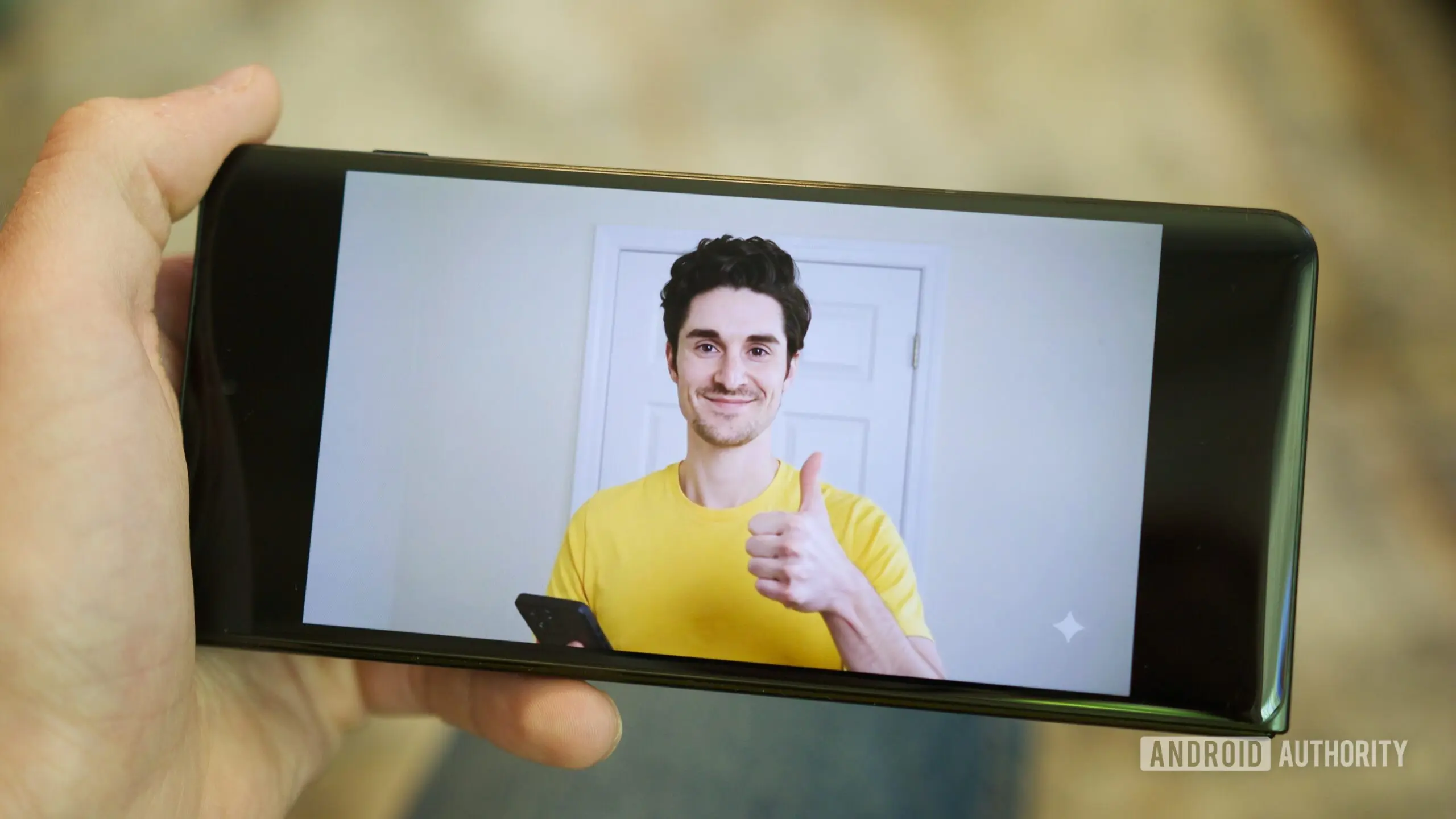
Video editing has traditionally been a time-intensive craft, demanding precise attention to lighting, background selection, and repeated takes to capture the perfect moment. Google is now rewriting that playbook with a sweeping update to its cloud-based video creation tool, Google Vids. The latest enhancements center on the integration of Gemini Omni, Google's multimodal video generation model first showcased at I/O 2026, alongside the introduction of personal AI avatars and advanced voice control capabilities.
Introducing Gemini Omni: The Brain Behind the Transformation
At the heart of this overhaul is Gemini Omni, a breakthrough model designed to understand and generate video content from text, images, and audio inputs. Unlike earlier AI tools that required users to manually sequence clips or apply filters, Gemini Omni allows for seamless, conversational interaction. Users can describe their desired video changes in plain language, such as "change the background to a beach at sunset" or "add dramatic lighting to the subject." The model interprets these prompts and applies them in real time, effectively eliminating the need for a traditional timeline editor.
This capability builds on Google's long-term investment in generative AI, with Gemini Omni representing a natural progression from text-based language models to multimedia understanding. The model was initially demonstrated at Google I/O 2026, where it impressed audiences with its ability to generate coherent video sequences from textual descriptions. Now, integrated into Google Vids, it promises to democratize video creation for professionals and casual users alike. For instance, a marketing team can quickly create product demos, educators can craft instructional videos, and social media creators can produce engaging content without extensive post-production skills.
Personal AI Avatars: Your Digital Mirror
One of the most visually striking features is the personal avatar system. Previously limited in scope, Google Vids now allows users to create a digital representation of themselves by uploading a single selfie and recording a short voice sample. The AI then builds a photorealistic avatar that can deliver any typed script with synchronized lip movements and natural facial expressions. This functionality is particularly valuable for users who need to appear in videos but cannot, or prefer not to, stand in front of a camera.
To ensure responsible use, Google has implemented several safeguards. Personal avatars are restricted to the account holder's likeness, meaning users cannot generate avatars resembling other individuals. Additionally, the feature is only available to users over 18 in supported regions. Every AI-generated clip includes an invisible watermark, called SynthID, which can be used to verify the video's origin. SynthID, a technology developed by Google DeepMind, embeds an imperceptible digital signature into the pixels, making it possible to detect if a video was created or altered by AI. This is a critical tool in combating misinformation and deepfakes.
Fine-Tuned Voice Control with Steering Tags
Beyond visual customization, Google Vids offers unprecedented control over AI narration. Users can now insert bracketed commands directly into their scripts to modify the avatar's delivery. For example, typing "[excitedly]" will cause the avatar to speak with heightened enthusiasm, while "[thoughtfully]" can slow down the pace and add introspective pauses. Other tags can control emotion, pacing, and even introduce background sound effects. When a user types an opening bracket, Vids suggests available steering tags, streamlining the process. For those who prefer automation, the new "Apply audio tags" option automatically inserts appropriate emotional cues throughout the script based on the content analysis.
This level of granularity opens up professional-grade voice direction to anyone. A tutorial video can shift from an upbeat introduction to a serious, detailed explanation without requiring the creator to manually re-record audio. The voice-steering tools are now rolling out across both Rapid Release and Scheduled Release domains, supporting Google Workspace Business and Enterprise editions, Education Plus, nonprofit organizations, and individual users, including those with Google AI Pro and Ultra subscriptions. Administrators do not need to enable anything—the feature activates automatically for eligible accounts.
Underlying Technology and Ecosystem Integration
Google Vids is part of a broader suite of AI-powered productivity tools within Google Workspace. The integration with Gemini Omni leverages the same infrastructure that powers features in Docs, Gmail, and Meet. For instance, the language model's ability to understand context and user intent is drawn from the same advancements that allow Gemini to summarize emails or draft documents. The video generation model, however, adds a temporal dimension, requiring synchronization of visual elements with audio and script.
The use of SynthID watermarking also aligns with Google's responsible AI framework. By embedding traceable signatures in all AI-generated media, Google aims to maintain transparency and trust. The watermark is robust enough to survive editing, compression, and re-encoding, making it a reliable tool for content verification. This is particularly important as generative video tools become more accessible and the risk of malicious use increases.
Availability and Practical Implications
The updated Google Vids is rolling out to a wide range of users. All US Google account holders can access the personal avatar feature, while Gemini Omni integration and voice steering tags are available in more than 26 languages across supported regions. The tools are designed to work with existing Google Drive storage, allowing users to import images, videos, and audio clips. Once created, videos can be exported in standard formats or shared directly through Google Drive.
For businesses, this update represents a significant cost and time saving. Marketing departments can produce high-quality video prototypes without hiring video editors, while remote teams can maintain a consistent presenter presence through avatars. Educators can create personalized lesson materials with synchronized narration and visual cues. Individual content creators can experiment with new formats and styles with minimal overhead.
The implications for creative workflows are substantial. Traditional video editing requires specialized software, hardware, and expertise. Google Vids, with its AI-first approach, lowers the barrier to entry while offering advanced customization that can rival dedicated editing suites. As the technology matures, we can expect even more sophisticated features, such as real-time collaboration on video projects and integration with other Google services like YouTube and Google Photos.
Google's emphasis on safety and controllability is also a model for the industry. By limiting avatars to the user's own likeness and embedding SynthID watermarks, the company addresses potential ethical concerns head-on. This approach may set a precedent for other AI video tools as they emerge. Meanwhile, the voice steering tags demonstrate a commitment to fine-grained user control, ensuring that the AI serves as a creative partner rather than a black box.
As the rollout continues over the coming weeks, users are encouraged to explore the new capabilities. The integration of Gemini Omni, personal avatars, and expressive voice controls marks a pivotal moment in the evolution of video creation, making it more intuitive, accessible, and responsible than ever before.
Source: Android Authority News