

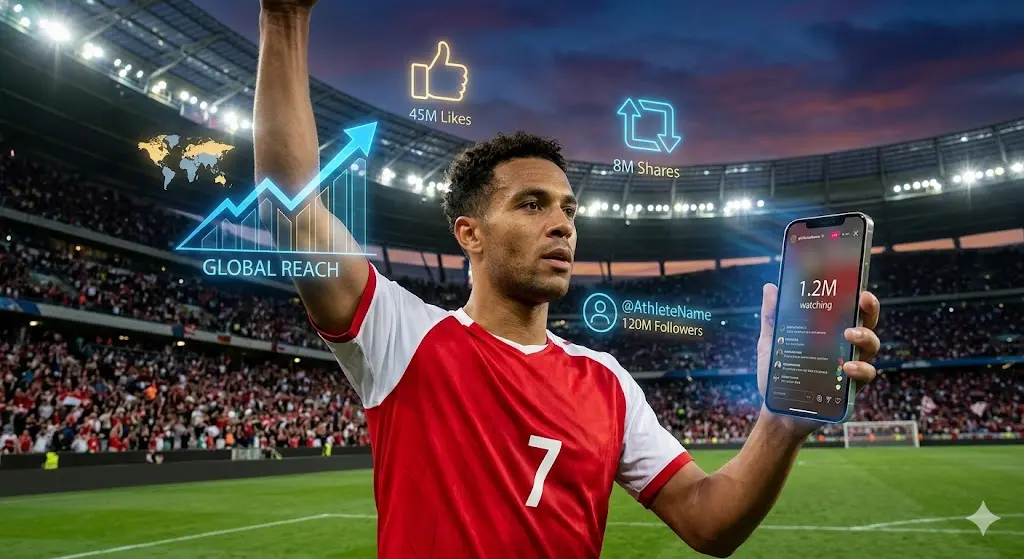
Social media influence is changing the sports industry worldwide by reshaping fan engagement, athlete branding, sponsorship strategies, and even how teams generate revenue. Sports organizations now rely heavily on digital platforms to build global audiences, attract younger fans, and create direct communication channels that traditional broadcasting alone could never achieve.
Why social media influence is changing the sports industry worldwide comes down to visibility, fan interaction, and digital reach. Athletes, teams, leagues, and sponsors can now connect with audiences instantly, creating stronger engagement, new revenue opportunities, and faster global exposure through online platforms and real-time content.
Why Social Media Became So Powerful in Sports
Sports used to depend heavily on television networks, newspapers, and live attendance for exposure.
That system worked for decades.
Then social media changed the rules almost overnight.
Now a single athlete can reach millions of fans directly without waiting for media interviews or official press coverage.
Here’s the thing. Fans no longer want polished corporate messaging all the time. They want personality, reactions, behind-the-scenes moments, and real conversations.
That emotional connection is incredibly valuable.
In my experience, younger audiences often feel more connected to athletes through short videos and personal updates than through actual game broadcasts.
That sounds strange at first, but it’s probably true.
Research increasingly shows that sports consumption is becoming more relationship-driven rather than purely event-driven.
What Is Social Media Influence in the Sports Industry?
Social Media Influence in Sports refers to the impact digital platforms have on fan engagement, athlete branding, sports marketing, sponsorship value, content distribution, and global audience growth.
This influence extends far beyond posting match highlights.
Teams now use social media for ticket sales, merchandise promotion, sponsorship campaigns, community building, and crisis communication.
Athletes use it to build personal brands and control public narratives.
What most people overlook is this: social media didn’t replace sports broadcasting.
It expanded the sports experience into a 24-hour conversation.
That shift completely changed how sports businesses operate.
A Realistic Example
Imagine a basketball player posting training clips daily.
Fans engage constantly, sponsors notice growing interaction, and media outlets start covering the athlete more frequently.
Even during the offseason, attention stays high.
A decade ago, maintaining that level of visibility would’ve been almost impossible.
Why Social Media Influence Matters in Sports in 2026
By 2026, digital influence will probably become even more important because fan attention is increasingly fragmented across platforms.
Sports organizations now compete with entertainment creators, streamers, influencers, and gaming content for audience attention.
That competition changes marketing strategies dramatically.
Several Trends Are Driving This Shift
Fans Want Instant Access
People expect live reactions, quick updates, highlights, and direct engagement immediately after games.
Waiting for next-day coverage feels outdated now.
Athlete Branding Is Bigger Than Ever
Some athletes attract audiences larger than entire sports franchises.
That individual influence changes sponsorship dynamics significantly.
Global Reach Has Expanded
Social media allows local teams and smaller leagues to reach international audiences without traditional broadcasting deals.
Honestly, that’s one of the biggest shifts in modern sports business.
Expert Tip
Sports organizations should focus less on follower counts and more on meaningful engagement. Smaller but highly active communities often generate stronger loyalty and higher conversion rates than massive passive audiences.
How Social Media Is Transforming the Sports Industry Step by Step
Research consistently shows clear patterns in how digital platforms influence sports globally.
1. Athletes Build Personal Brands
Players now create identities beyond the field or court.
Social media allows them to showcase personality, training routines, opinions, and lifestyle content directly to fans.
2. Sponsorship Opportunities Expand
Brands increasingly choose athletes and teams based on digital engagement rather than only performance statistics.
Engagement metrics now influence sponsorship deals heavily.
3. Fan Interaction Becomes Constant
Social media transformed sports from scheduled entertainment into ongoing conversation.
Fans interact before, during, and after events continuously.
4. Content Distribution Speeds Up
Highlights, reactions, interviews, and fan-created content spread globally within minutes.
That rapid distribution increases exposure dramatically.
5. Smaller Sports Gain Visibility
Niche sports and emerging leagues can now build audiences online without depending entirely on traditional media coverage.
That accessibility matters a lot.
6. Revenue Streams Diversify
Teams and athletes generate income through sponsored posts, digital memberships, merchandise promotion, and exclusive online content.
The Misconception Most People Have About Sports Social Media
A lot of people assume social media success is mainly about viral content.
That’s only part of the picture.
Here’s what most guides miss: consistency usually matters more than occasional viral moments.
I’ve seen sports accounts with moderate follower counts outperform larger accounts because their audiences genuinely trust and engage with the content.
That relationship factor changes everything.
A Counterintuitive Point
Sometimes overproduced content performs worse than simple authentic posts.
Fans often respond better to imperfect behind-the-scenes clips because they feel more personal.
That authenticity trend is becoming harder for traditional marketing departments to replicate naturally.
Social Media Influence Across Different Areas of Sports
Professional Athletes
Athletes increasingly function as independent media brands.
Some players earn substantial sponsorship income through online engagement alone.
Sports Teams and Franchises
Teams use social media for ticket promotions, fan interaction, community campaigns, and global audience expansion.
Digital content now influences brand identity heavily.
Sponsors and Advertisers
Brands prefer partnerships that create measurable engagement rather than generic visibility.
That’s why influencer-style athlete campaigns continue growing.
Sports Journalism
Social media accelerated sports reporting cycles dramatically.
Fans often receive breaking news directly from athletes or teams before traditional reporters publish stories.
Youth and Amateur Sports
Young athletes use digital platforms for exposure, recruitment opportunities, and personal branding earlier than ever before.
Honestly, that creates both opportunities and pressure.
Expert Tip
Sports brands should avoid trying to copy every trending format online. Audiences usually recognize forced content quickly. Consistent tone and authenticity often outperform trend-chasing strategies.
What Actually Works in Sports Social Media
A lot of organizations focus too heavily on polished graphics and scheduled campaigns.
Those things matter somewhat, but they’re not enough anymore.
What actually works is emotional connection.
My Personal Opinion
I think sports fans care less about “perfect branding” than marketers assume.
People follow sports because they want emotion, unpredictability, rivalry, excitement, and personality.
Overly corporate content often removes those elements completely.
A Mini Case Study
Imagine two football clubs.
Club A posts only formal announcements and polished marketing graphics.
Club B shares locker room moments, player reactions, travel clips, fan interviews, and casual behind-the-scenes content.
Research generally shows Club B develops stronger engagement and more loyal online communities even if both teams perform similarly on the field.
Fans want access.
Not just advertising.
How Sports Organizations Can Improve Social Media Strategy
Teams and leagues trying to improve digital influence should focus on long-term audience relationships rather than short-term metrics.
Prioritize Authenticity
Audiences respond better to honest communication than overly controlled messaging.
That doesn’t mean abandoning professionalism. It means sounding human.
Use Short-Form Content Effectively
Quick clips, reactions, and fan-focused content usually perform strongly because audiences consume sports content rapidly.
Involve Athletes More Directly
Athlete participation increases engagement significantly because fans connect more deeply with personalities than logos.
Build Community Conversations
Sports communities thrive when fans feel included in discussions rather than treated only as consumers.
Expert Tip
Sports organizations that respond actively to fans often build stronger long-term loyalty than brands relying only on scheduled promotional content.
People Most Asked About Why Social Media Influence Is Changing the Sports Industry Worldwide
Why is social media important in sports?
Social media helps teams, athletes, and leagues connect directly with fans, expand global reach, improve engagement, and create new sponsorship opportunities.
How do athletes benefit from social media?
Athletes build personal brands, attract sponsorship deals, communicate directly with fans, and increase visibility beyond sports performance alone.
Does social media affect sports marketing?
Yes. Sponsorship decisions increasingly depend on digital engagement, audience interaction, and online visibility rather than only television exposure.
Can smaller sports grow through social media?
Absolutely. Social platforms allow niche sports and smaller leagues to build international audiences without relying entirely on traditional broadcasting networks.
What type of sports content performs best online?
Behind-the-scenes videos, emotional reactions, short highlights, athlete interactions, and authentic storytelling often perform strongly.
Are sports organizations relying too much on social media?
Some probably are. Overdependence on trends and constant engagement can create pressure and distract from long-term brand identity if not managed carefully.
What is the biggest challenge in sports social media?
Maintaining authenticity while balancing sponsorship demands, audience expectations, and constant content production remains difficult for many organizations.
Final Thoughts on Why Social Media Influence Is Changing the Sports Industry Worldwide
Why social media influence is changing the sports industry worldwide comes down to connection. Fans no longer experience sports only through broadcasts and stadium attendance. They experience it continuously through conversations, content, reactions, personalities, and online communities.
The teams and athletes growing fastest globally usually aren’t just winning games. They’re building relationships that keep audiences emotionally invested every single day.
And honestly, that shift is probably permanent.
Businesses, startups, bloggers, and agencies aiming to improve brand visibility, SEO ranking, media coverage, and organic traffic can benefit from trusted platforms offering global newswire services and digital marketing company solutions that support instant publishing, high authority backlinks, and stronger online growth opportunities.