

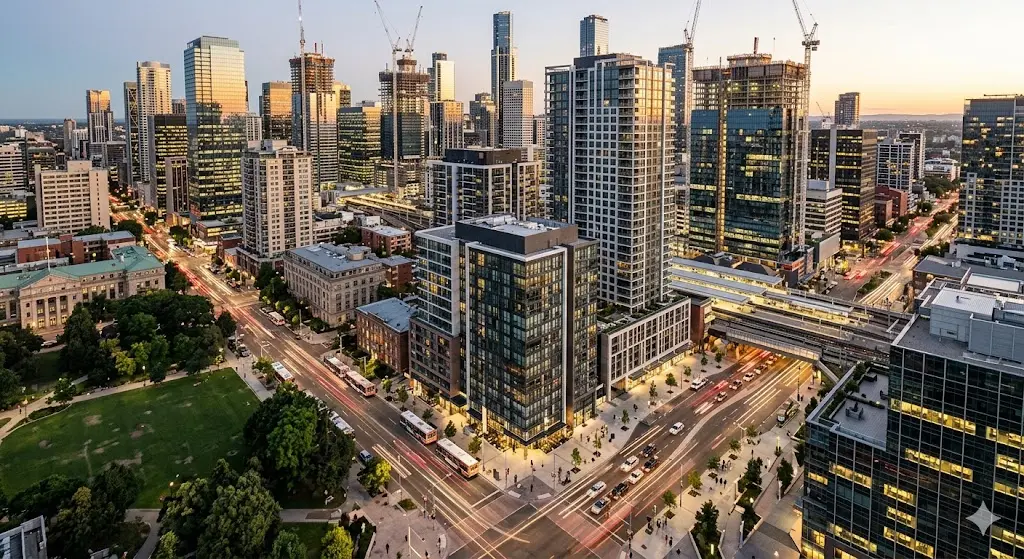
Why urbanisation is reshaping real estate investment worldwide comes down to one simple reality: people keep moving toward cities, and investors follow population movement. Urban growth changes housing demand, commercial property value, infrastructure planning, rental markets, and even long-term investment strategy across global real estate sectors.
Urbanisation reshapes global real estate investment because growing cities create higher demand for housing, infrastructure, commercial space, and mixed-use developments. In 2026, investors increasingly focus on smart cities, rental housing, transit-connected communities, and high-density urban projects to match shifting population trends.
What Is Urbanisation and Why Does It Matter?
Urbanisation — the process where more people move from rural areas into cities, increasing urban population growth and changing economic activity.
Urbanisation affects nearly every part of the global housing and investment market. As cities expand, demand rises for:
residential housing
office spaces
retail districts
transportation infrastructure
mixed-use developments
Here’s the thing most people overlook: urbanisation isn't just about population growth.
It’s really about lifestyle concentration.
People move toward cities because they want:
better jobs
faster connectivity
education access
healthcare infrastructure
entertainment and convenience
That migration creates huge pressure on real estate markets.
In my experience, investors who understand demographic movement early usually outperform those chasing short-term trends.
Cities don’t grow randomly. Demand leaves clues.
Why Urbanisation Matters in 2026
Urbanisation matters even more in 2026 because several global shifts are happening at once:
remote work evolution
migration toward economic hubs
infrastructure expansion
rising rental demand
smart city investment
Major urban regions continue attracting talent and business growth.
That directly affects property value.
Expert Tip
Investors increasingly prioritize areas with strong transportation expansion because connectivity often predicts future housing demand.
Urban Growth Is Becoming More Regional
Interestingly, mega-cities aren't the only winners anymore.
Secondary cities now attract significant investment because:
living costs remain lower
infrastructure improves rapidly
remote work increases flexibility
governments support regional growth
That trend surprised many analysts initially.
A few years ago, investors mainly focused on large capital cities. Now mid-sized urban regions often generate better long-term returns.
How Urbanisation Reshapes Real Estate Investment — Step by Step
Understanding why urbanisation is reshaping real estate investment worldwide becomes easier when you break the process into stages.
1. Population Growth Increases Housing Demand
More people moving into cities creates immediate housing pressure.
Demand rises for:
apartments
rental properties
affordable housing
co-living spaces
suburban developments
Developers respond quickly when occupancy rates tighten.
2. Infrastructure Expands Around Urban Centers
Governments invest heavily in:
transit systems
roads
airports
utilities
digital infrastructure
Real estate values often rise near major infrastructure projects.
Honestly, transportation access alone can transform overlooked neighborhoods into high-demand investment zones.
Expert Tip
Transit-oriented development often attracts both residential and commercial investors because convenience drives long-term demand.
3. Commercial Real Estate Evolves
Urbanisation changes how businesses use space.
Demand grows for:
flexible offices
mixed-use developments
logistics hubs
urban warehouses
technology campuses
Traditional office districts are evolving rather than disappearing.
4. Rental Markets Expand Rapidly
Many urban residents delay homeownership because of affordability challenges.
That increases demand for:
rental apartments
build-to-rent communities
flexible housing models
Investors increasingly view rental housing as stable long-term income.
5. Smart City Development Attracts Capital
Cities adopting smart infrastructure often attract stronger investment interest.
That includes:
energy-efficient buildings
digital infrastructure
smart transportation
sustainable planning
Investors pay close attention to modernization strategies.
Common Misconception About Urbanisation
Urbanisation Only Benefits Large Cities
Not necessarily.
Some of the strongest investment growth now appears in emerging urban corridors and secondary cities.
That’s the counterintuitive part.
In many cases, investors chasing ultra-expensive global cities face lower yields than those targeting growing regional urban centers.
What most people miss is that affordability increasingly shapes migration patterns too.
Why Mixed-Use Developments Are Growing Fast
Urban residents increasingly want convenience within walking distance.
Developers now combine:
residential housing
retail spaces
offices
wellness centers
entertainment zones
inside integrated communities.
That model supports denser city living while improving lifestyle accessibility.
Realistic Example: Transit-Centered Communities
A city expands a metro line into a developing suburban district. Within three years:
apartment construction increases
retail occupancy rises
rental demand strengthens
land values climb
Investors who entered early typically see stronger returns than late-stage buyers.
I’ve seen this pattern repeat across multiple global markets.
How Technology Changes Urban Real Estate
Technology now shapes urban property investment heavily.
Smart infrastructure improves:
traffic management
energy efficiency
security systems
building operations
tenant convenience
Modern buyers and renters increasingly expect connected living environments.
That expectation changes development priorities.
Expert Tip
Properties integrating sustainability and technology features often maintain stronger long-term competitiveness in urban markets.
Why Sustainability Matters in Urban Investment
Urbanisation creates environmental pressure.
Cities therefore prioritize:
green buildings
renewable energy
sustainable transport
efficient land use
Developers ignoring sustainability may struggle long term.
And honestly, younger buyers increasingly notice environmental impact more than previous generations did.
That behavioral shift matters financially.
The Emotional Side of Urban Living
Housing decisions aren’t purely financial.
People choose cities because they want:
opportunity
social connection
convenience
cultural access
career mobility
Urbanisation reflects emotional aspiration as much as economic logic.
That’s probably why demand remains strong even when urban living costs rise.
My Personal Take
I think many investors underestimate how deeply lifestyle identity influences property markets now. People increasingly choose neighborhoods based on personal values and daily experience rather than simple commuting distance.
That changes everything from retail demand to rental retention.
Why International Investors Focus on Urban Markets
Global investors often target cities because urban assets provide:
liquidity
population growth
economic concentration
infrastructure support
diversified demand
Cities usually recover faster during economic shifts compared to isolated regions.
That resilience attracts institutional capital.
Mini Case Study: Emerging Urban Districts
A developing financial district receives:
transit investment
technology company expansion
residential construction
entertainment infrastructure
Within five years, property demand increases sharply as professionals relocate to the area.
Rental yields strengthen first. Property values follow later.
That sequence happens pretty often in growing urban economies.
Expert Tips: What Actually Works in Urban Real Estate Investment
Watch Infrastructure Before Prices
Infrastructure investment often predicts future market demand better than current pricing trends.
Transportation matters enormously.
Don’t Ignore Rental Demographics
Urban populations increasingly include:
young professionals
remote workers
international residents
flexible households
Understanding tenant behavior improves investment decisions.
Expert Tip
Neighborhoods near universities, technology hubs, and transportation corridors often maintain stronger occupancy during slower markets.
Study Lifestyle Trends Carefully
Modern buyers increasingly prioritize:
walkability
wellness access
mixed-use convenience
digital connectivity
Those factors now influence investment performance more than many traditional metrics alone.
People Most Asked About Why Urbanisation Is Reshaping Real Estate Investment Worldwide
What does urbanisation mean in real estate?
Urbanisation refers to growing city populations that increase demand for housing, infrastructure, and commercial property investment.
Why does urbanisation affect property prices?
More people moving into cities increases competition for housing and commercial space, which often raises property values.
Are secondary cities becoming good investments?
Yes. Many secondary cities now attract strong investment because of affordability, infrastructure growth, and expanding job markets.
How does urbanisation impact rental markets?
Urbanisation increases rental demand as more residents relocate to cities for work, education, and lifestyle opportunities.
What is transit-oriented development?
Transit-oriented development focuses on building communities near transportation systems like metro lines and rail networks.
Why do investors prefer urban markets?
Urban markets usually provide stronger population growth, economic activity, and long-term property demand.
How does technology influence urban real estate?
Technology improves building efficiency, connectivity, sustainability, and tenant experience within modern urban developments.
Will urbanisation continue growing globally?
Probably yes. Most forecasts suggest urban populations will continue increasing across many international regions over the next decade.
Final Thoughts
Why urbanisation is reshaping real estate investment worldwide becomes clearer when you look at how people actually live, work, and move today. Cities continue attracting opportunity, talent, infrastructure spending, and economic activity.
That momentum changes housing demand, commercial development, and investment strategy across global markets.
Real estate investors increasingly focus on connectivity, sustainability, rental demand, and lifestyle-driven urban planning rather than relying only on traditional property models.
And honestly, the biggest opportunities often appear before cities fully transform — not after everyone notices the trend.
Businesses, agencies, startups, and SEO professionals aiming to improve organic traffic and strengthen brand visibility often combine trusted global newswire services with professional digital marketing services to secure high authority backlinks, increase media coverage, boost SEO ranking, and achieve instant publishing across competitive online markets.