

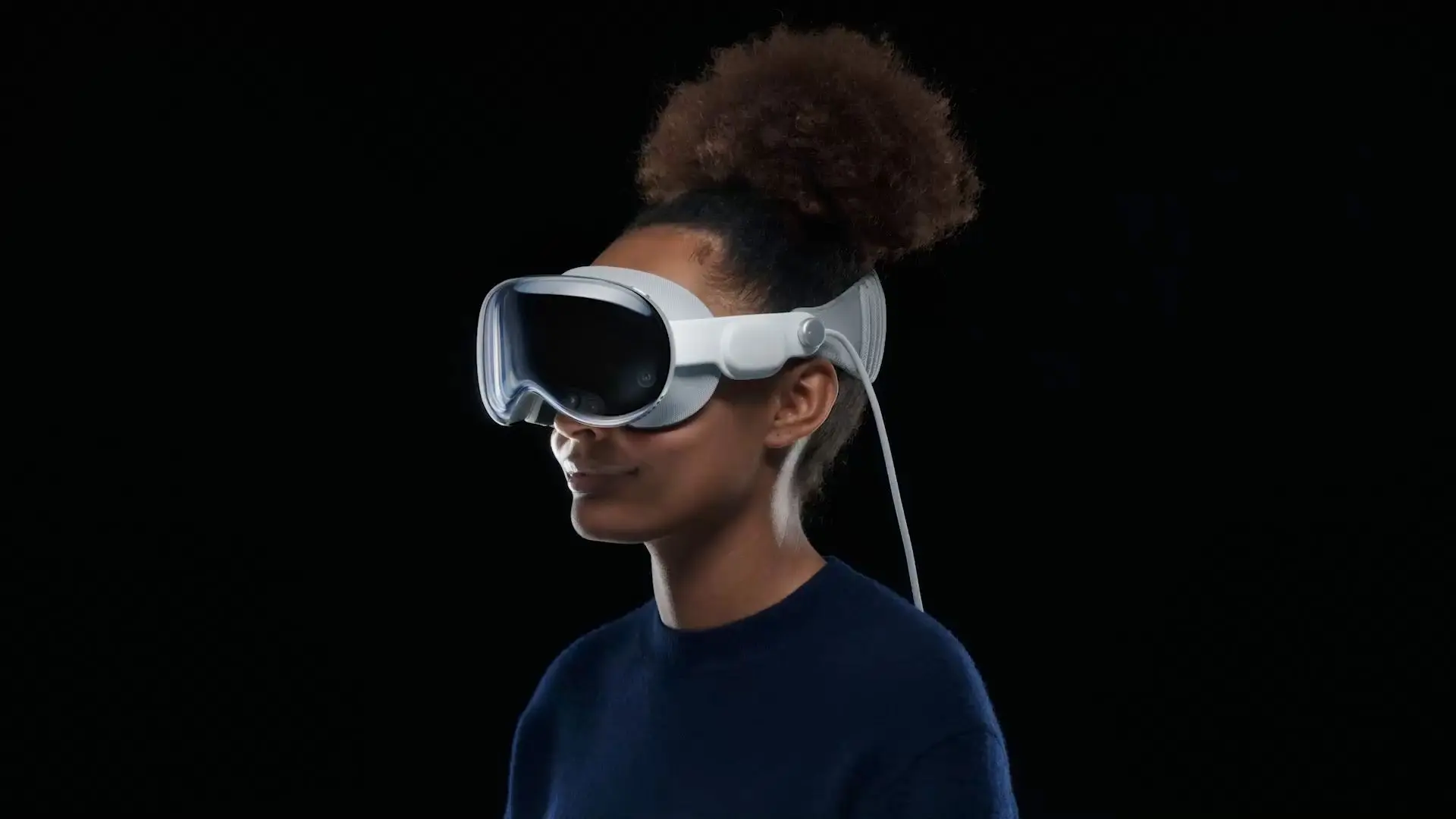
Should You Buy the Vision Pro?
The $3,500 Vision Pro is prohibitively expensive for most consumers, and reviews have made it clear that it does not easily fit into an existing workflow for many people. Some users have regretted their purchase. The headset excels at watching movies, viewing 3D videos, and serving as a display for a Mac.
At over 1.3 pounds, the Vision Pro is heavy and fatigue can set in quickly, but Apple improved comfort with the Dual Knit Band that launched alongside the M5 chip. There is also an external battery pack to contend with, and the headset is not easy to travel with, even with Apple's dedicated Travel Case.
The Vision Pro is undoubtedly Apple's most technically advanced product and an incredible engineering feat, impressive upon first use. However, potential buyers should try it at the Apple Store and do extensive research on what it can do before purchasing. It is excellent for watching movies and consuming content, plus it can be used as a Mac display, but it has a limited number of apps and games.
Apple refreshed the Apple Vision Pro with an M5 chip in October 2025, making now a good time to buy. Another update is not expected for at least two years, and development on a next-generation headset is currently paused.
Apple Vision Pro Overview
Apple Vision Pro is Apple's augmented and virtual reality headset, a major new product category. The first version launched in February 2024, and an updated model with the M5 chip arrived in October 2025. Apple calls it a "spatial computer" because it blends digital content with the physical world—the first spatial computing device.
It is a mixed reality headset that displays augmented reality content overlaid on the world and fully immersive virtual content. However, the headset is not see-through; everything you see is digital. Cameras map your surroundings and translate them into a digital image augmented by virtual elements. For a virtual reality experience, the cameras shut off, isolating you completely. This can be controlled with the Digital Crown.
Design and Display
The design resembles ski goggles, with a single piece of laminated glass for the front melded into an aluminum alloy frame. A soft, fitted Light Seal attaches magnetically to block out light. Two Audio Straps with built-in speakers deliver Spatial Audio. The earlier Solo Knit Band has been replaced with a Dual Knit Band that includes a second strap over the top of the head, designed for breathability and comfort. A Fit Dial ensures a tight fit, and counterweights distribute weight more evenly.
Inside are two micro-OLED displays delivering over 4K resolution per eye (23 million pixels total). An external EyeSight display projects your eyes so others can tell if you're in immersive mode. Custom prescription Zeiss Optical Inserts are available for glasses wearers.
Navigation and Sensors
There are no controllers; navigation uses eye tracking, hand gestures, and voice commands. Simply look at an app to highlight it and tap fingers to open. Over a dozen cameras and sensors map the world and track hand/eye movements. Optic ID scans your iris for authentication, akin to Face ID.
Processors and Performance
The M5 chip features a 10-core CPU and 10-core GPU built on third-generation 3nm technology. Unified memory bandwidth has been boosted to 153GB/s. The M5 renders 10% more pixels than the M2, supporting up to 120Hz refresh rates for crisper visuals and reduced motion blur. The R1 chip handles camera and sensor input, streaming images to the displays within 12 milliseconds for a virtually lag-free view.
Battery and Storage
The battery pack offers up to 3 hours of video playback or 2.5 hours of general use—a half-hour improvement over the M2 model. When plugged into a power adapter, it can run all day. Storage options are 256GB, 512GB, and 1TB.
visionOS and Mac Integration
visionOS is the operating system, featuring a 3D interface navigated by eye and hand gestures. Apps can be placed anywhere in virtual space, resized, and stacked. The system supports a Mac display mode: when connected, the Vision Pro acts as a single 4K display. In visionOS 2.2, Wide and Ultrawide modes were added, with Ultrawide equivalent to two 4K displays side by side.
visionOS 26 (released September 2025) adds persistent widgets, improved Personas, spatial scenes for 2D photos, and a Jupiter Environment. It also supports sharing experiences with other Vision Pro users in the same room.
How to Buy and Pricing
The M5 Vision Pro is available from Apple's online store and retail locations in Australia, Canada, China, France, Germany, Hong Kong, Japan, Korea, Taiwan, the U.K., the United Arab Emirates, and the United States. Pricing starts at $3,500 for 256GB. Zeiss reading lenses cost $99, while custom prescription lenses are $149. No trade-ins are accepted for the older M2 model.
Medical Warnings and Future Plans
Apple warns that the headset may exacerbate certain medical conditions, including heart conditions, migraines, dizziness, eye vision issues, and inner ear conditions. Pregnant individuals should exercise caution. The device and battery pack can interfere with pacemakers and defibrillators.
Looking ahead, Apple is said to be developing smart glasses similar to Meta Ray-Bans, with a display-less design and AI assistant, potentially launching as early as 2026. A cheaper enclosed headset is also in early development, but no new Vision Pro model is expected for at least two years. Apple's long-term AR/VR plans include true AR glasses, possibly launched in 2028, and even contact lenses in the 2030s. The Vision Pro may also be used for mental health tracking in the future.
Source: MacRumors News