

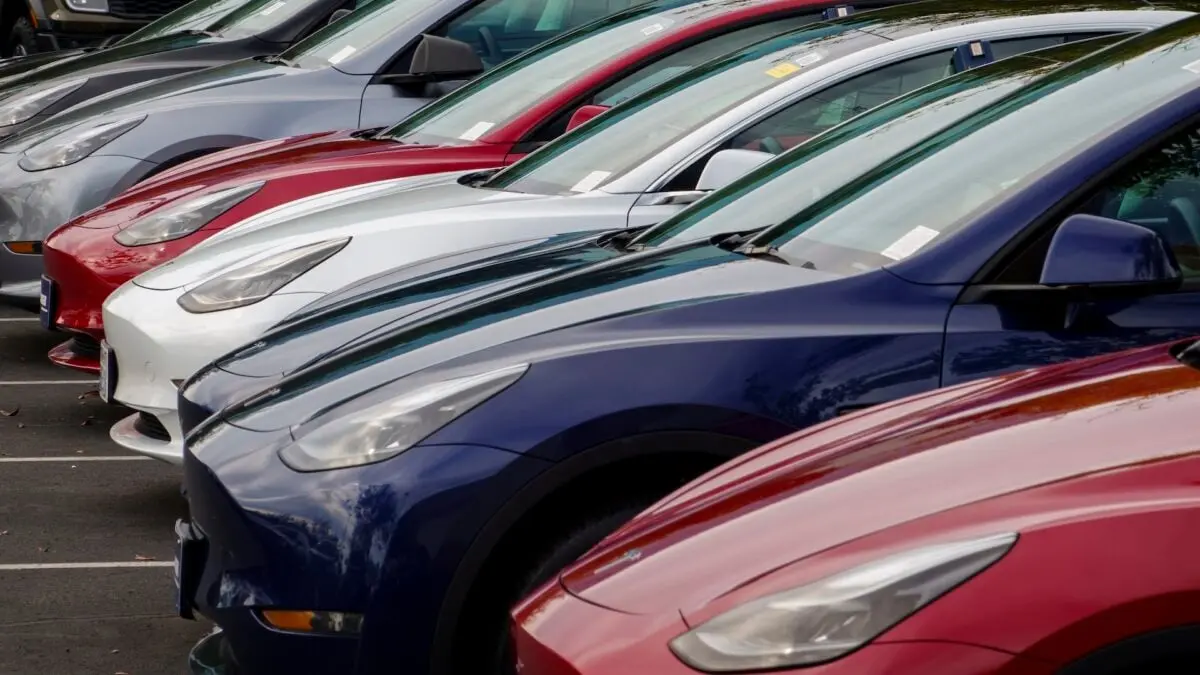
Tesla is making a notable comeback in Europe, with sales rebounding sharply after a difficult 2025. The electric vehicle manufacturer announced plans to hire 1,000 new workers at its Gigafactory near Berlin, aiming to increase production to 7,500 vehicles per week by October. This marks a significant turnaround from earlier this year when the company faced a sales nosedive across the continent, driven largely by the political activities of CEO Elon Musk.
Musk's outspoken support for conservative causes, his role in the Department of Government Efficiency (DOGE), and his close ties to President Donald Trump had soured European buyers. The political climate was further strained by Trump's threats to annex Greenland and the imposition of various tariffs on European goods. Musk also promoted far-right and anti-immigrant movements, including Germany's Alternative für Deutschland (AfD) party, and faced accusations of inciting violence related to anti-immigrant demonstrations in Belfast.
Despite these headwinds, Tesla registrations in Europe rose 57 percent to over 118,000 vehicles from January through May, compared with the same period in 2025, according to the European Automobile Manufacturers' Association. The rebound is attributed to rising fuel costs and new government incentives for zero-emission vehicles in Germany. Tesla's production boost would bring its German factory's annual capacity to around 390,000 EVs, still short of the original 500,000 target set when the facility opened in 2022.
The Political Context
Europe's love-hate relationship with American big tech has been a recurring theme. The European Union has introduced landmark regulations like the Digital Markets Act (DMA) and the Digital Services Act (DSA) to curb the power of U.S. tech giants. In February, French President Emmanuel Macron declared at the Munich Security Conference that Europe must become a "geopolitical power" and accelerate efforts to derisk from major powers.
These efforts have taken concrete form. France announced it would stop using American video conferencing platforms like Microsoft Teams and Zoom, switching instead to the French platform Visio. The French armed forces signed a deal to use Mistral's AI models. In June, the European Commission unveiled a "tech sovereignty package" targeting semiconductors, AI, cloud computing, and open-source software. The Commission also took preliminary steps to regulate Amazon Web Services and Microsoft Azure as "gatekeepers" under the DMA.
Yet the electric vehicle sector remains a glaring weak spot for European tech independence. Unlike cloud computing or social media, Europe already has strong homegrown automakers—Volkswagen, BMW, and Stellantis—that produce competitive EVs. Customers also have access to Chinese alternatives like BYD, which has made breakthroughs in driving range and charging speed. Despite these options, Tesla continues to dominate.
Why Tesla Still Wins
Tesla's success in Europe can be traced to several factors. First, the company's brand remains strong among early adopters and environmentally conscious consumers. The Supercharger network provides a seamless charging experience that rivals have struggled to match. Tesla's technological advancements, such as over-the-air updates and Full Self-Driving capabilities, also differentiate it from traditional automakers.
Second, European automakers have been slow to scale up EV production. Volkswagen's ID. series has faced software issues, and BMW's i4 has limited range compared to Tesla equivalents. Stellantis relies heavily on smaller, less expensive models like the Peugeot e-208, which appeal to a different segment. Meanwhile, Chinese brands like BYD are relatively new to the European market and have yet to build the same level of trust.
Third, government incentives have played a role. Germany's increased subsidies for EVs, combined with higher fuel taxes, have pushed consumers toward electric vehicles. Tesla's price cuts earlier in 2025 made its cars more accessible, and the company's production ramp-up in Berlin has reduced delivery times.
The Challenge for European Sovereignty
The rebound in Tesla sales highlights a deeper challenge for European tech sovereignty. While governments can mandate the use of local software and regulate digital platforms, they cannot easily influence consumer choices in the automotive market. Europe's automotive industry is deeply integrated into global supply chains, and breaking away from American or Chinese technology would require massive investment and time.
Moreover, the EU's tech sovereignty push has been criticized for being reactive rather than proactive. The new semiconductor subsidy scheme is still being implemented, and the bloc lags behind the U.S. and China in AI development. The DMA's designation of AWS and Azure as gatekeepers could be tied up in court for years. Meanwhile, American tech companies continue to innovate and expand their European presence.
Elon Musk's political alignment with Donald Trump has also created a paradox. European leaders who want to reduce reliance on American tech are simultaneously dealing with a U.S. president who actively undermines transatlantic alliances. Yet consumers seem willing to separate politics from product. Tesla's sales numbers suggest that even in a politically charged environment, price, convenience, and brand loyalty often trump geopolitical considerations.
Another factor is the role of Chinese competition. BYD and other Chinese EV makers are expanding rapidly in Europe, offering affordable models with competitive technology. However, they face their own geopolitical hurdles, including EU anti-subsidy tariffs. Recent reports indicate that the European Commission is considering additional duties on Chinese EVs to protect domestic manufacturers. This could inadvertently benefit Tesla, which already has a factory in Germany and avoids these tariffs.
In the long term, Europe's ability to achieve tech sovereignty in the EV sector will depend on whether its automakers can close the gap with Tesla in software and battery technology. Volkswagen's upcoming SSP platform and BMW's Neue Klasse architecture are promising, but they are still years away from full production. Meanwhile, Tesla continues to invest heavily in innovation, including new battery chemistries and autonomous driving.
The recent hiring spree at the Berlin Gigafactory is a sign of confidence. Tesla sees Europe as a growth market, not just a political challenge. The company is also expanding its Supercharger network and opening its technology to other manufacturers, further entrenching its ecosystem.
For European leaders, the lesson may be that breaking dependence on American big tech requires not just regulation but also investment in homegrown innovation. The tech sovereignty package is a step in the right direction, but its impact will take years to materialize. In the meantime, European consumers will continue to vote with their wallets, and right now, those wallets lean toward Tesla.
Source: Gizmodo News