

For nearly a decade, I convinced myself that owning a 3D printer would be more trouble than it was worth. My first encounter with 3D printing, back in 2017, involved repairing and maintaining two bulky industrial machines. Those printers ran smoothly only as long as I constantly tinkered with them. The experience hooked me on the potential of additive manufacturing, but it also set unrealistic expectations of what a personal 3D printer would demand in terms of time, space, and patience.
When I finally purchased a Bambu Lab A1 Mini in 2026, almost every assumption I held was proven wrong. The printer arrived, and within hours I realized that the technology had matured in ways I had completely overlooked. Noise, maintenance, and the need for constant supervision—all the fears that had kept me from buying—had been addressed by modern engineering.
The Printer Was Never the Problem
I Overestimated Noise, Space, and Disruption
My early 3D printing experience centered on the Wanhao Duplicator 3, a massive machine with a loud chassis and a temperamental bed-leveling process. I had to slice files on my PC, transfer them to a microSD card, and then carefully level the bed with a sheet of paper—often failing on my first attempt. The printer sat in a corner of a workshop, its constant hum and vibration making it impossible to work near.
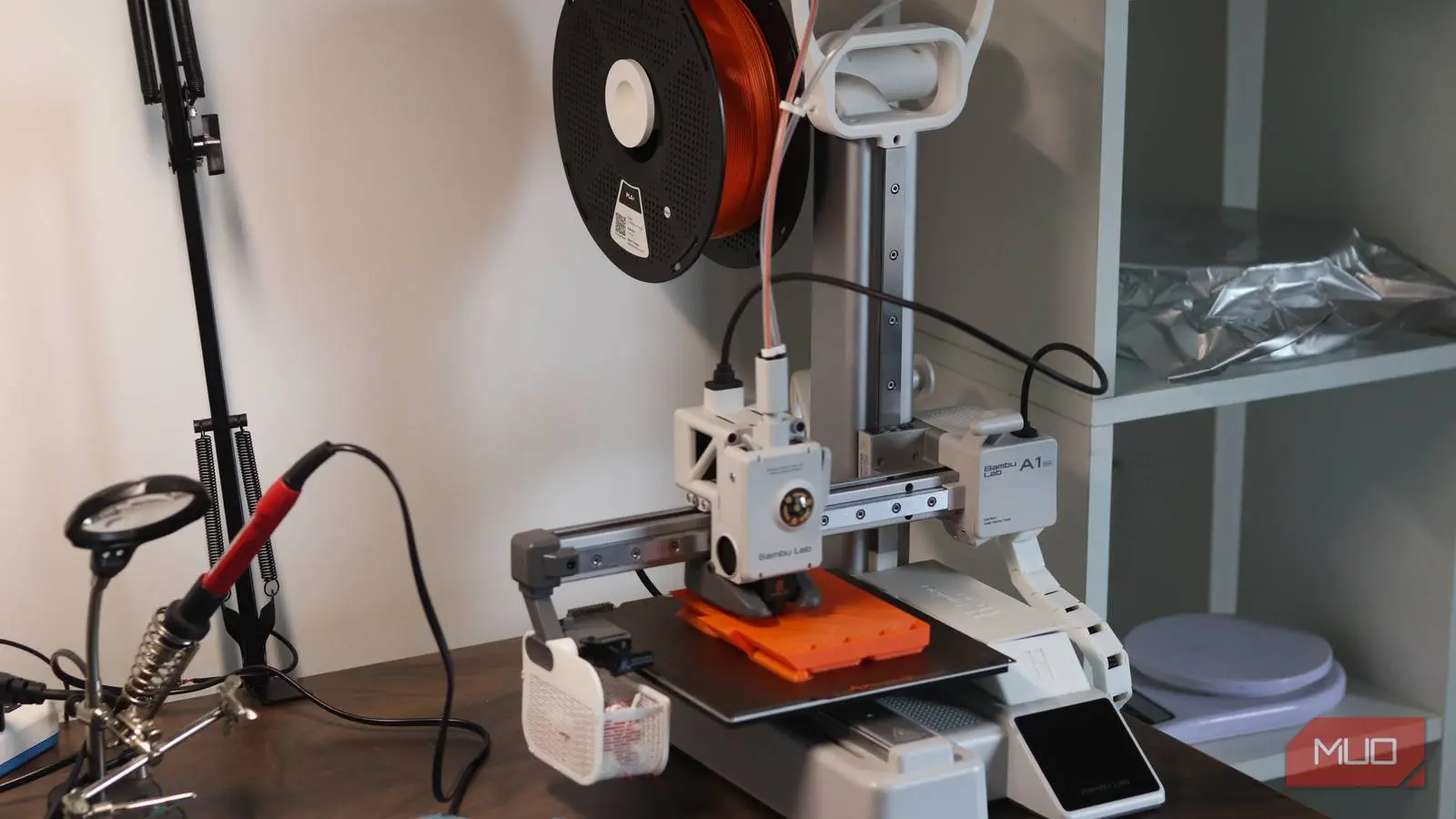
When I set up the A1 Mini on my electronics workbench, I expected a similar experience. Instead, I found a device that occupies a tiny footprint, looks elegant, and runs so quietly that the cooling fan is the only audible component. Now I run print jobs throughout the day while sitting barely a meter away and hear nothing disruptive. The printer's automatic bed leveling, filament runout detection, and built-in camera have eliminated the very issues that made me dread owning one.
Speed Mattered Less Than I Expected
Long Print Times Stopped Feeling Important Once the Printer Could Work Unattended
My time-related fears had two layers. The first was print speed itself. I associated 3D printers with glacial progress—small parts taking the better part of a day. The A1 Mini dismantled that assumption instantly. It prints a standard Benchy test boat in roughly 20 minutes at default speeds. Functional prints like brackets, enclosures, and organizers complete in a fraction of the time older machines would have needed.
The second layer was the attention a print required from me. Modern printers handle nearly everything autonomously. The bed levels automatically before each job, filament runout detection pauses when spools run empty, and the built-in camera lets you monitor progress from a smartphone app or a smart home dashboard. I've started prints from hundreds of kilometers away and returned to perfect objects waiting on the build plate. With proper maintenance and filament tuning, 3D printing becomes a background process, not a time-intensive hobby.
Maintenance Turned Out to Be Mostly a Myth
Modern Printers Require Far Less Tinkering Than Their Reputation Suggests
Beyond print time, I expected ongoing maintenance to quietly consume my schedule. In my early days, I considered myself lucky to finish a full day of printing without unclogging a nozzle or re-leveling the bed. I had mentally budgeted for calibration, belt tension checks, and nozzle swaps as recurring costs.
In practice, the A1 Mini has asked very little of me. Over 134 hours of total printing time, the only significant task I've performed is calibrating my filament—and even that wasn't strictly necessary, since generic PLA profiles worked well with filaments from various brands. Multi-color printing with the AMS Lite adds complexity and waste, but for everyday projects—ESP32 enclosures, mounts, cosmetic parts, replacement brackets—the printer has been remarkably low friction. Basic maintenance like cleaning the build plate and lubricating the rails is all it needs to keep running reliably.
The Biggest Mistake Was Waiting So Long
I Should Have Bought a 3D Printer Years Earlier Instead of Overthinking It
I purchased my printer just before Bambu Lab began adopting some controversial business practices, but the hardware itself is exceptional. And it's not just Bambu Lab—modern printers from Creality, Elegoo, and Prusa have also evolved from finicky hobbyist tools into reliable home appliances. You configure settings once, make a few adjustments, and the machine delivers consistent results. The printer doesn't demand entire days of maintenance; it doesn't magically fail out of nowhere. With proper care, it works just fine.
I was holding on to a mental image of 3D printing from nearly a decade ago and hadn't updated it. If your hesitation, like mine, was really about time—both the duration of prints and the skill required from you—the technology has addressed both issues. It is fast, reliable, and unobtrusive. I wish I had stopped waiting much sooner.
Source: MakeUseOf News