

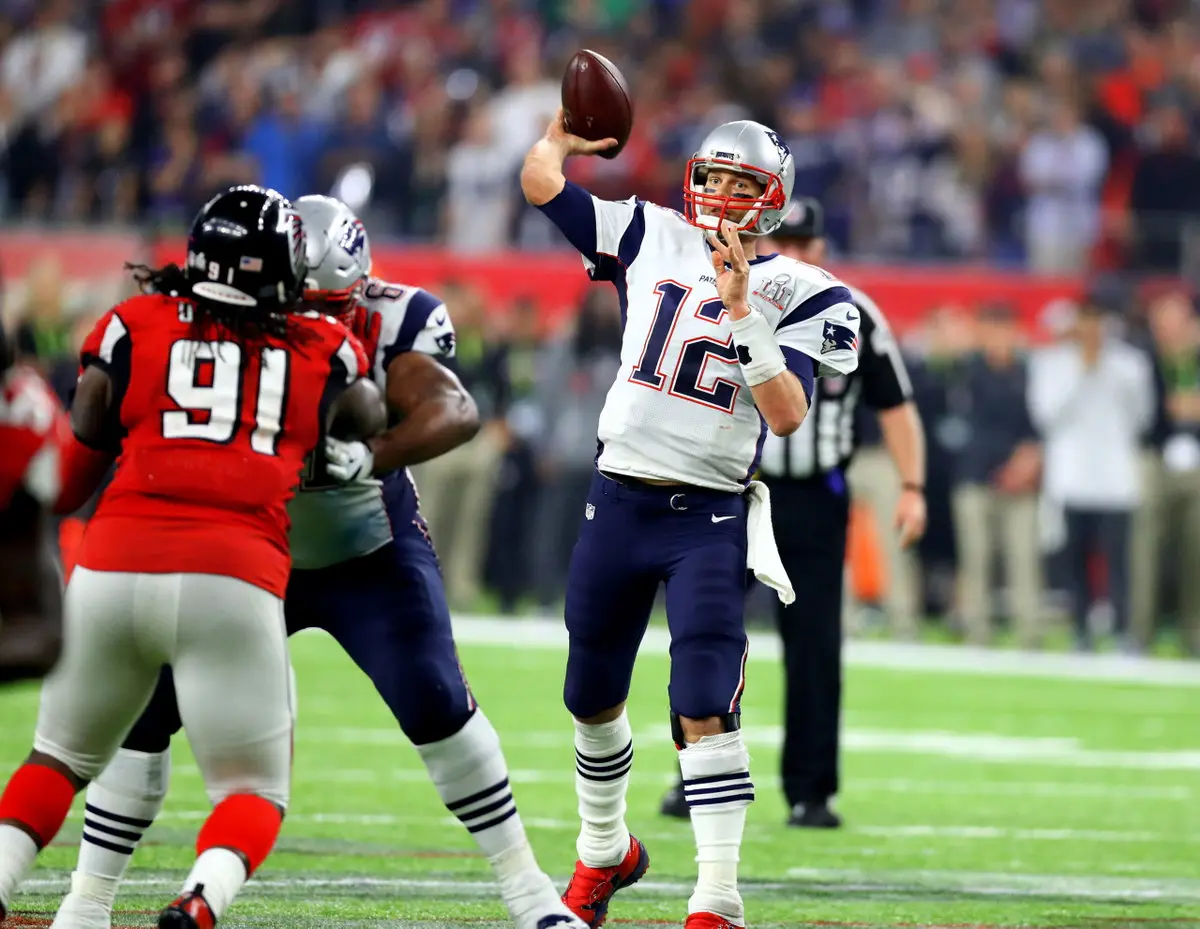
When Tom Brady was selected with the 199th pick by the New England Patriots in the 2000 NFL Draft, few envisioned the legendary career that would follow. He was an afterthought—a skinny quarterback from Michigan with average arm strength and limited mobility. Yet over two decades, Brady transformed into the most decorated player in NFL history: seven Super Bowl titles, five Super Bowl MVP awards, three league MVP honors, and countless passing records. For many observers, his success seemed effortless, as if he were simply a natural talent. But former Ohio State head coach and Jacksonville Jaguars head coach Urban Meyer strongly disagrees with that characterization.
“When I hear someone say, ‘He’s a natural,’ I would always disagree,” Meyer said during his June 15 appearance on the Breaking Sales Podcast with Dan Lappin. “We’re all natural, and God has gifted us with skill sets. But to say Tom Brady was a natural quarterback, that’s unfair to Tom Brady.” Meyer elaborated, “Tom Brady worked awfully hard to become a natural. Other guys didn’t work as hard as him, I hate to say it.” These comments highlight a fundamental truth about Brady’s career: his relentless dedication to preparation, practice, and performance.
Meyer’s perspective carries weight, given his experience coaching at the highest levels of college and professional football. He had a front-row seat to Brady’s work ethic during the 2021 season, when Meyer was head coach of the Jacksonville Jaguars. Though the Jaguars faced Brady’s Tampa Bay Buccaneers only once that season (a 20-16 loss), Meyer saw Brady up close during a joint minicamp practice in June. The scene left a lasting impression. “It was the last day of minicamp. They’re in shorts and helmets, and they’re doing a two-minute drill,” Meyer recalled in a 2021 interview with 247Sports. “And Tom Brady is treating it like it’s the Super Bowl. And he goes down and he scores with two seconds left to win that scrimmage or whatever they had and runs around that field like a child who just won the Super Bowl. That’s how competitive he is.”
The Myth of the Natural
The narrative of a “natural” athlete often obscures the hours of invisible labor required to achieve greatness. In Brady’s case, the label ignores his improbable journey. Coming out of Michigan, he was a backup for most of his college career, stuck behind Brian Griese and Drew Henson. His combine performance was unremarkable—a 5.28-second 40-yard dash, a 24.5-inch vertical, and a 9.5-inch broad jump. Scouts questioned his pocket presence and arm strength. Six quarterbacks were taken before him in the 2000 draft, including Chad Pennington, Giovanni Carmazzi, and Tee Martin. Brady was barely an afterthought.
Yet Brady used that disregard as fuel. From the moment he arrived in New England, he immersed himself in film study, practice drills, and the playbook. His former teammates have often described how he would stay late at the facility, reviewing every throw and discussing adjustments with coaches. Wide receiver Julian Edelman once said that Brady demanded “perfect practices” so that games felt easier. Rob Gronkowski similarly noted that Brady’s precision in practice allowed him to read defenses at a superhuman speed during games.
Meyer touched on that same point: “When you ask a quarterback to throw this certain pass throughout his time, 10,000 is probably extreme, but is it really? I mean, when you go back in his entire livelihood, he’s thrown that thing thousands of times before he’s asked to do that.” Brady’s work ethic extended beyond the field. The TB12 method, which he developed with business partner Alex Guerrero, emphasized a strict diet, hydration, pliability training, and recovery routines. Brady famously avoided sugar, dairy, and gluten, and adhered to a regimen that included early-morning workouts, sleep optimization, and constant body maintenance. This allowed him to play at an elite level into his mid-40s, defying conventional aging curves for NFL quarterbacks.
Comparing to Peers
In contrast, quarterbacks like Peyton Manning and Aaron Rodgers were often viewed as natural talents, albeit with their own intense preparation. Manning was renowned for his film study and audibles, but he was also a first overall pick with a prototypical frame and a football pedigree. Rodgers had a rocket arm and elite mobility; he fell in the draft due to concerns about his unique throwing motion, but his raw talent was never questioned. Brady had no such advantages. He had to manufacture his own edge through sheer perseverance and meticulous attention to detail.
Brady’s post-playing career also reflects his mindset. He rarely dwells on his accolades, but he frequently speaks about the drive that set him apart. In his own words, “I’m not a guy that’s ever satisfied. I think that’s probably my greatest strength.” That hunger kept him training like a rookie even in his final seasons with the Buccaneers. At age 44, he led the NFL in passing yards (5,316) and passing touchdowns (43) in 2021, earning his third MVP award. It was a testament to his unwavering commitment.
Lessons for Young Athletes
Meyer’s comments serve as a reminder that talent alone is rarely sufficient for sustained elite performance. The “natural” label can actually harm athletes by downplaying the effort required to develop mastery. As Meyer put it, “We’re all natural, and God has gifted us with skill sets. But to say Tom Brady was a natural quarterback, that’s unfair to Tom Brady.” The implication is clear: Brady’s success was earned through hard work, not handed to him by genetics.
This lesson resonates beyond football. In any field—sports, business, art—those who achieve greatness often invest thousands of hours in deliberate practice. Brady’s story is a case study in the power of grit and discipline. His 6-0 record in Super Bowls (later 7-0 with the Buccaneers) was not a matter of luck but the culmination of a lifetime of preparation. Even his famous “frozen tundra” overtime drive in Super Bowl LI against the Atlanta Falcons, where he led the Patriots to a historic 28-3 comeback, was the result of countless repetitions in practice and an unwavering belief in the process.
Meyer saw that intensity firsthand. During that minicamp drill, Brady didn’t just go through the motions; he treated it as if it were the biggest game of the season. That competitive drive, Meyer argued, is what separates Brady from his peers. “Other guys didn’t work as hard as him, I hate to say it,” Meyer said. The statement may seem harsh, but it aligns with the testimony of dozens of former teammates and coaches who have described Brady’s work ethic as unmatched.
The Legacy of Hard Work
Brady’s journey from a sixth-round draft pick to the GOAT is now part of NFL folklore. But as Meyer points out, the narrative of the “untrained” or “natural” athlete does a disservice to the years of sacrifice that made that transformation possible. Brady spent more than two decades perfecting his craft, and his legacy will forever be tied to his relentless pursuit of excellence. For Meyer, the truth is simple: Tom Brady was not a natural. He was a self-made phenomenon.
In the end, the takeaway for fans and aspiring players is not that Brady was born special, but that he chose to be special through effort. As the saying goes, “The harder you work, the luckier you get.” No one embodied that more than Tom Brady, and Urban Meyer’s remarks remind us that the most important trait for success isn’t talent—it’s the will to prepare.
Source: Yahoo Sports News