

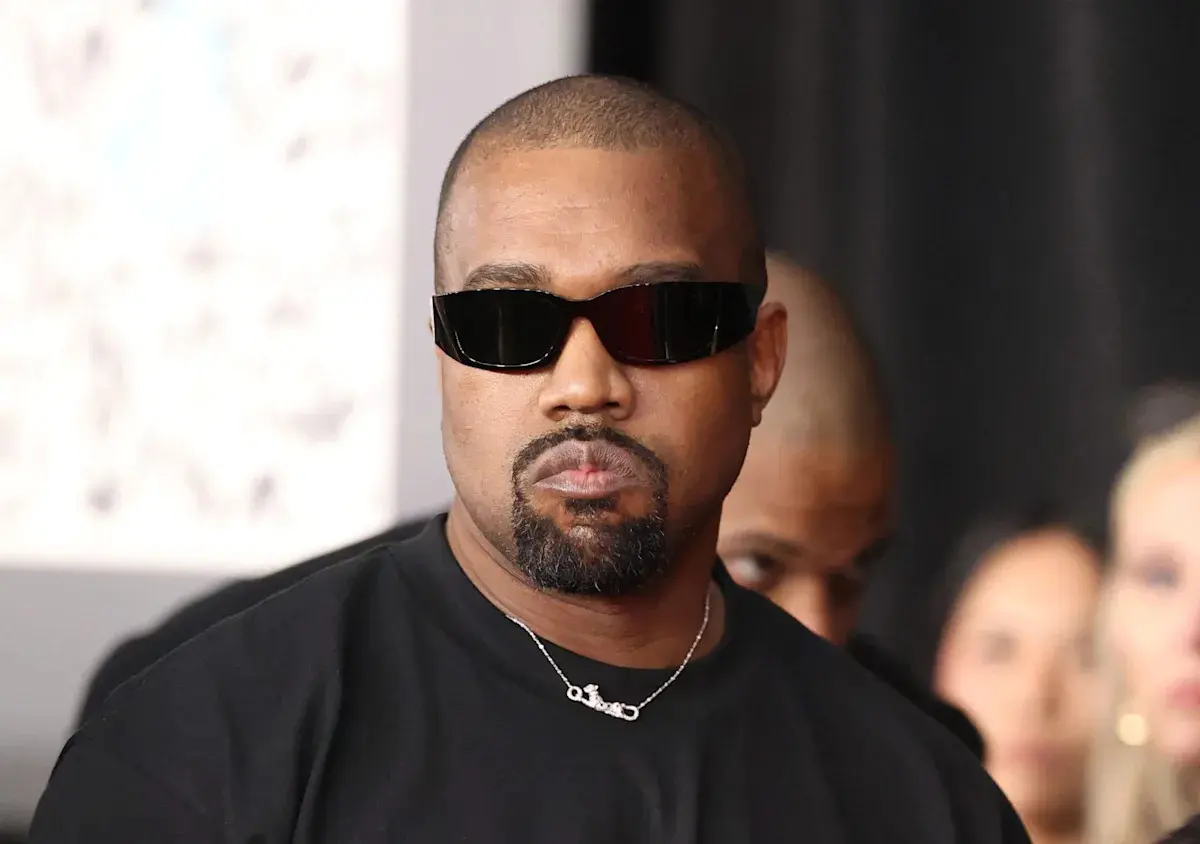
One day ahead of Kanye West’s summer tour kickoff in Istanbul, the rapper has received the go-ahead from officials in the Netherlands for planned dates in the city of Arnhem on June 6 and 8, despite pushback and protests in the country. The decision marks a significant victory for West, who has faced a series of concert cancellations across Europe due to his controversial history of antisemitic statements.
Deputy Prime Minister Bart van den Brink announced the decision on Friday, explaining that authorities had thoroughly reviewed West’s background. “Solid grounds are needed to bar people from entering [the country]. We have not found those in the analyses that were conducted,” van den Brink said, as reported by Reuters. “His past statements are not, at this moment, a reason to deny him entry.”
Van den Brink was referencing West’s history of antisemitic comments in recent years, including the release of a song titled “Heil Hitler,” which have alienated him from countless fans and observers across the world. Although West has apologized for these statements, blaming mental illness, many question his sincerity. In January, West purchased a full-page ad in the Wall Street Journal asking for forgiveness and attributing his behavior to his bipolar type-1 diagnosis. He described a “four-month-long manic episode of psychotic, paranoid and impulsive behavior that destroyed my life.”
The decision to allow West to perform in the Netherlands comes despite mounting opposition. Earlier this month, a plurality of those in the House of Representatives called for banning West from the country, Dutch public broadcaster NOS reported. The Centre for Information and Documentation on Israel (CIDI) had also called for a ban. Nonetheless, the government concluded that legal thresholds for denying entry, typically reserved for national security threats or individuals with criminal records, were not met in this case.
This is not the first time West has faced hurdles during his planned European tour. In April, he was barred from entering the U.K., forcing the cancellation of a planned festival appearance. In France, the mayor of Marseille, where West was planning to perform, stated unequivocally that “Kanye West is not welcome,” according to reports from the Guardian. The country’s Interior Minister, Laurent Nuñez, was also “highly determined” to prevent the concert, as reported by Le Monde. A venue in Poland also cancelled a performance there, reportedly under pressure from the government. Additionally, performances in Switzerland and Italy were canceled after public outcry. The Swiss soccer club that was to host his show said the event was not “in accordance with our values.”
West’s troubles began in earnest in late 2022, when he made a series of antisemitic remarks during interviews and on social media. These included praising Adolf Hitler and denying the Holocaust. The backlash was swift; his partnerships with Adidas, Gap, and Balenciaga were terminated, costing him billions of dollars and effectively ending his business empire. He also lost his record deal and was dropped by his talent agency. The controversy escalated to the point where he was temporarily locked out of his social media accounts.
Despite these setbacks, West has attempted a comeback. He has apologized multiple times, attributing his behavior to mental health issues. In his January newspaper ad, he wrote, “I have been wrestling with my mental health for many years. I know that this has caused a great deal of pain to many people. I am deeply sorry for any hurt I have caused.” He also stated that he was committed to “using his platform for good” and to “educating himself and others about Jewish history and culture.”
The Netherlands concert dates are part of a 10-show summer tour that also includes performances in Turkey. 75,000 tickets to West’s concert in Istanbul had been sold as of Friday morning, indicating that despite the controversies, the rapper retains a significant fan base. The tour will mark West’s first major live performances since his controversial statements, and the industry is watching closely to see how audiences react.
Legal experts have noted that the Dutch government’s decision reflects a delicate balance between free speech and public safety. While the government condemned West’s statements, it argued that banning him would set a dangerous precedent. “We live in a country where freedom of expression is a fundamental right, even for those who express views we find abhorrent,” said a spokesperson for the Ministry of Justice. “Banning someone solely for their opinions, without evidence of incitement to violence or other illegal acts, would be a violation of that principle.”
Organizations representing Jewish communities in the Netherlands have expressed disappointment with the decision. “We believe that Kanye West’s presence will cause pain to Holocaust survivors and their families,” said a representative from CIDI. “He has not shown genuine remorse, and his concerts will serve as a platform for hate speech.” However, the government has maintained that it will monitor the events closely and take action if any laws are broken during the performances.
West’s lawyers have welcomed the Dutch decision, stating that it confirms their client’s right to work and tour. In a statement, they said, “Kanye has been subjected to a campaign of cancellation based on false narratives. He has apologized and taken steps to address his mental health. We are pleased that the Netherlands has judged his case on its legal merits rather than on public pressure.”
The situation has also sparked debate about the role of governments in policing the speech of public figures. Some free-speech advocates argue that banning artists based on their political or religious views is a slippery slope, while others contend that enabling hate speech has real-world consequences, such as fueling antisemitic incidents. The Anti-Defamation League recorded a significant spike in antisemitic attacks in the United States following West’s comments.
As West prepares to take the stage in Istanbul, the eyes of the world are on him. The concert is expected to be a high-security event, with local authorities bracing for potential protests. In Turkey, where West has a dedicated fan base, the atmosphere is one of cautious anticipation. Tickets for the Istanbul show sold out within hours, with secondary market prices soaring.
The Arnhem concerts, scheduled for early June, will be held at the GelreDome stadium, which can accommodate up to 41,000 spectators. Local officials have stated that they are prepared for any scenario, including large demonstrations. “We have received several permit applications for protests, and we will facilitate them in designated areas,” said a city spokesperson. “Our priority is to ensure the safety of all attendees and residents.”
West’s career has been marked by both groundbreaking artistic achievements and public controversy. From his early work as a producer for Roc-A-Fella Records to his critically acclaimed albums such as “The College Dropout,” “Late Registration,” and “My Beautiful Dark Twisted Fantasy,” he has won 24 Grammy Awards and been named one of Time magazine’s most influential people. However, his outspoken nature and erratic behavior have often overshadowed his music. His support for Donald Trump, his comments on slavery, and his foray into politics as a presidential candidate in 2020 are just a few examples of his polarizing public persona.
In recent years, West has turned to fashion and architecture, launching his Yeezy brand and designing affordable housing concepts. He has also become a devout Christian, releasing gospel-inspired albums and holding Sunday Service events. Yet, his mental health struggles have continued to make headlines. He was hospitalized in 2016 for exhaustion and in 2018 for a “temporary psychosis.” His wife, Kim Kardashian, previously spoke about the challenges of living with someone with bipolar disorder, describing his manic episodes as “incredibly frightening.”
The upcoming tour represents a test of West’s ability to rebuild his career. Many in the music industry have distanced themselves from him, and it remains to be seen whether mainstream radio and streaming platforms will promote his new music. He has teased new material on social media, but no official release date has been announced. The concerts may also serve as a platform for him to address his critics directly.
Reactions from fellow artists have been mixed. Some, like Jon Stewart and Seth Rogen, have publicly condemned West’s attempted comeback. “F— that guy,” Rogen said in an interview, echoing the sentiments of many who believe that West’s apologies are insincere. Others, such as 50 Cent and Kid Cudi, have defended him, arguing that mental illness should be taken into account. The debate highlights the difficulty of separating the artist from the art, especially when the artist’s statements have caused real harm.
As June approaches, all eyes will be on the Netherlands. The country has a strong tradition of tolerance but also draws a line at hate speech, which is illegal under Dutch law. If West repeats any of his antisemitic comments during the concerts, he could face legal consequences. The government has made it clear that it will not hesitate to prosecute if the law is broken. “Freedom of speech is not absolute,” said van den Brink. “If Mr. West uses his platform to incite hatred or violence, we will take appropriate action.”
For now, West appears to have cleared the first hurdle. The Dutch decision is a rare instance of a government resisting public pressure to ban a controversial figure, and it sets a precedent for how other countries might handle similar cases in the future. Whether West will use this opportunity to promote reconciliation or further controversy remains to be seen. But one thing is certain: the world will be watching.
Source: Yahoo Entertainment News