

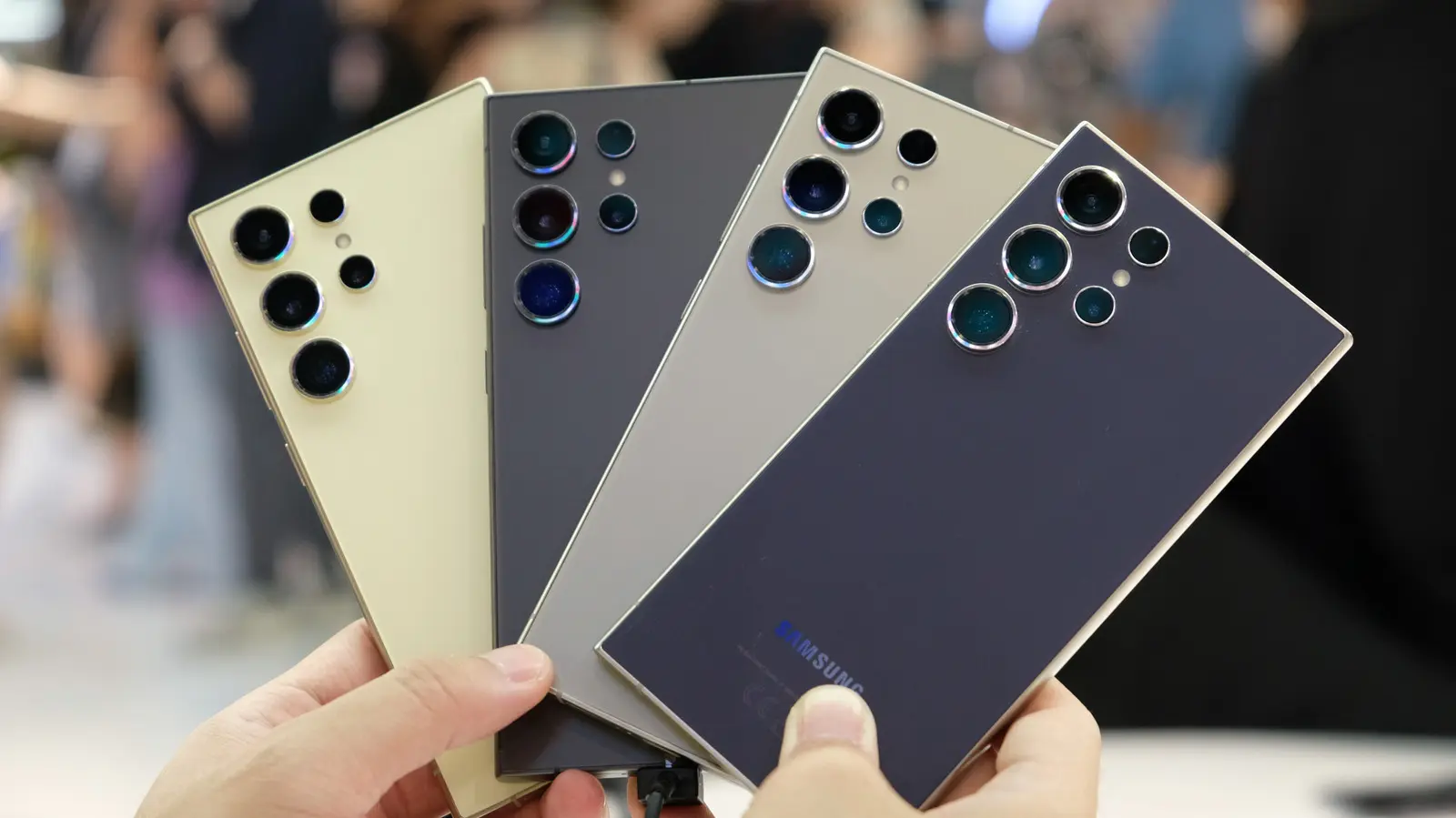
If you've been paying attention to Samsung's smartphone releases over the past few years, you might have noticed that the changes have become increasingly incremental. Apart from regular spec bumps and very few camera tweaks, the Galaxy S range of smartphones hasn't seen radical redesigns. In fact, Samsung dropped support for Bluetooth functionality on the Galaxy S25 Ultra's S Pen, a move that surprised many enthusiasts. Then, in 2026, the Galaxy S26 Ultra ditched titanium, which had been used on the previous two generations of Samsung's flagship device. This shift raises an important question: why would Samsung abandon a material it had heavily marketed as a premium upgrade? The answer lies in a combination of cost, manufacturing complexity, and market dynamics.
The Galaxy S26 Ultra now features an "Armor Aluminum" frame, as Samsung calls it. Technically, titanium is the superior metal in terms of strength-to-weight ratio and overall durability. It is more resistant to scratches and impacts than aluminum, making it a natural choice for high-end devices. Yet, Samsung chose to revert to aluminum after only two years of using titanium. This decision likely comes down to cost. Titanium is significantly more expensive to machine than aluminum. Smartphone manufacturers have spent decades perfecting aluminum production lines, allowing for efficient, high-volume output. Titanium, on the other hand, requires specialized tooling and slower manufacturing processes, which increases production costs and reduces profit margins. For a company that ships tens of millions of flagships annually, even a small per-unit cost increase can translate into billions of dollars in added expenses.
Moreover, Samsung's adoption of titanium may have been more of a marketing strategy than a technical necessity. The company introduced titanium frames on the Galaxy S24 Ultra in 2024, just months after Apple launched the iPhone 15 Pro with a titanium frame. This timing was no coincidence. Apple's marketing machine positioned titanium as a premium feature, and Samsung followed suit to avoid being seen as behind. However, when Apple stopped using titanium for its iPhone 17 Pro series in 2025—opting for an aluminum unibody build—Samsung quickly reversed course. The Galaxy S26 Ultra thus returned to the more economical metal, suggesting that the industry's pivot to titanium was a short-lived trend driven more by competitive marketing than by genuine consumer demand.
Aluminum Remains the Popular Choice for Smartphones
Although Apple ditched titanium for the iPhone 17 Pro series, it has continued to use the material in the iPhone Air's frame, indicating that titanium still has niche applications. Similarly, Samsung used a titanium frame for its ultra-slim Galaxy S25 Edge, which received positive reviews. However, the Galaxy S26 Ultra's successor has not yet been announced, leaving uncertainty about whether Samsung will continue to use titanium in its slim models. When SamMobile reached out to the company for an explanation, Samsung stated, "Armor Aluminum was the ideal material to support a thinner and lighter form factor without compromising Galaxy S26's everyday durability." This statement highlights the practical benefits of aluminum: it is easier to shape into thin profiles while maintaining structural integrity.
The Galaxy S26 Ultra, at 7.9mm, is indeed thinner than the 8.2mm Galaxy S25 Ultra, though it is only slightly lighter at 214 grams compared to 218 grams. The weight difference is negligible, but the thinner design is a clear advantage for aluminum. More importantly, aluminum has superior thermal conductivity compared to titanium. The Snapdragon 8 Elite Gen 5 SoC that powers the Galaxy S26 Ultra is a highly capable chipset, designed for demanding tasks like graphically intensive gaming and AI processing. Improved heat dissipation is crucial to prevent thermal throttling and maintain performance. Aluminum frames can act as a heat sink, drawing heat away from the processor and spreading it across the device's body. This can lead to more stable performance during prolonged gaming sessions or video editing. For users who push their phones to the limit, aluminum's thermal properties are a tangible benefit that titanium cannot match.
Beyond the frame, the Galaxy S26 Ultra retains premium materials elsewhere. The display is protected by Corning's Gorilla Armor 2, which offers enhanced scratch resistance and anti-reflective properties. The back panel uses Gorilla Glass Victus 2, providing durability against drops and daily wear. The device also carries an IP68 Ingress Protection rating, ensuring dust and water resistance up to 1.5 meters for 30 minutes. One of the standout new features is Samsung's Privacy Display technology, which minimizes off-angle visibility. This means that when someone looks at your phone from the side, the screen appears dark or blurred, preventing prying eyes from reading sensitive information. Combined with the anti-reflective panel, the Galaxy S26 Ultra offers one of the best display experiences on the market.
The shift back to aluminum also aligns with broader industry trends. Many smartphone manufacturers are moving away from exotic materials to reduce costs and simplify supply chains. The use of titanium was never widespread; only a handful of premium devices from brands like Apple and Samsung featured it. As competition intensifies in the mid-range and budget segments, companies are focusing on cost optimization. Aluminum is abundant, easy to recycle, and can be treated with various finishes to mimic the look of more expensive materials. For example, Samsung's Armor Aluminum is likely anodized and strengthened to resist scratches better than untreated aluminum. With the right engineering, aluminum can provide nearly the same level of daily durability as titanium, especially when paired with robust glass panels.
Another factor is repairability. Titanium's hardness makes it difficult for third-party repair shops to work with, often requiring specialized tools. Aluminum, in contrast, can be machined more easily, which simplifies repairs and reduces costs for consumers. As right-to-repair movements gain traction, manufacturers may prefer materials that are easier to service. This could extend the lifespan of devices and improve brand perception. For Samsung, which has been expanding its self-repair program, aluminum frames are a logical choice.
Looking at historical context, Samsung has a long history of experimenting with materials. The Galaxy S3 featured a plastic back, while later models moved to glass and metal. The Galaxy Note series occasionally used premium materials like leather and ceramic. The brief foray into titanium was likely driven by Apple's influence, but Samsung's core strength has always been delivering high-quality devices at scale, often using proven materials. Aluminum has been a staple in Samsung's flagship designs since the Galaxy S6 series, and its return signals a return to a predictable, cost-effective strategy.
In the end, the decision to stop using titanium on the Galaxy S26 Ultra is a pragmatic one. While titanium offers theoretical benefits in strength and weight, the real-world advantages are minimal for most users, especially when coupled with the trade-offs in cost and manufacturing. Aluminum provides a better balance of price, performance, and ease of production. With the addition of advanced glass protection, water resistance, and innovative display technologies, the Galaxy S26 Ultra remains a top-tier smartphone without the premium markup of titanium. The industry's brief love affair with titanium appears to be over, but Samsung's focus on delivering value-endurance features suggests that the material choice was just one piece of a much larger puzzle.
Source: SlashGear News