

A new research report details a solar storm that produced a GPS glitch with enough severity to crash self-driving cars. The study, conducted by a team of space weather and autonomous vehicle experts, outlines a chain reaction that began on the Sun and ended with navigation failures on the ground. The findings are a stark reminder of how dependent modern transportation has become on satellite signals.
What Happened?
According to the researchers, the event occurred when a coronal mass ejection — a massive burst of solar wind and magnetic fields — slammed into Earth’s magnetosphere. The resulting geomagnetic storm caused unexpected disturbances in the ionosphere, the layer of Earth’s atmosphere that GPS signals must pass through. These disturbances led to signal degradation and, in some cases, complete loss of GPS lock for several vehicles on a test track.
Self-driving cars, which rely heavily on GPS to determine their position, were caught off guard. The report states that several autonomous test vehicles veered off their lanes or stopped abruptly, while others crashed into barriers or other vehicles. The researchers were able to correlate the timing of the crashes with a sudden drop in GPS signal quality, confirming that the solar storm was the root cause.
The Vulnerability of GPS
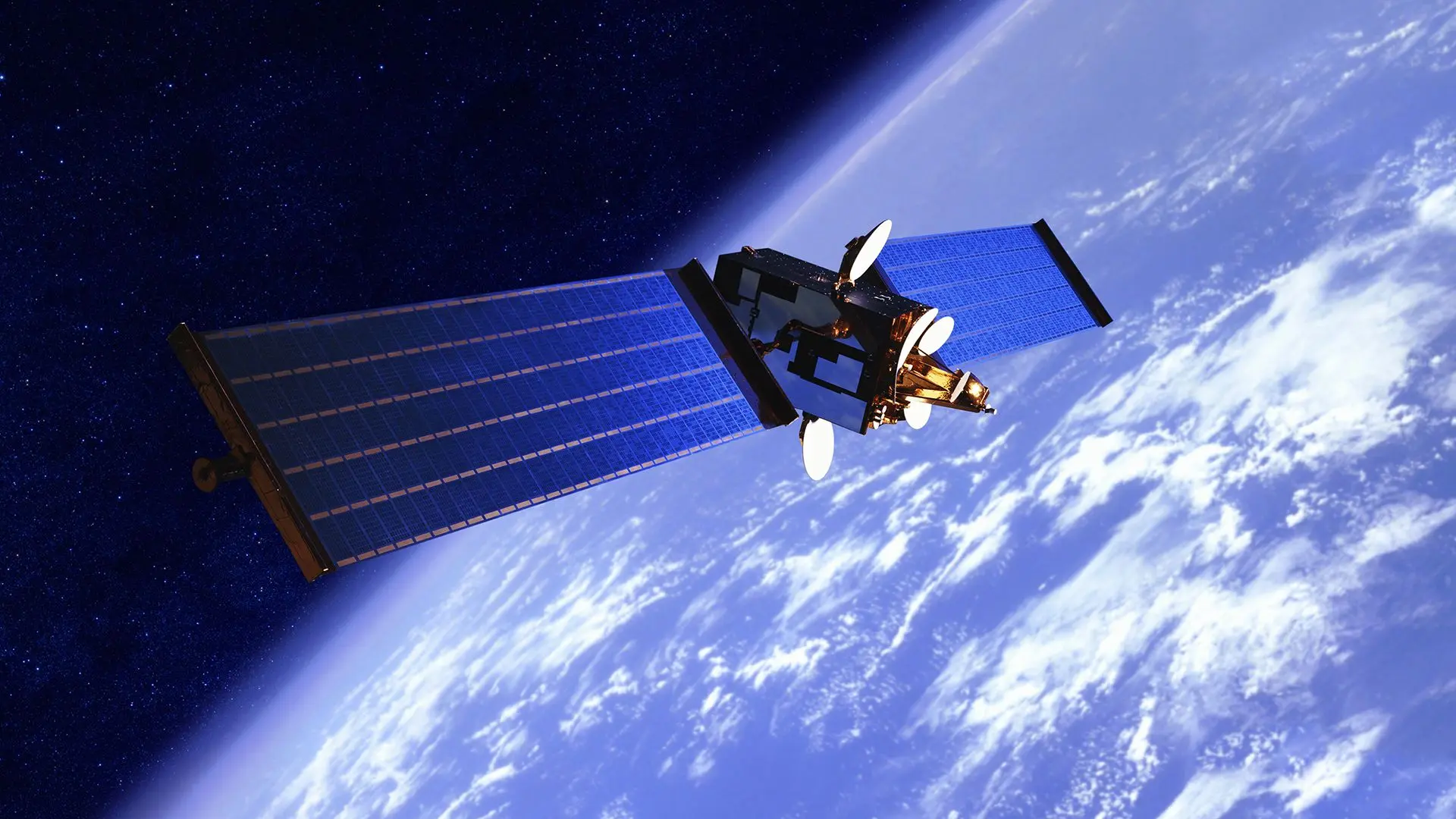
GPS, or the Global Positioning System, works by transmitting signals from satellites in medium Earth orbit. These signals travel through the ionosphere to receivers on the ground. Changes in the ionosphere’s electron density — often triggered by solar activity — can slow or refract these signals, causing errors in positioning.
Most civilian GPS receivers have algorithms that estimate and correct for ionospheric delays, but severe storms can overwhelm those corrections. In this incident, the researchers say the ionospheric electron density varied so rapidly that the receivers could not keep up. The result was positional drift of tens of meters or more, which is catastrophic for a self-driving car trying to maintain lane position.
The Growth of Autonomous Vehicles
Self-driving cars are being tested and deployed across the world by companies like Waymo, Tesla, and others. These vehicles use a combination of sensors — cameras, LiDAR, radar — and high-definition maps, but GPS remains a core component of the localization stack. It provides the global context that allows the vehicle to know where it is on the map, which is essential for route planning and navigation.
Even when other sensors are available, GPS glitches can cause the vehicle’s software to make incorrect decisions. For example, if the GPS says the car is two meters to the left of its actual position, the vehicle might steer right when it should go straight. Such errors are especially dangerous when dynamic paths are being followed.
The incident reported in the paper is not the first time solar activity has disrupted GPS. In 2017, a geomagnetic storm disturbed GPS signals across North America, causing positioning errors of about one meter. But the new report is believed to be the first to directly link a solar storm to crashes involving autonomous vehicles.
Space Weather and Infrastructure
Solar storms are a natural part of the Sun’s 11-year cycle. During periods of high activity, the Sun can produce powerful flares and coronal mass ejections. When these particles reach Earth, they can disrupt power grids, radio communications, and satellite operations.
The team behind the new research used data from the Solar Dynamics Observatory and ground-based magnetometers to reconstruct the storm’s journey from the Sun to Earth. They then compared this with telemetry from the test vehicles, including GPS accuracy readings, steering data, and brake logs. The correlation was unmistakable.
This case highlights the need for robust backup systems in autonomous vehicles. Some manufacturers are exploring options like enhanced dead reckoning, where the car uses wheel speed and steering angle to estimate position when GPS fails. Others are looking at ground-based beacons or long-range radio navigation systems as complements to GPS.
Policy and Safety Implications
Regulators are beginning to take notice. The report’s authors argue that automakers should be required to test self-driving systems under simulated space weather events. They also suggest that GPS-based systems should include real-time space weather monitoring to alert vehicles when signal degradation is likely.
The crashes occurred during a moderate storm, not an extreme one. This is concerning because moderate storms are relatively frequent — they can occur dozens of times during a solar cycle. If autonomous vehicles are to be deployed at scale, they must be able to handle not only normal conditions but also these occasional disturbances.
The researchers also emphasize that this is not just a problem for cars. Delivery drones, autonomous tractors, and even marine vessels use GPS for full automation. A widespread GPS outage could affect all of them simultaneously, creating a cascading failure across multiple industries.
How GPS Glitches Affect Self-Driving Algorithms
Autonomous driving software often fuses data from GPS with inertial sensors, wheel encoders, and visual odometry. A single source of bad data can corrupt the entire state estimate if the software trusts it too much. In the incident studied, the vehicles’ Kalman filters — which weigh the reliability of each sensor — initially trusted the GPS because it had been accurate for the preceding minutes.
When the GPS signal began to jump, the filters were slow to adapt. Within seconds, the vehicles’ perceived positions diverged by several meters from their actual positions. The control algorithms then reacted to these phantom movements, causing sudden steering corrections.
The report notes that the vehicles did not have a mechanism to declare GPS untrustworthy based on external factors like space weather. The only safeguard was a difference check between GPS and other sensors, but by the time the system noticed a mismatch, the vehicle was already in dangerous territory.
One of the key recommendations is to integrate geomagnetic storm indices into the vehicle’s sensor models. When the arrival of a solar storm is predicted, the vehicle could automatically switch to a less GPS-dependent mode or reduce speed. This proactive approach would prevent the surprise factor that caused the crashes.
The Broader Context: Solar Storms in History
To understand the severity, it is useful to recall famous solar storms. The Carrington Event of 1859 is the strongest recorded geomagnetic storm. It caused auroras visible in the Caribbean and disrupted telegraph systems. A modern Carrington-level storm could cause widespread blackouts and massive GPS failures.
More recently, the 1989 Quebec blackout was caused by a geomagnetic storm that collapsed the Hydro-Québec power grid in just 90 seconds. Storms in 2003, known as the Halloween storms, disrupted aviation communications and damaged satellites. These events underscore the real-world impact of space weather.
The solar storm that caused the self-driving car crashes was considerably weaker than those historical events. This suggests that even ordinary space weather can pose a risk to highly automated systems. As we rely more on precise positioning, we must also build resilience against natural variability.
Future Research and Development
The researchers behind this paper are now working on an early warning system that would alert autonomous vehicle operators to imminent GPS disturbances. The system would pull data from NASA and NOAA satellites, model the ionosphere in real time, and send alerts to vehicles via cellular networks.
Automakers are also exploring more robust sensor suites. Some are integrating terrain-relative navigation, which uses radar or LiDAR to match features in the environment to a map. This approach does not rely on GPS and can provide centimeter-level accuracy in some conditions.
But these technologies are still expensive. For autonomous vehicles to be safe and affordable, they need to handle a wide range of contingencies — including solar storms — without adding excessive cost. The industry will need to balance redundancy with efficiency.
The report concludes with an urgent call to action for the industry and regulatory bodies. It is not enough to test vehicles in sunny weather or in designated urban areas. They must be tested under ionospheric disturbances, radio frequency interference, and other unusual conditions that could realistically occur.
The sky above us is full of signals that work most of the time, but as the researchers have shown, a restless Sun can turn those signals into a source of confusion. For self-driving cars, that confusion can be the difference between a smooth journey and a crash.
Source: TechRadar News